
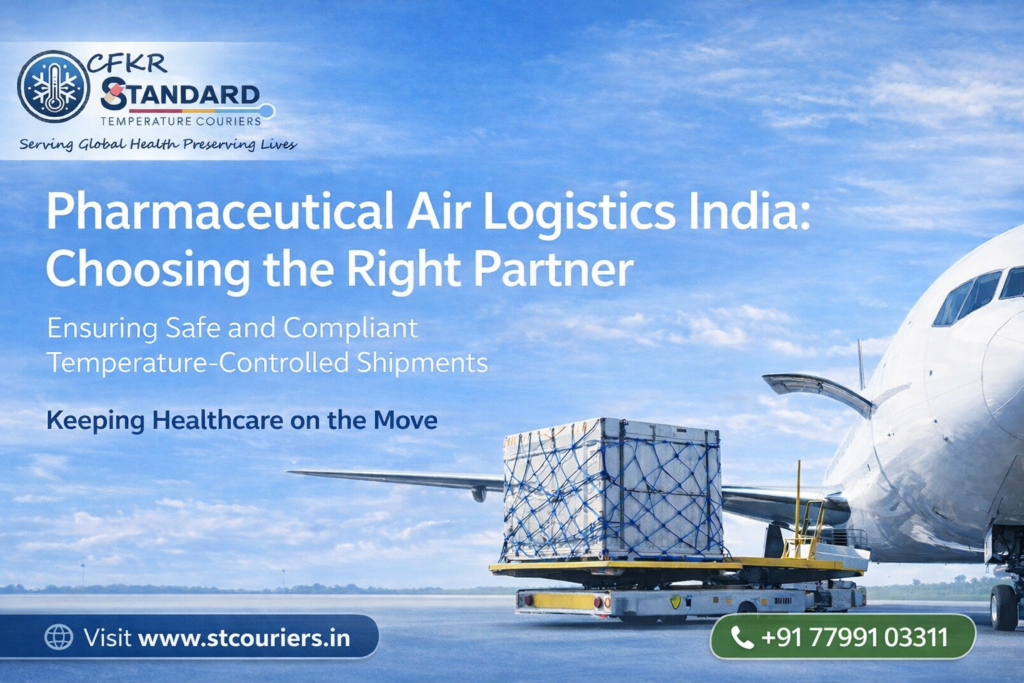
In the healthcare and life sciences industry, logistics is not just about transportation. It is about responsibility. In pharmaceutical air logistics India, every shipment represents more than cargo, it represents patient safety, regulatory accountability, and brand credibility. A temperature deviation, a documentation error, or a delayed uplift can have serious consequences.
Businesses operating in pharmaceutical air logistics India must therefore evaluate partners with precision. The right air logistics provider is not chosen based on pricing alone. It is selected based on systems, discipline, and the ability to manage risk under pressure.
Here is what truly matters when choosing a reliable pharmaceutical air logistics partner in India.
Understanding the Reality of Pharmaceutical Air Logistics in India
The pharmaceutical air logistics India sector is expanding rapidly due to increasing vaccine distribution, biotech exports, and temperature-sensitive medical shipments. Unlike general air cargo, pharmaceutical shipments operate under strict regulatory oversight including GDP (Good Distribution Practice), IATA guidelines, and temperature integrity mandates.
A reliable partner in this space must demonstrate clear process control rather than simply claiming experience. Businesses should look for documented SOPs, validated packaging solutions, and real-time monitoring capabilities that ensure uninterrupted cold chain management.
Compliance Must Be Operational, Not Promotional
Regulatory compliance is often advertised. But businesses should look deeper.
In pharmaceutical air logistics India, compliance should be embedded into daily processes. This includes documented SOPs,IATA pharmaceutical handling standards trained personnel, validated packaging methods, audit readiness, and documented deviation protocols.
Before selecting a partner, businesses should ask:
How are temperature excursions handled?
What is the escalation procedure during flight delays?
How is documentation archived and tracked?
Compliance is not a certificate on a website. It is visible in process control.
Temperature Integrity Is the Core Foundation
Pharmaceutical products often require strict temperature ranges, commonly 2–8°C or controlled ambient conditions. Even minor deviations can impact product stability. This is why businesses depend on structured temperature-controlled air freight systems that ensure validated packaging and real-time monitoring throughout transit.
A reliable pharmaceutical air logistics partner in India must provide validated packaging solutions and real-time temperature monitoring. More importantly, they must have intervention capability if something goes wrong.
Temperature integrity is not about hoping the system works. It is about proving it works.In the pharmaceutical air logistics India market, partners that provide active monitoring and clear reporting offer significantly lower operational risk.
Structured Accountability Reduces Operational Risk
One of the biggest differences between average and reliable logistics providers lies in accountability structure.
When evaluating a pharmaceutical air logistics partner in India, businesses should understand who is responsible at each stage — from pickup to airport handling to final delivery. There should be defined contact points, response timelines, and incident reporting mechanisms.
Healthcare logistics cannot depend on informal communication or reactive management. It requires disciplined coordination. Reliability is built through systems, not verbal assurances.
Airport Handling Expertise Matters More Than Many Realize
Air logistics for pharmaceuticals involves multiple coordination layers airline pharma desks, airport cold rooms, customs authorities, and ground handlers.
Not every air freight operator has specialized experience managing healthcare shipments at major Indian airports.
In pharmaceutical air logistics India, partners must demonstrate experience in handling time-sensitive and temperature-sensitive cargo within airport infrastructure constraints. This includes understanding priority uplift, transit handling risks, and cold storage availability.
Airport execution capability often determines shipment success.
Contingency Planning Defines True Reliability
Delays are inevitable in aviation. Weather disruptions, schedule changes, and operational bottlenecks can occur at any time.
The question is not whether delays happen. The question is how your logistics partner responds.
A dependable pharmaceutical air logistics partner in India will already have contingency frameworks in place. Alternative routing plans, temporary cold storage access, escalation chains, and clear communication protocols should be predefined.
In pharmaceutical air logistics India, preparedness is the difference between controlled risk and uncontrolled exposure.
Technology and Real-Time Visibility Are No Longer Optional
Modern healthcare supply chains demand transparency. Manual tracking updates are no longer sufficient for high-value pharmaceutical shipments.
A reliable partner should offer real-time shipment visibility, temperature monitoring dashboards, and structured documentation access. This level of transparency not only reduces anxiety but improves operational planning.
The pharmaceutical air logistics India industry is moving toward data-driven accountability. Businesses should align with partners who understand that visibility is part of compliance.
Experience in Healthcare-Specific Air Courier Operations
Pharmaceutical logistics differs fundamentally from commercial freight. Handling vaccines, APIs, specialty medicines, and clinical trial materials requires expertise that only a dedicated healthcare air courier provider can deliver with discipline and regulatory awareness..
A specialized healthcare air courier in India understands these nuances. They are aware of packaging validation requirements, batch documentation handling, and time-critical movement windows.
When evaluating pharmaceutical air logistics India providers, businesses should examine case history and sector experience rather than simply overall cargo volumes. Experience reduces uncertainty.
Cost Efficiency Should Not Override Risk Assessment
Pricing always matters in business decisions. However, in pharmaceutical air logistics India, selecting the lowest bidder without evaluating risk exposure can become expensive in the long run.
Compliance failures, temperature excursions, and shipment delays carry financial and reputational costs that far exceed marginal freight savings.
The goal is not to find the cheapest provider. The goal is to find the most reliable partner within structured cost parameters.
In healthcare logistics, value lies in consistency.
Risk Management in Pharmaceutical Air Logistics India
In pharmaceutical air logistics India, risk management is not a backup measure. It is the operational backbone that protects shipment integrity at every stage. Sensitive healthcare cargo moves through multiple handling points, and each stage introduces potential exposure. A reliable logistics partner builds systems to anticipate these risks rather than reacting to them.
1. Managing Flight Delays with Structured Escalation
Flight disruptions are a reality in air cargo operations. What matters is not whether delays happen, but how they are handled. A structured pharmaceutical air logistics partner operates with predefined escalation procedures. This includes airline coordination, alternative routing readiness, temperature reassessment protocols, and immediate communication with the shipper. In pharmaceutical air logistics India, such proactive planning prevents operational disruption from becoming regulatory failure.
2. Controlling Temperature Excursions Through Validation
Temperature-sensitive pharmaceutical products cannot tolerate uncontrolled exposure. Reliable operators use validated packaging solutions, calibrated data loggers, and documented monitoring systems. More importantly, they maintain deviation reporting processes that investigate and close any excursion with complete traceability. Risk management in pharmaceutical air logistics India is demonstrated through documented control, not verbal assurance.
3. Securing Airport Transitions and Handling Points
Shipments frequently move between cargo terminals, ground handlers, and airline facilities within tight timeframes. Without disciplined coordination, this stage becomes vulnerable. A dependable air logistics provider ensures trained personnel supervise handovers, verify temperature stability, and maintain documented chain-of-custody procedures. Structured oversight during airport transitions significantly reduces handling risk.
4. Maintaining Documentation and Audit Readiness
Regulatory scrutiny is constant in pharmaceutical logistics. Businesses must evaluate whether their logistics partner maintains updated SOPs, deviation logs, and audit-ready documentation. In pharmaceutical air logistics India, compliance is proven through process discipline and accountability systems that withstand inspection.
Ultimately, risk management reflects preparedness. It is visible in contingency planning, escalation structures, and controlled execution under pressure. Businesses selecting a pharmaceutical air logistics partner in India should assess operational systems carefully, because structured risk control directly protects patient safety, regulatory compliance, and brand credibility.
A Structured Evaluation Approach Before Finalizing
Before onboarding a pharmaceutical air logistics partner in India, businesses should conduct a structured review process. This may include reviewing SOP documentation, validating temperature handling systems, assessing airport coordination capabilities, and understanding escalation procedures.
A pilot shipment can often provide practical insight into real operational strength.
Pharmaceutical air logistics India is a regulated and high-stakes environment. Decision-making should reflect that reality.
Why Pharmaceutical Air Logistics India Requires Structured Systems
Pharmaceutical air logistics India operates in a high-risk, zero-error environment. Unlike conventional cargo movement, pharmaceutical shipments involve temperature-sensitive medicines, vaccines, biologics, and life-saving treatments that must remain stable throughout transit. A minor delay, a temperature excursion, or a documentation gap can compromise product integrity and create regulatory exposure.
This is why structured systems are not optional in pharmaceutical air logistics India, they are foundational. Every stage of the shipment lifecycle must be governed by documented procedures, validated packaging standards, defined accountability layers, and proactive monitoring mechanisms. From pickup coordination and airport handling to airline uplift and final delivery, each touchpoint must follow a controlled workflow.
In India’s rapidly expanding pharmaceutical export landscape, structured systems also ensure alignment with GDP compliance standards and international air freight regulations. Businesses cannot rely on informal coordination or reactive communication. They need predefined escalation frameworks, temperature validation records, and clear documentation trails that withstand audits and regulatory reviews.
Moreover, structured systems reduce operational uncertainty. Real-time visibility tools, standardized reporting formats, and trained handling teams create consistency across shipments. This consistency is what builds long-term trust between pharmaceutical manufacturers and logistics partners.
As pharmaceutical air logistics India continues to grow in scale and complexity, the companies that prioritize structured processes over ad-hoc operations will deliver greater reliability, lower risk exposure, and stronger regulatory confidence.
Conclusion
Choosing a pharmaceutical air logistics partner in India is not a transactional decision. It is a strategic decision that affects product integrity, regulatory compliance, and patient trust.
As pharmaceutical air logistics India continues to expand, businesses must move beyond surface-level evaluation and prioritize process discipline, accountability, temperature integrity, and contingency readiness.
A reliable partner does not merely transport goods. They safeguard healthcare continuity.Businesses looking for structured pharmaceutical logistics solutions can explore the complete service framework available on the STC official website.
In an industry where margins for error are minimal, structured systems and operational control define true reliability.
Frequently Asked Questions
What is pharmaceutical air logistics in India?
Pharmaceutical air logistics in India refers to the specialized air transportation of temperature-sensitive medicines, vaccines, biologics, and healthcare products under strict regulatory and temperature-controlled conditions to ensure product integrity and compliance.
Why is GDP compliance important in pharmaceutical air logistics?
GDP compliance ensures that medicines are stored, handled, and transported under controlled conditions. In pharmaceutical air logistics India, GDP standards reduce risks of temperature excursions, documentation errors, and regulatory violations.
How do companies ensure temperature control during air shipment?
Temperature control is maintained through validated packaging solutions, real-time monitoring devices, airport cold storage coordination, and structured SOPs. Reliable partners also have contingency protocols for delays.
What should businesses evaluate before choosing a pharmaceutical air logistics partner?
Businesses should assess compliance structure, temperature handling capability, airport coordination expertise, documentation systems, and contingency readiness before finalizing a pharmaceutical air logistics partner in India.
Does air freight reduce risk for pharmaceutical shipments?
Air freight reduces transit time significantly, which lowers exposure to temperature fluctuations and handling risk when managed under proper pharmaceutical logistics protocols.