Blog

air cold chain temperature excursion pharmaceutical cargo aircraft logistics
Blog

Air Cold Chain Temperature Excursion: Causes, Risks & Prevention | STC Couriers

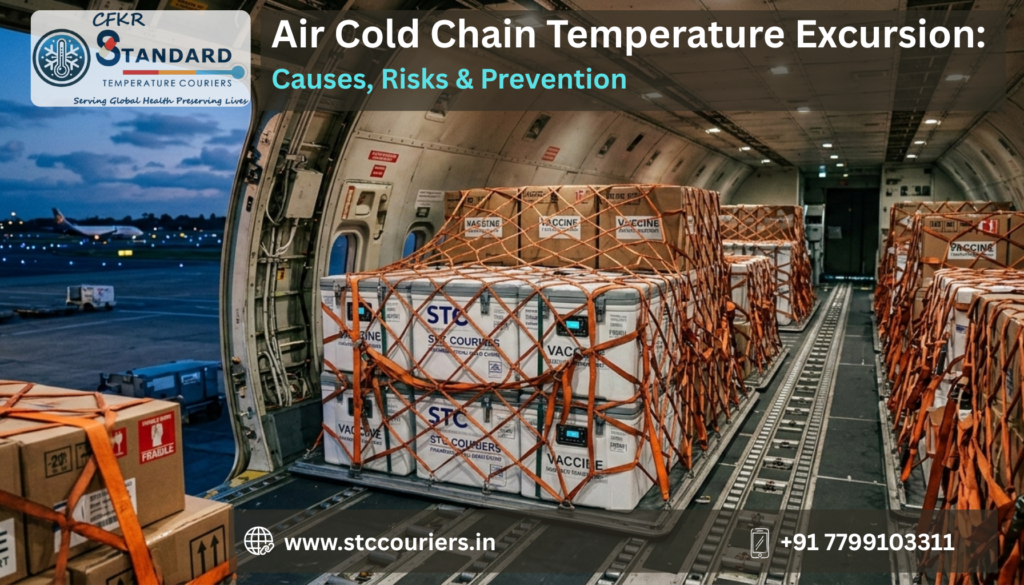
What Happens When Air Cold Chain Faces Temperature Excursion? Air cold chain temperature excursion is one of the most critical risks in pharmaceutical logistics. Even small temperature deviations during air transport can damage vaccines, biologics, and medical shipments.Temperature control plays a critical role in pharmaceutical logistics. Many medical products such as vaccines, biologics, insulin, and specialty medicines must be transported within strict temperature ranges to maintain their stability and effectiveness. When these products experience a deviation from their required temperature range during transportation or storage, it is known as a temperature excursion. In air cold chain logistics, managing and preventing temperature excursions is one of the most important responsibilities for logistics providers handling pharmaceutical shipments. In pharmaceutical logistics, preventing air cold chain temperature excursion is essential to ensure vaccines and temperature-sensitive medicines remain effective during air transport. Air transportation is widely used for temperature-sensitive cargo because it reduces transit time and ensures faster delivery across cities and countries. However, maintaining temperature stability throughout the logistics journey requires careful planning, specialized packaging, and strict monitoring systems. Without these safeguards, even a small temperature fluctuation can compromise an entire shipment. Understanding how air cold chain temperature excursion occurs and how it can be prevented helps pharmaceutical companies protect product integrity and ensure safe delivery to healthcare facilities and patients. What Is Air Cold Chain Temperature Excursion? Air cold chain temperature excursion refers to a situation where temperature-sensitive pharmaceutical shipments move outside their required temperature range during air transportation or handling. Many medical products such as vaccines, biologics, clinical samples, and specialty medicines must remain within strict temperature conditions, commonly between 2°C and 8°C or in controlled frozen environments. When this temperature range is exceeded even for a short period, it is called a temperature excursion. In air logistics, such deviations can occur during cargo loading, airport transfers, flight delays, or improper handling. Because pharmaceutical products are highly sensitive to temperature changes, an air cold chain temperature excursion can compromise product stability, reduce effectiveness, and lead to regulatory compliance issues. This is why maintaining strict temperature monitoring and proper cold chain management is critical in pharmaceutical air logistics. Understanding Temperature Excursion in Cold Chain Logistics A temperature excursion in cold chain logistics occurs when the temperature of a shipment moves outside its approved storage range for a certain period during transportation or storage. Pharmaceutical products typically require very specific environmental conditions. According to global cold chain standards from the World Health Organization, maintaining correct temperature conditions is critical for vaccine safety. Many vaccines and biological medicines must remain within a range of 2°C to 8°C, while some specialty drugs require even stricter temperature control. When a shipment exceeds these temperature limits, the chemical composition of the product may begin to change. Even if the deviation lasts only a short time, it can reduce drug potency and make the medicine less effective. Because of these risks, pharmaceutical manufacturers and regulatory authorities treat temperature excursions very seriously. In pharmaceutical air logistics, temperature monitoring is used to track the environmental conditions of shipments throughout the entire journey. This ensures that any deviation is quickly detected and addressed before the shipment reaches its final destination. Why Temperature Excursion Is a Major Risk in Pharmaceutical Logistics The pharmaceutical industry relies on highly controlled logistics systems because the quality of medicines depends heavily on environmental conditions. When a temperature excursion occurs in pharmaceutical cold chain logistics, it can lead to several operational and financial consequences. 1. Temperature-sensitive medicines may lose their effectiveness if exposed to temperatures outside their recommended range. This can make the product unsafe for patient use and may require the shipment to be discarded. 2. Regulatory compliance becomes a major concern. Pharmaceutical companies must comply with strict storage and transportation guidelines set by health authorities. If monitoring data shows that a shipment experienced a temperature excursion, the product may be rejected even if no visible damage is present. For these reasons, reliable temperature monitoring in air logistics is essential for maintaining compliance and ensuring product safety throughout the supply chain. Common Causes of Temperature Excursion in Air Logistics Temperature excursions during transportation can occur for several reasons. One common cause is inadequate packaging. Without proper insulation and thermal protection, temperature-sensitive shipments may lose their controlled environment during transit. Another factor that can lead to temperature excursion in air cargo logistics is unexpected delays during airport handling. If cargo remains exposed to external environmental conditions while waiting for loading or transfer, the temperature inside the packaging may change. Handling errors also contribute to cold chain failures. Pharmaceutical cargo requires trained logistics professionals who understand how to manage temperature-sensitive shipments and follow strict procedures when loading, unloading, or storing cargo.In addition, the absence of reliable monitoring technology can delay the detection of temperature fluctuations. Modern air cold chain logistics systems rely on temperature data loggers and digital sensors to monitor shipment conditions throughout the journey. How Air Cold Chain Logistics Prevents Temperature Excursions Preventing temperature excursions requires a combination of proper packaging, efficient transportation, and continuous monitoring. Advanced thermal packaging solutions are designed to maintain stable temperatures for extended periods, even during long-distance air transportation. In pharmaceutical air logistics, temperature monitoring devices are commonly used to track the environmental conditions inside the shipment. These devices record temperature data throughout the journey and allow logistics teams to identify deviations quickly. Air transportation also plays a key role in reducing cold chain risks because it significantly shortens transit time. Faster delivery reduces the chances of prolonged exposure to uncontrolled environments, which helps maintain temperature stability. Professional logistics providers also maintain strict handling protocols to ensure temperature-sensitive shipments are managed carefully at every stage of transportation. How STC Couriers Supports Safe Air Cold Chain Transportation For pharmaceutical companies, selecting a reliable logistics partner is essential for maintaining supply chain stability. STC Couriers specializes in time-critical air courier services designed to support temperature-sensitive shipments across India. By focusing on fast air transportation and careful cargo handling, STC helps reduce the risks

air courier services for temperature controlled shipments
Blog, Emergency Pharma Deliveries, Pharmaceutical Logistics

How Air Courier Services Reduce Logistics Risk | Temperature Controlled Air Cargo

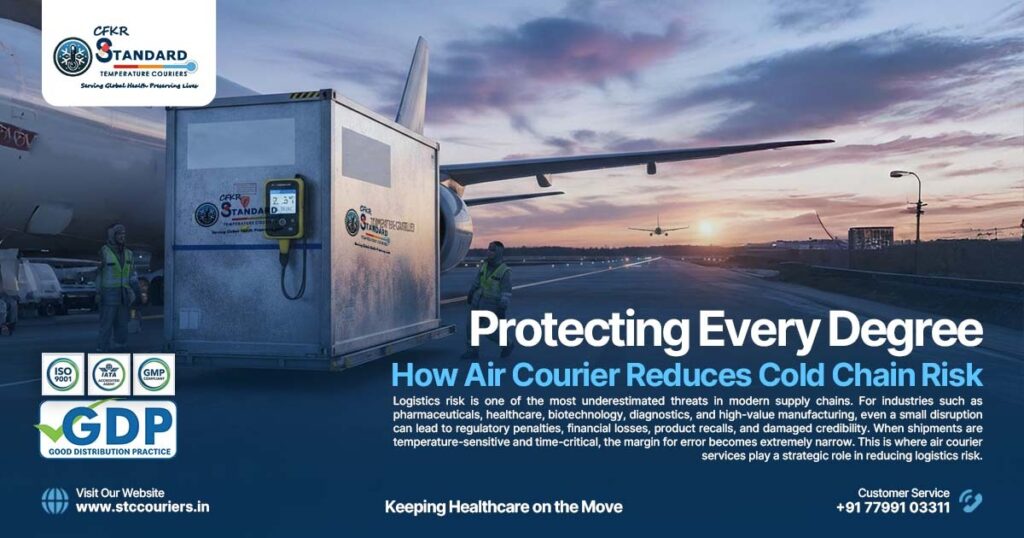
Logistics risk is one of the most underestimated threats in modern supply chains. For industries such as pharmaceuticals, healthcare, biotechnology, diagnostics, and high-value manufacturing, even a small disruption can lead to regulatory penalties, financial losses, product recalls, and damaged credibility. When shipments are temperature-sensitive and time-critical, the margin for error becomes extremely narrow. This is where air courier services play a strategic role in reducing logistics risk. Air courier services are not simply about faster delivery. They are structured aviation-based logistics solutions designed to minimize transit exposure, reduce handling points, enhance security, and protect temperature integrity. In temperature-controlled shipments, these factors directly influence product safety and compliance outcomes. Understanding Logistics Risk in Temperature-Controlled Supply Chains Logistics risk in cold chain operations typically includes delays, temperature deviation, mishandling, documentation errors, theft, and operational unpredictability. Each of these risks increases when shipments remain in transit for extended periods or pass through multiple uncontrolled transfer points. Temperature-sensitive products such as vaccines, biologics, insulin, oncology drugs, specialty injectables, and laboratory samples must remain within validated ranges such as 2–8°C, 15–25°C, or below -20°C. Any exposure outside these limits can compromise product efficacy and regulatory compliance. The longer a shipment remains exposed to environmental fluctuations, the greater the risk. This is why transit duration and operational control become critical risk variables. Reduced Transit Time Minimizes Exposure One of the primary ways air courier services reduce logistics risk is by compressing delivery timelines. Road transport, especially across states or regions, may take several days and is vulnerable to traffic congestion, border checks, vehicle breakdowns, and weather disruptions. Air transport significantly shortens transit duration. What could take two or three days by road can often be completed within hours through structured air cargo networks. Reduced transit time directly decreases exposure to temperature fluctuation, environmental instability, and operational unpredictability. In temperature-controlled logistics, speed is not a luxury. It is a protective mechanism. Fewer Handling Points Lower Operational Risk Every transfer in a logistics chain introduces potential risk. Loading and unloading at multiple warehouses, cross-docking hubs, and regional distribution centers increase the probability of mishandling, packaging damage, or temperature instability. Air courier services typically operate within centralized airport cargo terminals governed by standardized aviation protocols. While shipments are still processed, the overall chain is more streamlined and regulated compared to multi-stage ground transportation networks. Fewer uncontrolled touchpoints reduce the chances of physical damage and operational errors. For pharmaceutical and healthcare shipments, minimizing handling exposure directly strengthens cold chain integrity. Temperature Integrity Through Controlled Environments Maintaining temperature stability is fundamental in cold chain logistics. Road transport relies heavily on refrigerated vehicles and insulated packaging. While modern reefer systems are effective, long-distance journeys expose shipments to prolonged environmental stress. Air courier services reduce this stress by limiting exposure duration. Even when shipments rely on validated packaging solutions, shorter travel time reduces the likelihood of internal temperature drift. Airport cargo facilities also operate under structured operational controls that support better shipment coordination. For highly sensitive products, reduced exposure equals reduced temperature deviation risk. Enhanced Security and Shipment Protection High-value and temperature-sensitive cargo often carries additional security risks. Theft, tampering, and counterfeiting can create significant financial and reputational damage. Extended road routes expose shipments to unpredictable external factors over long distances. Airport cargo environments operate under surveillance systems, restricted access protocols, and regulated documentation procedures. Air courier services therefore provide a more secure logistics ecosystem. For companies transporting specialty pharmaceuticals, biologics, or critical healthcare equipment, security is an integral component of logistics risk reduction. Compliance Support and Traceability Pharmaceutical and healthcare logistics operate under strict regulatory frameworks. Good Distribution Practice guidelines require proper documentation, traceability, and monitoring. Delays or documentation inconsistencies can trigger compliance issues and audits. Air courier services benefit from structured aviation documentation workflows. Coordinated cargo handling systems improve traceability and reduce clearance complications. When logistics operations are aligned with compliance standards, administrative risk decreases alongside operational risk. Businesses seeking a reliable pharmaceutical air logistics partner in India must prioritize structured risk management capabilities, not just delivery speed Reliability in Time-Critical Operations Time-critical shipments represent another dimension of logistics risk. Clinical trials require timely biological sample movement. Hospitals depend on urgent medication supply. Manufacturing operations rely on just-in-time component delivery. Air courier services operate on scheduled flight networks, providing greater predictability than long-haul road transport. Even when disruptions occur, aviation networks offer alternative routing options that reduce downtime. Predictability supports operational continuity. When shipments arrive within defined windows, business stability improves. Financial Impact of Risk Reduction The financial consequences of logistics failure extend beyond shipment replacement costs. Delayed deliveries may lead to contract penalties, emergency re-shipments, regulatory scrutiny, and damaged long-term relationships. While air courier services may involve higher upfront transportation costs compared to road transport, they reduce risk-adjusted financial exposure. For high-value or highly sensitive cargo, preventing loss is significantly more cost-effective than managing failure. Strategic logistics planning requires evaluating total risk cost, not just freight pricing. Strategic Value of Air Courier Services in Modern Supply Chains As global healthcare and pharmaceutical supply chains become more complex, logistics risk management becomes increasingly important. Temperature-controlled shipments are expanding due to growth in biologics, vaccine programs, and specialty treatments. Air courier services provide structured aviation-based logistics that reduce exposure time, enhance security, streamline handling, and support compliance. These advantages collectively strengthen supply chain resilience. At STC – Standard Temperature Couriers, aviation logistics is designed specifically for time-sensitive and temperature-controlled shipments. By focusing on operational precision, minimal handling exposure, and reliable air cargo coordination, STC supports businesses in reducing logistics risk while maintaining shipment integrity. In modern supply chains, eliminating risk entirely may not be possible. However, reducing it strategically is achievable. Air courier services represent a proactive approach to safeguarding temperature-sensitive shipments, protecting regulatory compliance, and strengthening operational continuity. Businesses that evaluate logistics decisions through the lens of risk reduction rather than simple cost comparison position themselves for long-term stability and trust. Frequently Asked Questions How do air courier services reduce logistics risk?Air courier services reduce transit time, minimize handling points,

Cold Chain Logistics Company India
Blog

How to Choose the Right Healthcare Logistics Company in India

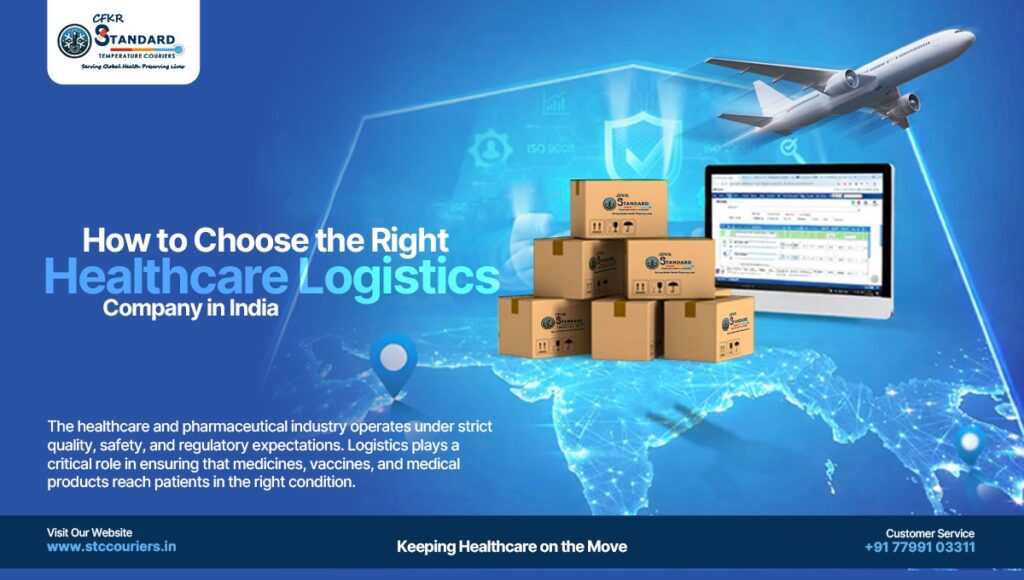
The healthcare and pharmaceutical industry operates under strict quality, safety, and regulatory expectations. Logistics plays a critical role in ensuring that medicines, vaccines, and medical products reach patients in the right condition. Even a small lapse in handling or temperature control can lead to product damage, regulatory penalties, and serious risks to patient health. This is why selecting the right Healthcare Logistics Company in India is not a routine vendor decision. It is a strategic choice that directly impacts product integrity, compliance, and brand trust. Why Healthcare Logistics Requires Specialised Expertise Healthcare logistics is fundamentally different from general cargo or retail distribution. Pharmaceutical products are highly sensitive to environmental conditions and handling practices. Many medicines, injectables, vaccines, and diagnostic samples require strict temperature control throughout storage and transportation. Experienced pharma cold chain logistics companies understand these complexities. They operate with defined SOPs, trained personnel, validated packaging, and continuous monitoring systems. A logistics partner without healthcare-specific experience can unintentionally compromise product quality at any stage of the supply chain. Importance of Cold Chain Infrastructure in Pharma Logistics Cold chain capability is the backbone of healthcare logistics. A reliable Cold Chain Logistics Company in India must ensure uninterrupted temperature control during warehousing, transportation, and last-mile delivery. This includes chilled, controlled ambient, and frozen movements based on product requirements. Temperature stability must be maintained regardless of transit distance, climate conditions, or delivery location. Any break in the cold chain can result in loss of potency, product rejection, or non-compliance. Role of Technology in Healthcare Logistics Technology has become essential in modern healthcare logistics operations. Real-time shipment tracking, temperature monitoring, and digital reporting provide visibility and accountability across the supply chain. A capable healthcare logistics partner should offer live temperature data, automated alerts for deviations, and post-trip reports for quality and audit purposes. These systems help businesses identify risks early, take corrective action, and maintain compliance with regulatory standards. Compliance and Regulatory Readiness Regulatory compliance is non-negotiable in healthcare logistics. Logistics partners must follow GDP-aligned practices and maintain proper documentation, traceability, and handling protocols. A dependable Healthcare Logistics Company India operates with audit readiness at all times. Compliance is embedded into daily operations, not treated as an occasional requirement. Clear documentation, trained staff, and defined escalation processes are key indicators of compliance maturity. Secure Warehousing and Risk Management Pharmaceutical products require controlled and secure storage environments. Warehouses must be equipped with temperature control systems, contamination prevention measures, and safety protocols to protect sensitive goods. Security is equally important. Medicines are high-value products and vulnerable to theft or counterfeiting. Strong access controls, surveillance systems, and process discipline help reduce these risks and ensure product safety during storage. Network Strength and Location Advantage An effective healthcare supply chain depends on network reach. Healthcare logistics often involves deliveries beyond metro cities to hospitals, clinics, laboratories, and distributors across Tier 2 and Tier 3 locations. A strong logistics partner should have the infrastructure and operational capability to manage long-distance and last-mile deliveries without compromising temperature or handling standards. Strategic presence near manufacturing hubs and healthcare centers improves delivery efficiency and reduces transit risks. Balancing Cost with Service Quality While cost is an important consideration, healthcare logistics decisions should never be driven by price alone. Lower-cost services may result in delays, temperature deviations, or compliance failures that cost far more in the long run. The right partner focuses on reliability, transparency, and long-term value rather than short-term savings. Consistent service quality protects both business continuity and patient safety. Customer Support and Operational Transparency Healthcare logistics requires proactive communication. Delays, route changes, or environmental risks must be communicated immediately. A dedicated support team and clear escalation structure ensure that issues are addressed before they impact product quality. Transparent communication builds trust and enables better coordination between logistics teams, quality departments, and customers. Future of Healthcare Logistics in India Healthcare logistics continues to evolve with advancements in technology and process automation. Data-driven planning, predictive analytics, and integrated monitoring systems are shaping the future of pharmaceutical supply chains. Companies that invest in modern infrastructure and digital tools are better positioned to meet growing regulatory demands and rising expectations for speed, accuracy, and compliance. Choosing the Right Partner for Healthcare Logistics Selecting the right Healthcare Logistics Company in India is a critical business decision. The ideal partner combines healthcare-specific experience, cold chain expertise, regulatory readiness, and strong operational transparency. A dependable logistics provider supports not only efficient delivery but also compliance, risk reduction, and patient safety, making them a true extension of your healthcare supply chain. Conclusion Choosing the right Healthcare Logistics Company in India is essential for protecting product quality, ensuring compliance, and maintaining patient safety. With healthcare logistics, there is no room for error. STC Courier delivers reliable cold chain logistics backed by process discipline, temperature control, and nationwide reach, making it a dependable partner for pharmaceutical and healthcare supply chains across India.  

Scroll to Top