Pharmaceutical Logistics

air courier services for temperature controlled shipments
Blog, Emergency Pharma Deliveries, Pharmaceutical Logistics

How Air Courier Services Reduce Logistics Risk | Temperature Controlled Air Cargo

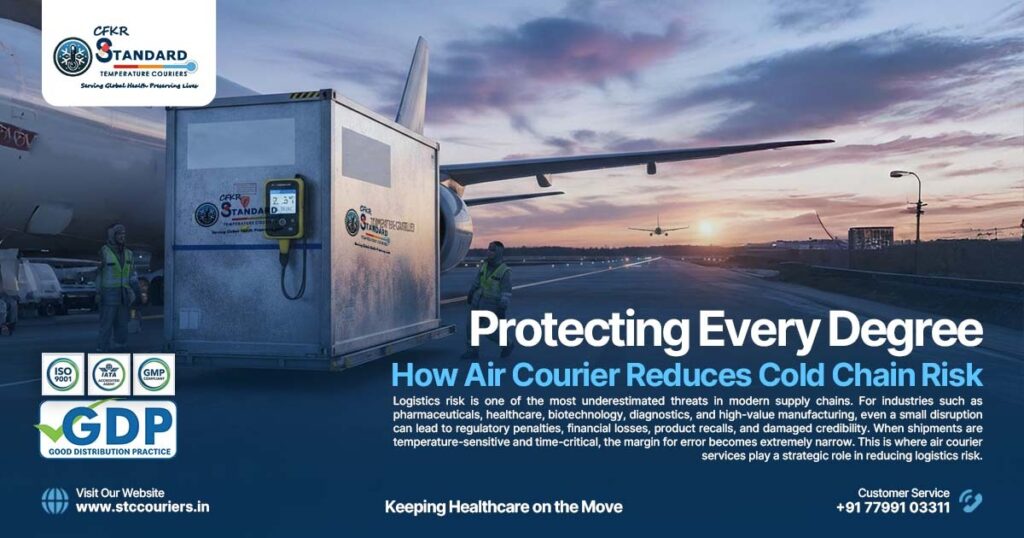
Logistics risk is one of the most underestimated threats in modern supply chains. For industries such as pharmaceuticals, healthcare, biotechnology, diagnostics, and high-value manufacturing, even a small disruption can lead to regulatory penalties, financial losses, product recalls, and damaged credibility. When shipments are temperature-sensitive and time-critical, the margin for error becomes extremely narrow. This is where air courier services play a strategic role in reducing logistics risk. Air courier services are not simply about faster delivery. They are structured aviation-based logistics solutions designed to minimize transit exposure, reduce handling points, enhance security, and protect temperature integrity. In temperature-controlled shipments, these factors directly influence product safety and compliance outcomes. Understanding Logistics Risk in Temperature-Controlled Supply Chains Logistics risk in cold chain operations typically includes delays, temperature deviation, mishandling, documentation errors, theft, and operational unpredictability. Each of these risks increases when shipments remain in transit for extended periods or pass through multiple uncontrolled transfer points. Temperature-sensitive products such as vaccines, biologics, insulin, oncology drugs, specialty injectables, and laboratory samples must remain within validated ranges such as 2–8°C, 15–25°C, or below -20°C. Any exposure outside these limits can compromise product efficacy and regulatory compliance. The longer a shipment remains exposed to environmental fluctuations, the greater the risk. This is why transit duration and operational control become critical risk variables. Reduced Transit Time Minimizes Exposure One of the primary ways air courier services reduce logistics risk is by compressing delivery timelines. Road transport, especially across states or regions, may take several days and is vulnerable to traffic congestion, border checks, vehicle breakdowns, and weather disruptions. Air transport significantly shortens transit duration. What could take two or three days by road can often be completed within hours through structured air cargo networks. Reduced transit time directly decreases exposure to temperature fluctuation, environmental instability, and operational unpredictability. In temperature-controlled logistics, speed is not a luxury. It is a protective mechanism. Fewer Handling Points Lower Operational Risk Every transfer in a logistics chain introduces potential risk. Loading and unloading at multiple warehouses, cross-docking hubs, and regional distribution centers increase the probability of mishandling, packaging damage, or temperature instability. Air courier services typically operate within centralized airport cargo terminals governed by standardized aviation protocols. While shipments are still processed, the overall chain is more streamlined and regulated compared to multi-stage ground transportation networks. Fewer uncontrolled touchpoints reduce the chances of physical damage and operational errors. For pharmaceutical and healthcare shipments, minimizing handling exposure directly strengthens cold chain integrity. Temperature Integrity Through Controlled Environments Maintaining temperature stability is fundamental in cold chain logistics. Road transport relies heavily on refrigerated vehicles and insulated packaging. While modern reefer systems are effective, long-distance journeys expose shipments to prolonged environmental stress. Air courier services reduce this stress by limiting exposure duration. Even when shipments rely on validated packaging solutions, shorter travel time reduces the likelihood of internal temperature drift. Airport cargo facilities also operate under structured operational controls that support better shipment coordination. For highly sensitive products, reduced exposure equals reduced temperature deviation risk. Enhanced Security and Shipment Protection High-value and temperature-sensitive cargo often carries additional security risks. Theft, tampering, and counterfeiting can create significant financial and reputational damage. Extended road routes expose shipments to unpredictable external factors over long distances. Airport cargo environments operate under surveillance systems, restricted access protocols, and regulated documentation procedures. Air courier services therefore provide a more secure logistics ecosystem. For companies transporting specialty pharmaceuticals, biologics, or critical healthcare equipment, security is an integral component of logistics risk reduction. Compliance Support and Traceability Pharmaceutical and healthcare logistics operate under strict regulatory frameworks. Good Distribution Practice guidelines require proper documentation, traceability, and monitoring. Delays or documentation inconsistencies can trigger compliance issues and audits. Air courier services benefit from structured aviation documentation workflows. Coordinated cargo handling systems improve traceability and reduce clearance complications. When logistics operations are aligned with compliance standards, administrative risk decreases alongside operational risk. Businesses seeking a reliable pharmaceutical air logistics partner in India must prioritize structured risk management capabilities, not just delivery speed Reliability in Time-Critical Operations Time-critical shipments represent another dimension of logistics risk. Clinical trials require timely biological sample movement. Hospitals depend on urgent medication supply. Manufacturing operations rely on just-in-time component delivery. Air courier services operate on scheduled flight networks, providing greater predictability than long-haul road transport. Even when disruptions occur, aviation networks offer alternative routing options that reduce downtime. Predictability supports operational continuity. When shipments arrive within defined windows, business stability improves. Financial Impact of Risk Reduction The financial consequences of logistics failure extend beyond shipment replacement costs. Delayed deliveries may lead to contract penalties, emergency re-shipments, regulatory scrutiny, and damaged long-term relationships. While air courier services may involve higher upfront transportation costs compared to road transport, they reduce risk-adjusted financial exposure. For high-value or highly sensitive cargo, preventing loss is significantly more cost-effective than managing failure. Strategic logistics planning requires evaluating total risk cost, not just freight pricing. Strategic Value of Air Courier Services in Modern Supply Chains As global healthcare and pharmaceutical supply chains become more complex, logistics risk management becomes increasingly important. Temperature-controlled shipments are expanding due to growth in biologics, vaccine programs, and specialty treatments. Air courier services provide structured aviation-based logistics that reduce exposure time, enhance security, streamline handling, and support compliance. These advantages collectively strengthen supply chain resilience. At STC – Standard Temperature Couriers, aviation logistics is designed specifically for time-sensitive and temperature-controlled shipments. By focusing on operational precision, minimal handling exposure, and reliable air cargo coordination, STC supports businesses in reducing logistics risk while maintaining shipment integrity. In modern supply chains, eliminating risk entirely may not be possible. However, reducing it strategically is achievable. Air courier services represent a proactive approach to safeguarding temperature-sensitive shipments, protecting regulatory compliance, and strengthening operational continuity. Businesses that evaluate logistics decisions through the lens of risk reduction rather than simple cost comparison position themselves for long-term stability and trust. Frequently Asked Questions How do air courier services reduce logistics risk?Air courier services reduce transit time, minimize handling points,
Pharmaceutical air logistics India temperature controlled cargo by STC Couriers
Pharmaceutical Logistics

Pharmaceutical Air Logistics India : A Business Guide to Choosing the Right Partner

In the healthcare and life sciences industry, logistics is not just about transportation. It is about responsibility. In pharmaceutical air logistics India, every shipment represents more than cargo, it represents patient safety, regulatory accountability, and brand credibility. A temperature deviation, a documentation error, or a delayed uplift can have serious consequences. Businesses operating in pharmaceutical air logistics India must therefore evaluate partners with precision. The right air logistics provider is not chosen based on pricing alone. It is selected based on systems, discipline, and the ability to manage risk under pressure. Here is what truly matters when choosing a reliable pharmaceutical air logistics partner in India. Understanding the Reality of Pharmaceutical Air Logistics in India The pharmaceutical air logistics India sector is expanding rapidly due to increasing vaccine distribution, biotech exports, and temperature-sensitive medical shipments. Unlike general air cargo, pharmaceutical shipments operate under strict regulatory oversight including GDP (Good Distribution Practice), IATA guidelines, and temperature integrity mandates. A reliable partner in this space must demonstrate clear process control rather than simply claiming experience. Businesses should look for documented SOPs, validated packaging solutions, and real-time monitoring capabilities that ensure uninterrupted cold chain management. Compliance Must Be Operational, Not Promotional Regulatory compliance is often advertised. But businesses should look deeper. In pharmaceutical air logistics India, compliance should be embedded into daily processes. This includes documented SOPs,IATA pharmaceutical handling standards trained personnel, validated packaging methods, audit readiness, and documented deviation protocols. Before selecting a partner, businesses should ask: How are temperature excursions handled?What is the escalation procedure during flight delays?How is documentation archived and tracked? Compliance is not a certificate on a website. It is visible in process control. Temperature Integrity Is the Core Foundation Pharmaceutical products often require strict temperature ranges, commonly 2–8°C or controlled ambient conditions. Even minor deviations can impact product stability. This is why businesses depend on structured temperature-controlled air freight systems that ensure validated packaging and real-time monitoring throughout transit. A reliable pharmaceutical air logistics partner in India must provide validated packaging solutions and real-time temperature monitoring. More importantly, they must have intervention capability if something goes wrong. Temperature integrity is not about hoping the system works. It is about proving it works.In the pharmaceutical air logistics India market, partners that provide active monitoring and clear reporting offer significantly lower operational risk. Structured Accountability Reduces Operational Risk One of the biggest differences between average and reliable logistics providers lies in accountability structure. When evaluating a pharmaceutical air logistics partner in India, businesses should understand who is responsible at each stage — from pickup to airport handling to final delivery. There should be defined contact points, response timelines, and incident reporting mechanisms. Healthcare logistics cannot depend on informal communication or reactive management. It requires disciplined coordination. Reliability is built through systems, not verbal assurances. Airport Handling Expertise Matters More Than Many Realize Air logistics for pharmaceuticals involves multiple coordination layers airline pharma desks, airport cold rooms, customs authorities, and ground handlers. Not every air freight operator has specialized experience managing healthcare shipments at major Indian airports. In pharmaceutical air logistics India, partners must demonstrate experience in handling time-sensitive and temperature-sensitive cargo within airport infrastructure constraints. This includes understanding priority uplift, transit handling risks, and cold storage availability. Airport execution capability often determines shipment success. Contingency Planning Defines True Reliability Delays are inevitable in aviation. Weather disruptions, schedule changes, and operational bottlenecks can occur at any time. The question is not whether delays happen. The question is how your logistics partner responds. A dependable pharmaceutical air logistics partner in India will already have contingency frameworks in place. Alternative routing plans, temporary cold storage access, escalation chains, and clear communication protocols should be predefined. In pharmaceutical air logistics India, preparedness is the difference between controlled risk and uncontrolled exposure. Technology and Real-Time Visibility Are No Longer Optional Modern healthcare supply chains demand transparency. Manual tracking updates are no longer sufficient for high-value pharmaceutical shipments. A reliable partner should offer real-time shipment visibility, temperature monitoring dashboards, and structured documentation access. This level of transparency not only reduces anxiety but improves operational planning. The pharmaceutical air logistics India industry is moving toward data-driven accountability. Businesses should align with partners who understand that visibility is part of compliance. Experience in Healthcare-Specific Air Courier Operations Pharmaceutical logistics differs fundamentally from commercial freight. Handling vaccines, APIs, specialty medicines, and clinical trial materials requires expertise that only a dedicated healthcare air courier provider can deliver with discipline and regulatory awareness.. A specialized healthcare air courier in India understands these nuances. They are aware of packaging validation requirements, batch documentation handling, and time-critical movement windows. When evaluating pharmaceutical air logistics India providers, businesses should examine case history and sector experience rather than simply overall cargo volumes. Experience reduces uncertainty. Cost Efficiency Should Not Override Risk Assessment Pricing always matters in business decisions. However, in pharmaceutical air logistics India, selecting the lowest bidder without evaluating risk exposure can become expensive in the long run. Compliance failures, temperature excursions, and shipment delays carry financial and reputational costs that far exceed marginal freight savings. The goal is not to find the cheapest provider. The goal is to find the most reliable partner within structured cost parameters. In healthcare logistics, value lies in consistency. Risk Management in Pharmaceutical Air Logistics India In pharmaceutical air logistics India, risk management is not a backup measure. It is the operational backbone that protects shipment integrity at every stage. Sensitive healthcare cargo moves through multiple handling points, and each stage introduces potential exposure. A reliable logistics partner builds systems to anticipate these risks rather than reacting to them. 1. Managing Flight Delays with Structured Escalation Flight disruptions are a reality in air cargo operations. What matters is not whether delays happen, but how they are handled. A structured pharmaceutical air logistics partner operates with predefined escalation procedures. This includes airline coordination, alternative routing readiness, temperature reassessment protocols, and immediate communication with the shipper. In pharmaceutical air logistics India, such proactive planning prevents operational disruption from

Cold Chain Logistics Company
Pharmaceutical Logistics

Cold Chain Logistics Company: The Backbone of Healthcare Distribution

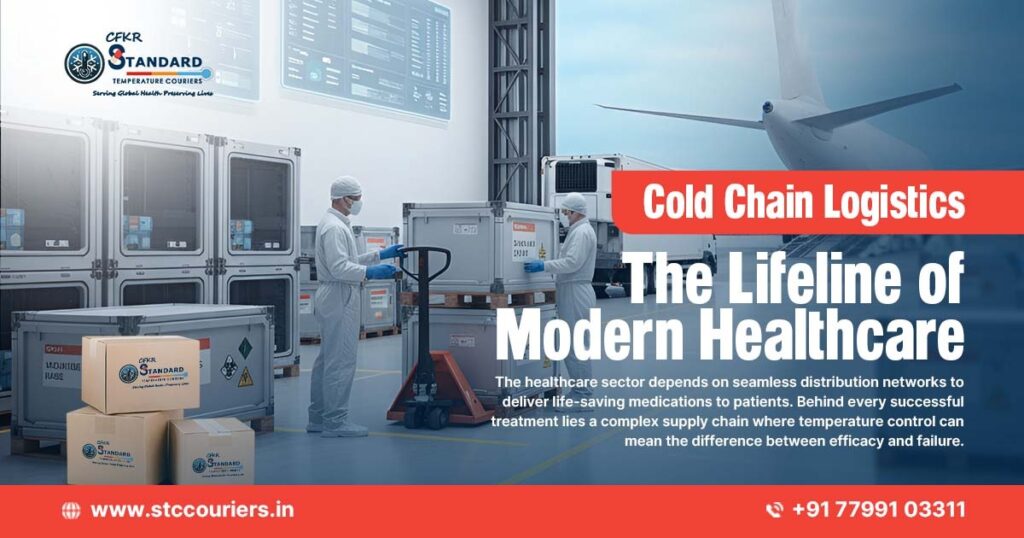
The healthcare sector depends on seamless distribution networks to deliver life-saving medications to patients. Behind every successful treatment lies a complex supply chain where temperature control can mean the difference between efficacy and failure. Understanding how cold chain logistics supports pharmaceutical distribution reveals why this industry remains fundamental to modern healthcare. Why Is a Cold Chain Logistics Company Essential for Healthcare? The healthcare industry relies on a delicate balance of science, precision, and timing. Medicines, vaccines, and biologics manufactured with cutting-edge technology must reach patients in the same pristine condition they left the laboratory. This journey from production facilities to hospitals, clinics, and pharmacies requires expertise that goes far beyond ordinary transportation. A specialised cold chain logistics company becomes the invisible guardian of public health, ensuring that temperature-sensitive pharmaceuticals maintain their therapeutic properties throughout distribution. Without proper cold chain infrastructure, even the most advanced medicines can deteriorate before reaching patients. The consequences extend beyond financial losses for pharmaceutical companies. Patients receiving compromised medications face serious health risks, and the entire healthcare system suffers when drug integrity cannot be guaranteed. What Makes Cold Storage Pharmaceutical Solutions Different? Cold storage pharmaceutical operations involve much more than simply keeping products cold. These systems require precise temperature control within narrow ranges, often between 2°C and 8°C for vaccines and certain biologics. Some advanced therapies demand ultra-low temperatures of -20°C or even -70°C, creating additional complexity in storage and transportation. The challenge intensifies when considering India’s diverse climate. Summer temperatures in many regions exceed 45°C, whilst winter brings freezing conditions to northern areas. A reliable cold chain logistics company must maintain consistent internal temperatures regardless of external conditions, protecting pharmaceutical products from heat exposure and freezing alike. Modern cold storage pharmaceutical facilities incorporate multiple safeguards: These measures ensure that every product stored remains within its specified temperature range, preserving efficacy and safety. How Does Technology Support Cold Chain Operations? Technology has transformed how cold chain logistics companies monitor and manage temperature-sensitive shipments. Real-time sensors placed throughout storage facilities and transport vehicles continuously measure temperature and humidity levels. This data streams to central monitoring systems, providing instant visibility into conditions across the entire supply chain. GPS tracking systems complement temperature monitoring by providing location updates throughout transit. When combined with route optimisation software, these tools enable efficient delivery whilst maintaining cold chain integrity. Drivers receive alerts if vehicles deviate from approved routes or if delivery schedules risk exposing products to ambient temperatures for extended periods. Data loggers create permanent records of storage conditions, essential for regulatory compliance and quality assurance. Pharmaceutical companies can review complete temperature histories for every shipment, verifying that products remained within specifications. This documentation proves invaluable during audits and helps identify potential improvements in cold chain processes. Advanced packaging technology adds another layer of protection. Phase change materials and vacuum insulation panels maintain stable temperatures even if primary cooling systems experience brief interruptions. These innovations provide crucial safety margins, especially during last-mile delivery where temperature control becomes most challenging. What Role Does a Cold Chain Logistics Company Play in Medicine Distribution? Distribution networks for temperature-sensitive pharmaceuticals require coordination across multiple stakeholders. Manufacturers, distributors, hospitals, pharmacies, and regulatory bodies all depend on cold chain logistics companies to maintain product integrity. These specialists act as the central nervous system of pharmaceutical distribution, ensuring seamless handoffs at every stage whilst preserving cold chain continuity. Consider vaccine distribution during immunisation campaigns. Vaccines must travel from manufacturing sites to regional distribution centres, then to local health facilities, and finally to vaccination sites. Each transfer point presents risks of temperature excursions. A professional cold chain logistics company minimises these risks through standardised protocols, trained personnel, and appropriate equipment at every location. The complexity increases for clinical trial materials. Investigational drugs often have strict storage requirements and short expiration windows. Temperature monitoring throughout the cold chain becomes absolutely critical, as any deviation could compromise trial integrity and patient safety. Logistics providers must offer flexible solutions that adapt to evolving study protocols whilst maintaining rigorous quality standards. Why Is Regulatory Compliance Critical in Cold Chain Logistics? Pharmaceutical distribution operates under stringent regulatory frameworks designed to protect public health. Good Distribution Practices (GDP) guidelines establish standards for storage, transportation, and documentation of pharmaceutical products. Cold chain logistics companies must demonstrate compliance through regular audits, staff training, and quality management systems. Regulatory requirements extend beyond temperature control. Documentation must trace every product movement, creating an unbroken chain of custody from manufacturer to end user. Any gaps in this documentation can result in product recalls, regulatory sanctions, and loss of business licences. Qualified personnel represent another crucial compliance element. Staff handling pharmaceutical products need training in proper storage procedures, emergency response protocols, and documentation requirements. Regular competency assessments ensure that knowledge remains current as regulations evolve and new products enter the market. How Can Businesses Choose the Right Cold Chain Partner? Selecting a cold chain logistics company requires careful evaluation of capabilities, experience, and reliability. Pharmaceutical companies should assess potential partners across several dimensions: Infrastructure and technology: Does the provider maintain modern cold storage facilities with appropriate backup systems? Can they offer real-time tracking and temperature monitoring throughout transit? Geographic coverage: Can they reach all required delivery locations, including remote areas with limited infrastructure? Do they have experience navigating regional challenges? Regulatory compliance: Are their facilities certified to relevant standards? Do they maintain current GDP compliance and undergo regular audits? Experience with specific product types: Have they successfully handled products with similar temperature requirements? Can they demonstrate expertise with vaccines, biologics, or other specialised pharmaceuticals? Customer service and communication: How quickly do they respond to queries and emergencies? Do they provide proactive updates about shipment status? Where Can Healthcare Businesses Find Reliable Cold Chain Solutions? India’s pharmaceutical sector continues expanding, creating growing demand for sophisticated cold chain logistics services. Healthcare businesses need partners who understand the critical nature of their products and can deliver consistent results across diverse geographic and climatic conditions. Companies like STC Couriers (CFKR STC), with over three decades

Choosing the Right Partner for Pharmaceutical Logistics
Pharmaceutical Logistics

Why Does Choosing the Right Partner for Pharmaceutical Logistics Matter?

Every healthcare business faces a simple truth: the medicine that saves lives only works when it reaches patients intact, on time, and in perfect condition. Yet, selecting a logistics partner is often treated as just another vendor decision, when it should be recognized as choosing a guardian for your most valuable assets. The stakes in pharmaceutical logistics are uniquely high. A broken cold chain can render a shipment of insulin useless. A documentation error can trigger regulatory penalties. A delayed delivery can leave hospitals without the critical medications they need. Your logistics partner isn’t just moving boxes; they’re protecting patient outcomes and your business reputation simultaneously. So how do you separate providers who truly understand these stakes from those who just claim they do? Let’s break down what actually matters. What Compliance Standards Should Your Pharmaceutical Logistics Services Meet? Regulations exist for good reason in pharmaceutical distribution. They protect patients and ensure product integrity. Your logistics provider needs to demonstrate more than casual familiarity with these requirements; they need to live them daily. Good Distribution Practice guidelines shape how pharmaceutical products should be stored, transported, and handled. These aren’t suggestions. Any provider working in pharmaceutical logistics services should have systems designed around these principles. They should speak fluently about validation protocols, qualification procedures, and deviation management. Temperature control creates its own layer of complexity. Many medications require specific temperature ranges throughout their journey. Your provider should maintain detailed records proving they kept products within acceptable ranges. More importantly, they should have protocols for what happens when temperature excursions occur—because equipment failures and unexpected delays do happen. Ask about their quality management system. Documentation might seem tedious, but it becomes your proof that everything was done correctly if questions arise later. Providers serious about compliance maintain meticulous records and make them readily available. How Much Does Technology Really Matter in Modern Pharmaceutical Distribution? Technology has transformed what’s possible in pharmaceutical logistics. Thirty years ago, you shipped products and hoped for the best. Today, you can monitor every aspect of a shipment in real time. Real-time tracking shows you exactly where your products are at any moment. This transparency helps you plan inventory, communicate with customers, and respond quickly if issues arise. Basic GPS tracking has become table stakes: look for providers offering more sophisticated visibility tools. Temperature monitoring technology particularly matters for pharmaceutical products. Modern sensors continuously log temperature data throughout transit. This creates an unbroken record proving the cold chain remained intact. The best systems send automatic alerts if temperatures drift outside acceptable ranges, allowing immediate corrective action. Integration capabilities often get overlooked during provider selection, but they matter enormously for operational efficiency. Systems that connect with your inventory management software eliminate manual data entry, reduce errors, and speed up processes. Ask potential providers about their API capabilities and experience integrating with systems you already use. Data analytics separate good providers from great ones. Companies that analyze their performance data can identify patterns, predict potential issues, and continuously improve their operations. This proactive approach beats reactive problem-solving every time. Does Industry Experience Actually Make a Difference? The pharmaceutical sector contains incredible diversity. Shipping vaccines requires a completely different infrastructure from transporting medical devices. Moving oncology drugs demands different handling than shipping over-the-counter medications. Generic logistics experience doesn’t translate directly to pharmaceutical competence. Look for providers with specific experience handling products similar to yours. A company that excels at room-temperature pharmaceuticals might lack the ultra-cold storage capabilities some biologics require. Ask potential providers for case studies or references from companies in your specific niche. The questions they ask during initial conversations reveal their depth of understanding. Sophisticated providers ask about your specific products, their stability profiles, and your particular challenges. Generic providers ask about volumes and destinations. What Infrastructure Elements Should You Evaluate? Infrastructure reveals whether a provider can actually deliver what they promise. Pretty presentations don’t move products safely; proper equipment and facilities do. Vehicle ownership versus third-party reliance makes a significant difference. Providers who own their fleet maintain more control over maintenance, driver training, and quality standards. Those relying heavily on subcontractors add layers of complexity and potential quality variance. Warehouse facilities deserve close inspection if your provider offers storage. Climate control systems, security measures, and organization methods all impact product safety. The best providers welcome facility tours and openly discuss their infrastructure. Network coverage determines whether a provider can serve your current needs and support future growth. Companies planning regional expansion should prioritize providers with an established presence in target markets. Building relationships with multiple providers in different regions creates unnecessary complexity. Redundancy planning separates prepared providers from those who just hope nothing goes wrong. Equipment fails. Weather disrupts routes. Staff get sick. Providers should articulate clear backup plans for these inevitable challenges. How Important is Security in Pharmaceutical Logistics Services? Pharmaceutical products represent high-value targets. Theft happens. Counterfeiting happens. Your logistics provider needs robust security measures protecting against both external threats and internal risks. Personnel screening should be thorough. Background checks, drug testing, and ongoing training help ensure trustworthy staff. Ask about their hiring practices and training programs. Physical security measures at facilities should include controlled access, surveillance systems, and secure storage areas. During transport, sealed packaging, GPS tracking, and route monitoring help prevent tampering or diversion. Insurance coverage appropriate for pharmaceutical cargo values protects against financial losses from theft, damage, or loss. Verify that potential providers carry adequate coverage and understand the claims process. What Level of Customer Service Should You Expect? Urgent situations don’t respect business hours. When a critical shipment faces unexpected delays, you need answers and solutions immediately, not a voicemail promising a callback tomorrow. Twenty-four-seven support availability matters for time-sensitive pharmaceutical distribution. Evaluate how providers handle after-hours situations. Do you get routed to an answering service, or can you reach someone with actual decision-making authority? Dedicated account management creates continuity and accountability. Having a specific person who knows your business, understands your products, and recognizes your priorities makes everything work more

Scroll to Top