
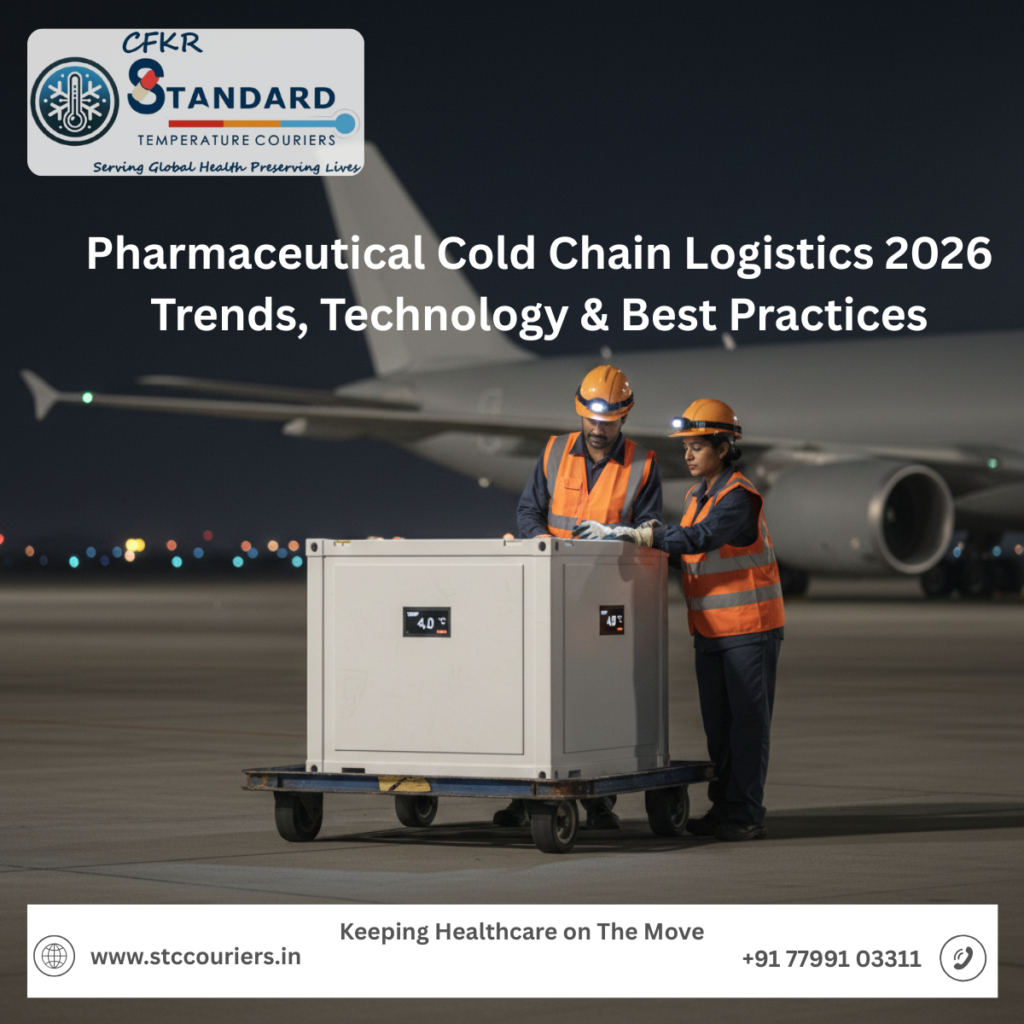
Pharmaceutical Cold Chain Logistics in 2026: What’s Changing and Why It Matters
The pharmaceutical industry is undergoing a major transformation, and cold chain logistics sits at the center of this change. As vaccines, biologics, insulin, and other temperature-sensitive medicines become more common, the need for precise, reliable, and fast logistics has intensified. In 2026, cold chain logistics is no longer treated as a support activity; it is a strategic function that directly impacts patient safety, regulatory compliance, and brand credibility. Companies today are evaluating their cold chain partners not only on cost, but on speed, visibility, and temperature integrity.
Why Cold Chain Logistics Is Mission-Critical Today
Pharmaceutical products are extremely sensitive to temperature variations, and even brief exposure outside approved ranges can render medicines ineffective or unsafe. This makes cold chain logistics fundamentally different from conventional transportation. It requires strict temperature control, specialized handling, rapid transit, and complete documentation throughout the shipment journey. As global pharmaceutical distribution expands and supply chains become more complex, cold chain logistics has evolved into a critical risk-management layer that protects both human lives and commercial value.
Technology Is Transforming Cold Chain Reliability
Technology has become the backbone of modern cold chain logistics. Real-time temperature monitoring, smart sensors, and automated alert systems now allow logistics teams to track shipment conditions continuously while goods are in transit. Advanced insulated packaging and temperature-controlled containers help maintain stability across long distances, while data-driven route planning minimizes delays and environmental exposure. These innovations enable logistics providers to prevent issues before they occur rather than reacting after damage is done, significantly improving shipment success rates.
Regulatory Compliance Is No Longer Optional
Regulatory authorities across the world are enforcing stricter standards for pharmaceutical transportation. Compliance with Good Distribution Practices and regional regulations requires validated packaging systems, trained personnel, detailed documentation, and complete traceability of temperature data. Regulatory compliance today goes beyond passing audits; it directly ensures patient safety and protects pharmaceutical brands from recalls, penalties, and reputational damage. Logistics partners who fail to meet these standards expose their clients to significant operational and legal risks.
Market Expansion and the Rise of Emerging Regions
While North America and Europe continue to lead in advanced cold chain infrastructure, emerging regions such as Asia-Pacific are experiencing rapid growth. Increased pharmaceutical manufacturing, vaccine exports, and healthcare investments are driving demand for dependable temperature-controlled logistics. India, in particular, is becoming a global pharmaceutical hub, making time-critical and air-based cold chain logistics essential for meeting international quality and delivery expectations.
Time-Critical and Emergency Deliveries Are the New Reality
In 2026, emergency pharmaceutical shipments are no longer rare events. Urgent vaccine replenishments, life-saving medicines, and critical diagnostic samples often require immediate dispatch with zero tolerance for delay. In these situations, speed alone is insufficient if temperature control is compromised. Effective cold chain logistics must balance rapid response with strict temperature management, supported by strong contingency planning and real-time communication throughout the shipment lifecycle.
STC Couriers’ Focused Approach to Cold Chain Logistics
At STC Couriers, our cold chain operations focus on air-only logistics with rapid response handling, ensuring minimal transit time and controlled temperature exposure. By prioritising air freight and time-critical coordination, STC Couriers supports pharmaceutical and healthcare clients with shipments where speed, safety, and temperature integrity are non-negotiable. This approach significantly reduces transit risks and enhances overall cold chain reliability, especially for urgent and high-value pharmaceutical consignments.
Transparency and Visibility as a Trust Factor
Modern pharmaceutical clients expect complete transparency throughout the logistics process. Real-time visibility into shipment location, temperature conditions, and delivery timelines has become a standard expectation rather than a premium feature. Transparency builds trust, enables faster decision-making, and allows corrective action before issues escalate. In a highly regulated environment, visibility is not just operational convenience; it is a key element of long-term client confidence.
Conclusion:
Pharmaceutical cold chain logistics in 2026 is defined by precision, speed, compliance, and accountability. As temperature-sensitive therapies continue to grow, companies must adopt advanced technologies, strengthen compliance frameworks, and partner with logistics providers that specialize in time-critical cold chain operations. In an industry where every degree and every minute matters, the right cold chain strategy is no longer optional — it is essential for sustainable growth and patient safety.
Frequently Asked Questions (FAQ)
1. What is pharmaceutical cold chain logistics and why is it critical?
Pharmaceutical cold chain logistics involves transporting temperature-sensitive medicines under controlled conditions to maintain safety and effectiveness. It is critical because even small temperature deviations can compromise drug quality, patient safety, and regulatory compliance.
2. How does technology improve reliability in cold chain logistics?
Technology improves cold chain reliability through real-time temperature monitoring, smart sensors, and automated alerts that track shipment conditions during transit. These tools help detect issues early and prevent temperature excursions before damage occurs.
3. Why is air freight important for time-critical pharmaceutical shipments?
Air freight is essential for time-critical pharmaceutical shipments because it minimizes transit time and reduces temperature exposure risks. It is especially important for urgent vaccines, biologics, and life-saving medicines where speed and temperature integrity are equally critical.
4. What regulations apply to pharmaceutical cold chain transportation?
Pharmaceutical cold chain transportation must comply with Good Distribution Practices and regional regulatory standards. These regulations require validated packaging, trained handling personnel, temperature traceability, and complete shipment documentation.
5. How does STC Couriers handle emergency pharmaceutical deliveries?
STC Couriers handles emergency pharmaceutical deliveries through air-only logistics with rapid response coordination. This approach ensures minimal transit time, controlled temperature exposure, and real-time visibility for urgent and high-value medical consignments.