
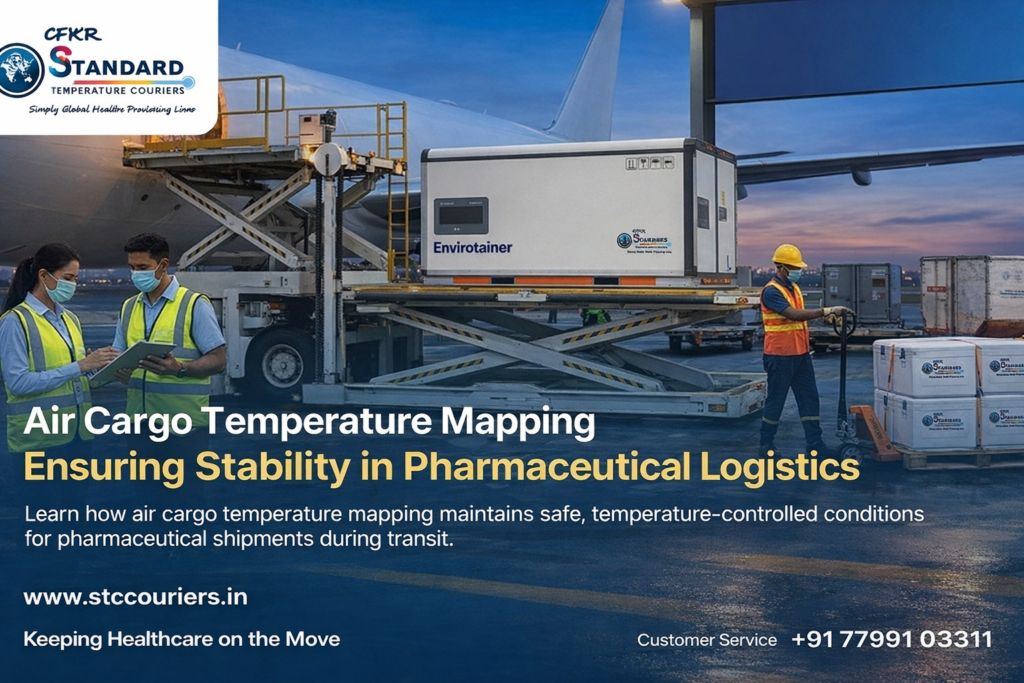
Air cargo temperature mapping plays a critical role in pharmaceutical logistics by ensuring stable temperature conditions during transit. In pharmaceutical logistics, maintaining the right temperature is not just a technical requirement, it is a responsibility. Medicines, vaccines, and biologics are highly sensitive to environmental changes, and even a slight variation can impact their effectiveness. While most discussions focus on speed or packaging, there is another critical aspect that often stays behind the scenes: temperature mapping.
Air cargo temperature mapping in pharmaceutical logistics plays a key role in understanding how temperature behaves throughout the journey. It is not enough to assume that cargo holds or storage areas maintain uniform conditions. In reality, temperature can vary across different zones, and identifying these variations is essential for maintaining product integrity.
When pharmaceutical shipments move through airports, aircraft, and handling zones, they pass through multiple environments. Each of these environments can influence temperature in different ways. Without proper mapping, these variations can go unnoticed, increasing the risk of temperature excursions.
Understanding Temperature Mapping in Air Cargo
Temperature mapping is essentially the process of measuring and analyzing how temperature is distributed within a specific environment. In the context of air cargo, it involves studying conditions across cargo terminals, storage rooms, aircraft compartments, and handling areas.
This process helps logistics teams understand where temperature fluctuations are likely to occur. It also provides clarity on how external factors such as weather, handling time, and airflow can affect the shipment.
In pharmaceutical logistics, this level of understanding is critical. Products are not just being transported they are being preserved under strict conditions. Temperature mapping ensures that every part of the journey supports that requirement.
Why Air Cargo Temperature Mapping is Important in Pharmaceutical Logistics
One of the biggest misconceptions in logistics is that temperature-controlled environments are always stable. In reality, even controlled spaces can have variations.
For example, In air cargo temperature mapping a cargo hold inside an aircraft may not maintain the same temperature throughout. Certain areas may experience slight differences due to airflow patterns or proximity to external surfaces. Similarly, airport storage areas can be influenced by door openings, loading activity, or ambient weather conditions.
These variations may seem minor, but in pharmaceutical logistics, even a small deviation can have consequences. Temperature mapping helps uncover these hidden inconsistencies and allows logistics providers to address them before they become a problem.
How Temperature Variations Occur During Air Transport
Air cargo logistics involves multiple stages, and each stage introduces its own challenges. When a shipment moves from pickup to airport handling, then to aircraft loading, and finally to delivery, it encounters different environmental conditions.
Weather plays a major role, especially in a country like India where temperatures can vary significantly across regions. A shipment moving from a cooler city to a warmer one may experience environmental stress during transit.
Handling time is another factor. Delays in air cargo temperature mapping loading or unloading can expose shipments to external temperatures. Even short exposure can impact sensitive products if not properly managed.
Airflow inside aircraft compartments can also influence temperature distribution. Some areas may receive more consistent cooling, while others may experience slight variations.
Temperature mapping helps identify these patterns and ensures that appropriate measures are taken to maintain stability.
Preventing Temperature Excursions Through Mapping
Temperature excursions are one of the most serious risks in pharmaceutical logistics. They occur when products are exposed to conditions outside their required temperature range. According to World Health Organization guidelines, maintaining temperature control is critical in pharmaceutical logistics.
Air cargo temperature mapping helps identify temperature variations across different zones during pharmaceutical transport. In many cases, excursions are not caused by major failures but by small, unnoticed variations. This is where temperature mapping becomes valuable.
By analyzing temperature distribution, logistics teams can identify potential risk areas and adjust their processes accordingly. This may involve improving packaging methods, optimizing handling procedures, or adjusting storage practices.
Instead of reacting to problems after they occur, air cargo temperature mapping allows a proactive approach. It helps prevent issues before they impact the shipment.
The Role of Compliance in Temperature Mapping
Pharmaceutical logistics operates under strict regulatory guidelines. Maintaining temperature control is not just about quality, in air cargo temperature mapping it is also about compliance.
Regulatory frameworks require proper documentation and validation of temperature conditions throughout the supply chain. Temperature mapping provides the data needed to support these requirements.
It helps demonstrate that storage and transport environments are controlled and consistent. This is especially important during audits and inspections, where proof of compliance is essential.
By incorporating temperature mapping into logistics operations, companies can strengthen their compliance processes and reduce regulatory risk.
How Technology Supports Temperature Mapping
Modern logistics has evolved significantly with the use of technology. Temperature mapping is now supported by advanced tools that provide accurate and continuous data.
Data loggers and sensors are used to record temperature at different points within a shipment or storage area. These devices help create a detailed picture of how temperature behaves over time.
In some cases, real-time monitoring systems allow logistics teams to track conditions as they change. This provides immediate visibility and enables quick action if any deviation is detected.
Technology not only improves accuracy but also enhances confidence. It allows logistics providers to make informed decisions based on real data rather than assumptions.
Ensuring Stability in Air Cargo Pharmaceutical Logistics
Maintaining temperature stability in air cargo requires more than just equipment. It requires coordination, planning, and attention to detail at every stage of the process.
From the moment a shipment is prepared for transport to the time it reaches its destination, every step must be aligned with temperature control requirements.
Understanding how temperature behaves in different environments allows logistics teams to design better processes. It also helps in selecting the right packaging solutions and handling methods.
Consistency is the key. When every stage of the journey is managed with the same level of care, the risk of temperature variation is significantly reduced.
How STC Approaches Temperature-Sensitive Air Logistics
STC focuses on handling temperature-sensitive shipments with precision and reliability. Air cargo logistics is not just about speed it is about ensuring that products arrive in the same condition in which they were dispatched.
By understanding air cargo temperature mapping pharmaceutical logistics, the importance of temperature behavior and incorporating structured handling practices, STC ensures that pharmaceutical shipments are managed carefully throughout the journey.
The focus remains on maintaining stability, minimizing risk, and ensuring that every shipment meets the required standards.
Conclusion
Air cargo temperature mapping is an essential part of pharmaceutical logistics. It provides the insight needed to understand and control temperature conditions during transit.
In an industry where even minor variations can have serious consequences, relying on assumptions is not enough. Temperature mapping brings clarity, control, and confidence to the logistics process.
As pharmaceutical supply chains continue to grow and evolve, the importance of precise temperature management will only increase. Air cargo logistics, supported by proper mapping and monitoring, will remain a key factor in ensuring safe and reliable delivery.
Frequently Asked Questions
What is temperature mapping in air cargo pharmaceutical logistics?
Why is temperature mapping important for pharmaceutical shipments?
How does temperature mapping help prevent temperature excursions?
Where is temperature mapping conducted in air cargo logistics?