
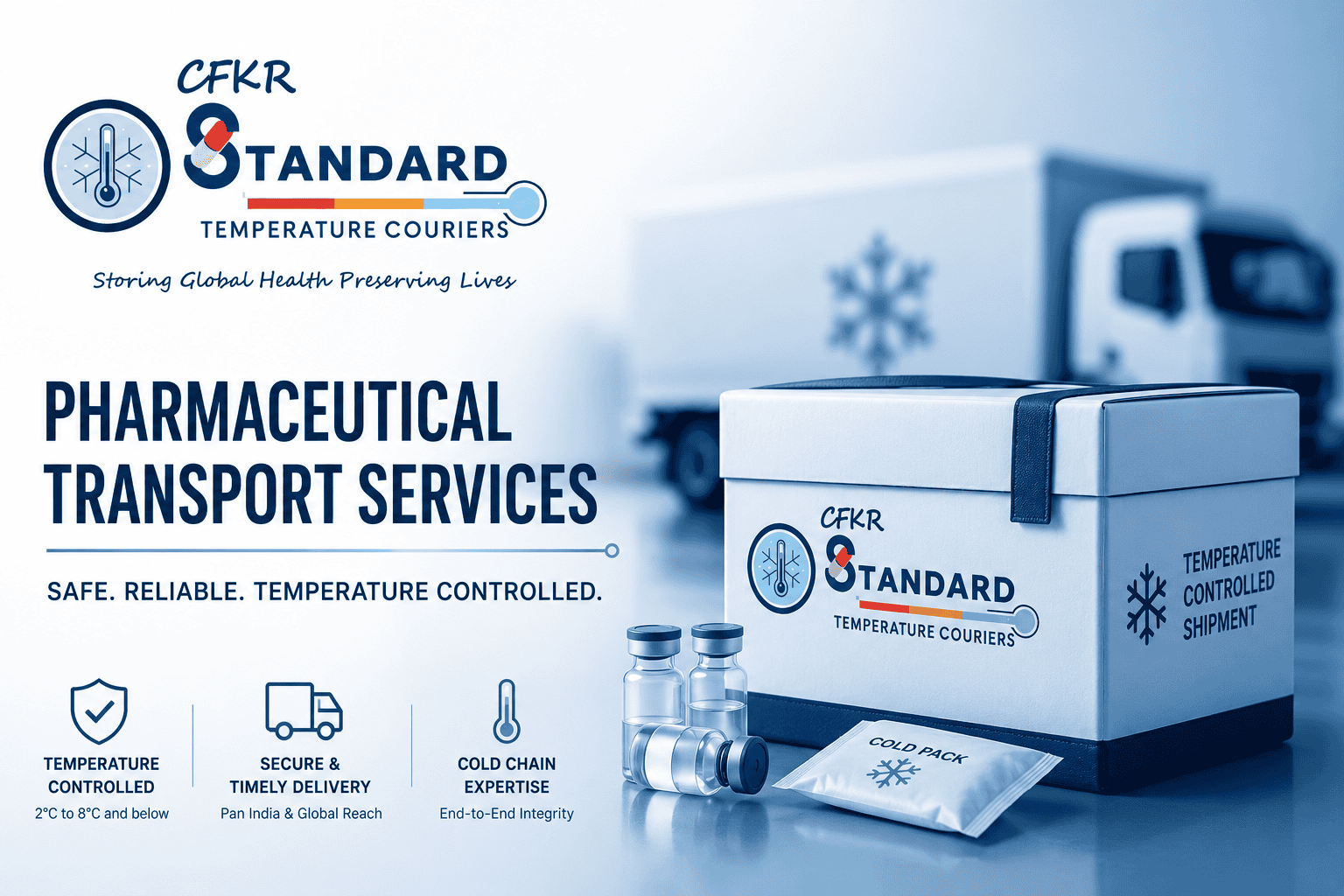
Healthcare products save lives only when they reach the right destination in the right condition. Medicines, vaccines, clinical trial samples, laboratory specimens, and biologics often require strict temperature management during transportation. Even a small temperature variation can affect product quality, safety, and effectiveness. This is why pharmaceutical transport services play a critical role in the healthcare supply chain.
As pharmaceutical products become more advanced and sensitive, transportation requirements continue to increase. Modern logistics providers must ensure product integrity, regulatory compliance, real-time monitoring, and timely delivery across local, national, and international routes.
At STC Couriers, we understand that pharmaceutical logistics is more than moving shipments from one place to another. It is about protecting patient safety and maintaining the quality of healthcare products throughout the journey.
Understanding Pharmaceutical Transport Services
Pharmaceutical transport services involve the specialized movement of healthcare products under controlled conditions. Unlike standard courier services, pharmaceutical transportation requires trained personnel, validated packaging, temperature monitoring systems, and strict operational procedures.
Products commonly transported through pharmaceutical logistics include prescription medicines, vaccines, biological samples, blood products, diagnostic kits, clinical trial materials, and temperature-sensitive healthcare products.
The objective is simple. Every shipment must arrive in the same condition in which it left the manufacturing facility, laboratory, hospital, or distribution center.
Why Temperature Control Matters
Temperature is one of the most important factors in pharmaceutical transportation. Many products must remain within specific temperature ranges during transit.
Some products require refrigerated parcel delivery between 2°C and 8°C. Others may need frozen or deep-frozen transportation conditions. Certain biologics and cell therapies require ultra-low temperatures throughout the journey.
Exposure to unsuitable temperatures can result in product degradation, reduced effectiveness, regulatory violations, and financial losses.
The table below shows common pharmaceutical temperature requirements.
Product Type | Typical Temperature Range |
Standard Medicines | 15°C to 25°C |
Refrigerated Pharmaceuticals | 2°C to 8°C |
Vaccines | 2°C to 8°C |
Frozen Products | -20°C or below |
Cell and Gene Therapies | -80°C or below |
Maintaining these temperature ranges requires advanced temperature controlled shipping solutions supported by continuous monitoring and documentation.
The Growing Demand for Temperature Controlled Shipping
The pharmaceutical industry has experienced significant growth in recent years. New biologics, specialty medicines, and personalized treatments have increased the need for specialized logistics services.
Traditional transportation methods often cannot provide the level of control required for sensitive healthcare products. This has increased demand for temperature controlled shipping across the healthcare sector.
Temperature controlled transportation includes insulated packaging, refrigerated vehicles, thermal containers, temperature data loggers, GPS tracking, and real-time monitoring systems.
These technologies help logistics providers maintain product quality while ensuring complete visibility throughout the transportation process.
Pharmaceutical Transport Services vs Standard Courier Services
Many organizations assume that pharmaceutical products can be shipped using conventional courier services. However, there are major differences between the two.
Feature | Pharmaceutical Transport Services | Standard Courier Services |
Temperature Monitoring | Continuous | Usually Not Available |
Regulatory Compliance | Mandatory | Limited |
Specialized Packaging | Required | Basic Packaging |
Product Handling | Trained Personnel | General Handling |
Shipment Documentation | Detailed | Standard Documentation |
Risk Management | Advanced | Basic |
The comparison clearly shows why healthcare products require dedicated pharmaceutical transport services rather than conventional logistics solutions.
The Role of Refrigerated Parcel Delivery
Refrigerated parcel delivery is essential for transporting temperature-sensitive pharmaceutical products. These services maintain controlled environments from pickup to final delivery.
Hospitals, pharmacies, laboratories, research centers, and healthcare distributors depend on refrigerated logistics for critical shipments.
A successful refrigerated parcel delivery process typically includes temperature-qualified packaging, cold chain monitoring, secure transportation, and delivery verification.
Without these measures, temperature-sensitive products may become unusable before reaching their destination.
How Cold Chain Logistics Protect Pharmaceutical Products
Cold chain logistics refers to the uninterrupted management of temperature-sensitive products throughout storage and transportation.
The cold chain begins at manufacturing facilities and continues through warehouses, transportation hubs, distribution centers, healthcare facilities, and end users.
Every stage must be carefully managed to prevent temperature excursions.
An effective cold chain includes:
Temperature-controlled storage facilities.
Validated packaging systems.
Refrigerated transportation vehicles.
Real-time shipment monitoring.
Emergency response procedures.
Quality assurance documentation.
These components work together to ensure pharmaceutical products remain safe and effective during transportation.
Challenges in Pharmaceutical Transportation
Pharmaceutical logistics involves unique challenges that require specialized expertise.
One major challenge is maintaining temperature consistency across long-distance shipments. Environmental conditions, transit delays, and handling errors can impact shipment integrity.
Regulatory compliance is another critical concern. Pharmaceutical shipments must meet strict industry standards and documentation requirements.
International transportation introduces additional complexities, including customs clearance, cross-border regulations, and varying transportation infrastructures.
Security is also important. High-value pharmaceutical products must be protected against theft, tampering, and unauthorized access.
Addressing these challenges requires experienced logistics providers with established pharmaceutical transportation capabilities.
Regulatory Requirements in Pharmaceutical Logistics
The pharmaceutical industry operates under strict regulatory frameworks designed to protect product quality and patient safety.
Transport providers must follow guidelines related to storage, handling, transportation, and documentation.
Regulatory compliance often includes temperature monitoring records, shipment validation reports, standard operating procedures, and quality management systems.
Organizations that fail to maintain compliance may face product recalls, financial losses, legal consequences, and reputational damage.
For this reason, pharmaceutical companies carefully select logistics partners with proven compliance capabilities.
Technology in Modern Pharmaceutical Transport Services
Technology has transformed pharmaceutical logistics over the past decade.
Advanced monitoring systems provide real-time visibility into shipment conditions throughout transit.
GPS tracking enables logistics teams to monitor vehicle locations and estimated delivery times.
Temperature sensors continuously record environmental conditions and immediately alert operators if temperature deviations occur.
Cloud-based logistics platforms provide access to shipment data, compliance reports, and transportation records.
The table below highlights the impact of technology on pharmaceutical transportation.
Technology | Benefit |
GPS Tracking | Real-Time Shipment Visibility |
Temperature Sensors | Continuous Temperature Monitoring |
Data Loggers | Regulatory Documentation |
Cloud Platforms | Centralized Shipment Management |
Automated Alerts | Faster Issue Resolution |
These technologies help improve reliability, compliance, and operational efficiency.
Temperature Controlled Logistics India: Market Growth and Opportunities
The demand for temperature controlled logistics India services is growing rapidly.
Several factors are driving this expansion, including increasing pharmaceutical production, vaccine distribution requirements, clinical research activities, and healthcare infrastructure development.
India has become a major global pharmaceutical manufacturing hub. As production volumes increase, reliable logistics solutions become increasingly important.
Healthcare organizations require transportation partners capable of managing sensitive shipments across urban centers, remote locations, and international markets.
Temperature controlled logistics India providers play a key role in supporting healthcare delivery while maintaining product integrity throughout the supply chain.
Choosing the Right Pharmaceutical Transport Partner
Selecting the right logistics partner is one of the most important decisions for pharmaceutical organizations.
The provider should demonstrate experience in pharmaceutical transportation, temperature-controlled logistics, regulatory compliance, and cold chain management.
Organizations should evaluate several factors before making a decision.
Evaluation Factor | Importance |
Pharmaceutical Experience | High |
Temperature Monitoring Capabilities | High |
Regulatory Compliance | High |
Nationwide Coverage | High |
Real-Time Tracking | Medium |
Emergency Support | High |
A reliable transportation partner reduces operational risks and helps maintain product quality across the supply chain.
Pharmaceutical Transport Services for Clinical Trials
Clinical trials require highly specialized transportation solutions.
Research materials, investigational drugs, biological samples, and laboratory specimens often have strict temperature and handling requirements.
Transportation delays or temperature excursions can compromise research results and impact trial timelines.
Specialized pharmaceutical transport services help research organizations maintain sample integrity, regulatory compliance, and chain-of-custody requirements throughout the study process.
Reliable logistics support is essential for successful clinical trial operations.
Sustainability in Pharmaceutical Logistics
Sustainability is becoming increasingly important in healthcare transportation.
Organizations are seeking ways to reduce environmental impact while maintaining shipment quality and compliance.
Many logistics providers are adopting reusable packaging systems, fuel-efficient transportation methods, optimized delivery routes, and energy-efficient storage facilities.
These initiatives help reduce carbon emissions without compromising temperature control performance.
As sustainability expectations continue to grow, environmentally responsible logistics practices will become a standard industry requirement.
Future Trends in Pharmaceutical Transportation
The future of pharmaceutical transport services will be shaped by innovation, automation, and advanced monitoring technologies.
Artificial intelligence is expected to improve route optimization and risk management.
Internet of Things devices will provide even greater visibility into shipment conditions.
Predictive analytics will help identify potential transportation issues before they occur.
Automation will improve operational efficiency while reducing manual errors.
These advancements will strengthen pharmaceutical supply chains and improve healthcare product distribution worldwide.
Why Businesses Trust STC Couriers
Healthcare organizations require transportation partners that understand the unique requirements of pharmaceutical logistics.
STC Couriers provides specialized solutions designed to support temperature-sensitive healthcare shipments with reliability, compliance, and operational excellence.
Our services focus on maintaining product integrity throughout the transportation process through advanced monitoring, secure handling procedures, and temperature-controlled logistics solutions.
Whether the requirement involves refrigerated parcel delivery, clinical trial logistics, laboratory shipments, or temperature controlled shipping, STC Couriers is committed to ensuring every shipment reaches its destination safely and on time.
Conclusion
Pharmaceutical transport services have become a critical part of modern healthcare operations. As medicines, vaccines, biologics, and research materials become increasingly temperature sensitive, the importance of specialized transportation continues to grow.
Successful pharmaceutical logistics depends on temperature control, regulatory compliance, advanced technology, secure handling, and experienced transportation partners.
Organizations that invest in professional temperature controlled shipping and refrigerated parcel delivery services can protect product quality, maintain compliance, and support better healthcare outcomes.
As the pharmaceutical industry continues to evolve, reliable temperature controlled logistics India solutions will remain essential for ensuring safe and effective healthcare product distribution across the country and around the world.