
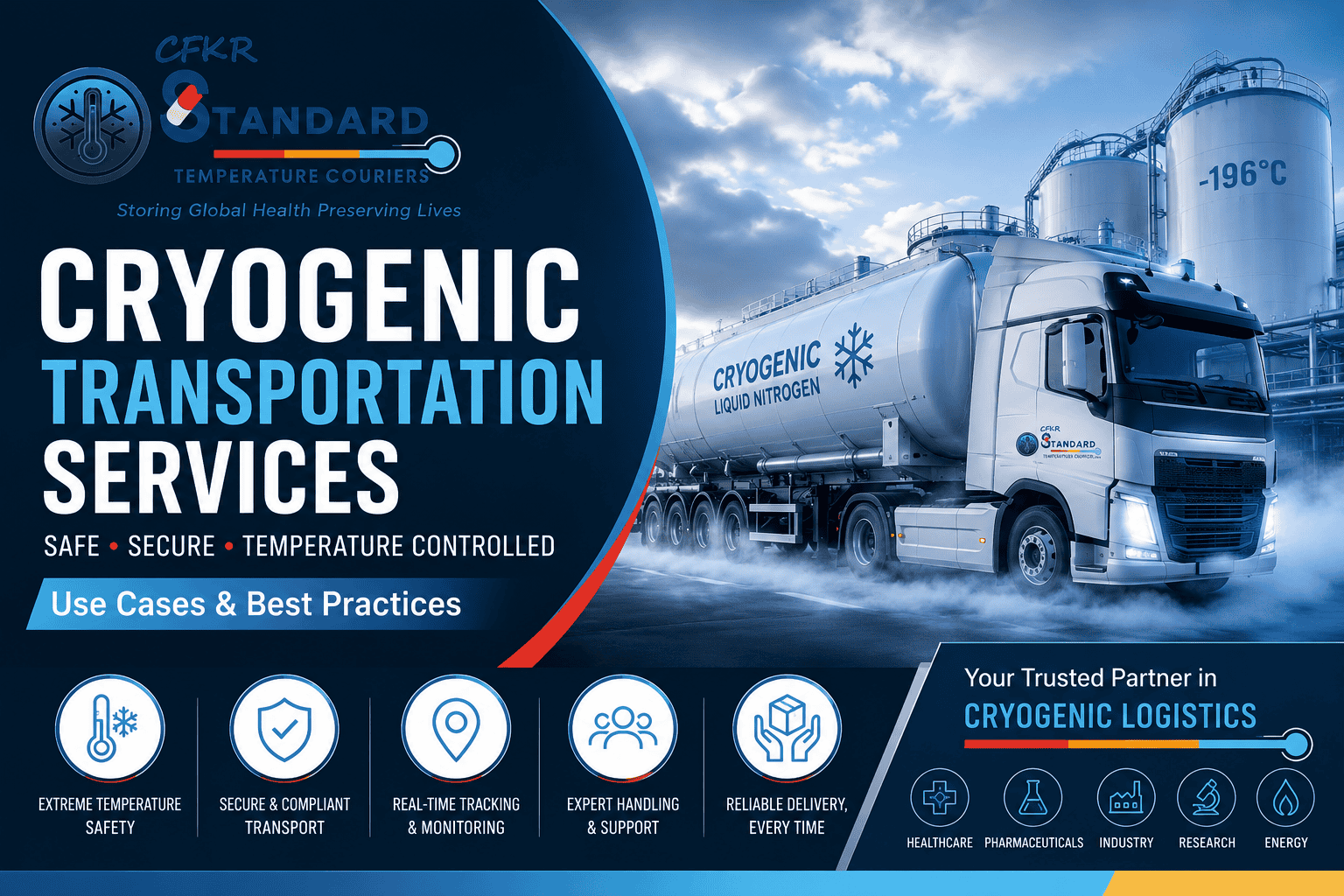
STC Couriers‘ cryogenic transportation services with a temperature-controlled tanker truck, ensuring safe, reliable, and compliant logistics for cryogenic materials across India.
Cryogenic transportation services play an important role in industries that depend on extremely low temperatures to keep products safe and effective. Whether it is liquid nitrogen for healthcare, liquid oxygen for hospitals, liquefied natural gas for energy, or specialty gases for manufacturing, proper transportation is essential. A small mistake during handling or transit can affect product quality, create safety risks, and lead to financial losses.
As industries continue to grow, the demand for reliable cryogenic logistics is increasing across India. Healthcare facilities need a constant supply of medical gases, research laboratories depend on cryogenic materials for scientific work, and industrial manufacturers require temperature-sensitive gases for production. Every shipment must maintain stable conditions from pickup to final delivery.
This is where professional cryogenic transportation services make a significant difference. A trusted logistics partner follows strict safety standards, uses specialized vehicles, monitors shipments throughout the journey, and ensures every delivery reaches its destination in the required condition.
At STC Couriers, we understand that cryogenic logistics is more than moving products from one place to another. It is about maintaining quality, ensuring compliance, protecting valuable materials, and delivering confidence to customers across the supply chain.
What Are Cryogenic Transportation Services?
Cryogenic transportation services involve the safe movement of materials stored at extremely low temperatures. These materials are usually transported in specially designed insulated containers that maintain their required temperature throughout the journey.
Unlike conventional transportation, cryogenic logistics requires advanced equipment, trained personnel, continuous monitoring, and strict safety procedures. The transportation process must prevent temperature fluctuations, pressure build-up, contamination, and product loss.
Industries that commonly depend on cryogenic transportation include healthcare, pharmaceuticals, biotechnology, food processing, aerospace, chemicals, manufacturing, and energy.
Why Maintaining Low Temperatures Matters
Cryogenic products are highly sensitive to temperature changes. Even a short period of exposure to higher temperatures can reduce product quality or make materials unusable.
For example, hospitals rely on liquid oxygen for patient care. Research laboratories use liquid nitrogen to preserve biological samples. Manufacturing industries use industrial gases for welding, metal treatment, and electronics production. Every shipment must arrive safely without interruption.
Reliable cryogenic transportation protects product quality, reduces waste, supports regulatory compliance, and improves customer confidence.
Common Materials Transported Through Cryogenic Logistics
Cryogenic transportation covers a wide range of products across multiple industries.
Medical oxygen supports hospitals and emergency healthcare services where uninterrupted supply is critical.
Liquid nitrogen is widely used for biological sample preservation, laboratory research, food freezing, and industrial cooling applications.
Liquid argon is commonly used in metal fabrication, welding, and semiconductor manufacturing.
Liquid carbon dioxide is transported for food processing, beverage production, pharmaceutical applications, and industrial manufacturing.
Liquefied natural gas is transported to support industrial operations and energy distribution where pipeline infrastructure is limited.
Each product has unique storage requirements, making professional handling essential throughout transportation.
Industries That Depend on Cryogenic Transportation Services
Healthcare and Hospitals
Hospitals require uninterrupted delivery of medical gases every day. Oxygen shortages can directly affect patient care, making reliable logistics one of the most important parts of healthcare operations.
Cryogenic transportation ensures hospitals receive medical oxygen safely while maintaining required purity standards.
Pharmaceutical Industry
Pharmaceutical companies transport vaccines, biological materials, clinical trial samples, and laboratory chemicals that require controlled environments.
Maintaining stable temperatures throughout transit helps preserve product effectiveness and supports regulatory compliance.
Biotechnology and Research
Research organizations frequently transport frozen biological samples, stem cells, blood products, tissues, and laboratory specimens.
Any temperature variation can damage years of valuable research, making professional cryogenic logistics essential.
Food Industry
Food manufacturers use cryogenic freezing to maintain freshness, improve shelf life, and preserve product quality.
Frozen seafood, meat, bakery products, dairy products, and ready-to-eat meals often rely on cryogenic transportation.
Industrial Manufacturing
Many manufacturing facilities depend on industrial gases during production.
Automotive manufacturing, electronics production, aerospace engineering, and metal fabrication all require reliable deliveries of cryogenic materials.
Challenges in Cryogenic Transportation
Cryogenic logistics presents several operational challenges that require careful planning and advanced technology.
Maintaining consistent temperatures throughout long-distance transportation is one of the biggest challenges. Specialized insulated tanks help reduce temperature fluctuations while minimizing product evaporation.
Safety is another major concern. Cryogenic liquids expand rapidly when exposed to warmer temperatures. Proper pressure control systems and trained professionals are necessary to prevent accidents.
Transportation regulations also vary depending on the product being transported. Logistics providers must comply with national safety standards, hazardous material regulations, and industry-specific requirements.
Road conditions, weather changes, and unexpected delivery delays can also affect shipments. Professional logistics companies use route planning and real-time shipment monitoring to minimize these risks.
Key Features of Reliable Cryogenic Transportation Services
Choosing the right logistics partner involves more than comparing prices. Experience, equipment quality, safety standards, and operational capabilities all play important roles.
Modern cryogenic transport vehicles are equipped with insulated tanks specifically designed to maintain extremely low temperatures during transit.
Real-time GPS tracking allows customers to monitor shipment progress while improving transparency.
Temperature monitoring systems continuously record storage conditions throughout transportation.
Emergency response procedures help reduce risks during unexpected situations.
Regular equipment inspections improve operational reliability and reduce the chance of technical failures.
Experienced drivers and logistics professionals understand how to safely handle cryogenic materials under different operating conditions.
Best Practices for Safe Cryogenic Transportation
Successful cryogenic transportation begins long before the vehicle leaves the warehouse.
Proper packaging is the first step. Every storage container must meet industry standards and be inspected before loading.
Vehicles should be thoroughly checked to ensure insulation systems, pressure controls, and monitoring equipment are functioning correctly.
Shipment routes should be planned carefully to reduce travel time and avoid unnecessary delays.
Drivers should receive specialized training in handling cryogenic materials, emergency response procedures, and regulatory compliance.
Continuous monitoring during transportation allows logistics teams to respond quickly if any issue develops.
Regular communication between logistics providers and customers helps improve coordination throughout the delivery process.
Cryogenic Transportation vs Standard Cold Chain Logistics
Although both services involve temperature-sensitive transportation, they operate under different conditions.
| Feature | Cryogenic Transportation Services | Standard Cold Chain Logistics |
|---|---|---|
| Temperature Range | Below -150°C | Usually between -25°C and 8°C |
| Products | Liquid gases, biological samples, LNG | Medicines, vaccines, food |
| Equipment | Cryogenic tanks and insulated vessels | Refrigerated trucks and cold boxes |
| Safety Requirements | Very High | High |
| Monitoring | Continuous pressure and temperature monitoring | Temperature monitoring |
Understanding these differences helps businesses choose the most suitable logistics solution for their products.
How Technology Improves Cryogenic Transportation
Technology has significantly improved cryogenic logistics over the past decade.
GPS tracking allows businesses to monitor shipments in real time.
Digital temperature sensors record environmental conditions throughout the journey.
Automated alerts notify logistics teams if temperatures move outside acceptable limits.
Predictive maintenance systems help identify equipment issues before they cause transportation delays.
Cloud-based logistics platforms improve shipment visibility and simplify documentation.
These innovations help reduce risks while improving delivery reliability for customers.
conclusion
Cryogenic transportation services are essential for industries that depend on products stored at extremely low temperatures. From healthcare and pharmaceuticals to biotechnology, manufacturing, and energy, every shipment requires careful handling, specialized equipment, and strict temperature control. Even a small change in temperature can affect product quality, safety, and compliance.
Choosing an experienced logistics partner helps businesses reduce risks, improve supply chain efficiency, and ensure timely deliveries. A reliable provider uses advanced monitoring systems, trained professionals, and well-maintained cryogenic vehicles to protect sensitive materials throughout the journey.
At STC Couriers, we are committed to delivering safe, reliable, and compliant cryogenic transportation services across India. Our expertise, modern logistics infrastructure, and customer-focused approach help businesses transport temperature-sensitive products with confidence. Whether you need transportation for medical gases, laboratory samples, industrial gases, or other cryogenic materials, STC Couriers provides dependable solutions designed to meet your business needs while maintaining the highest standards of safety and quality.