
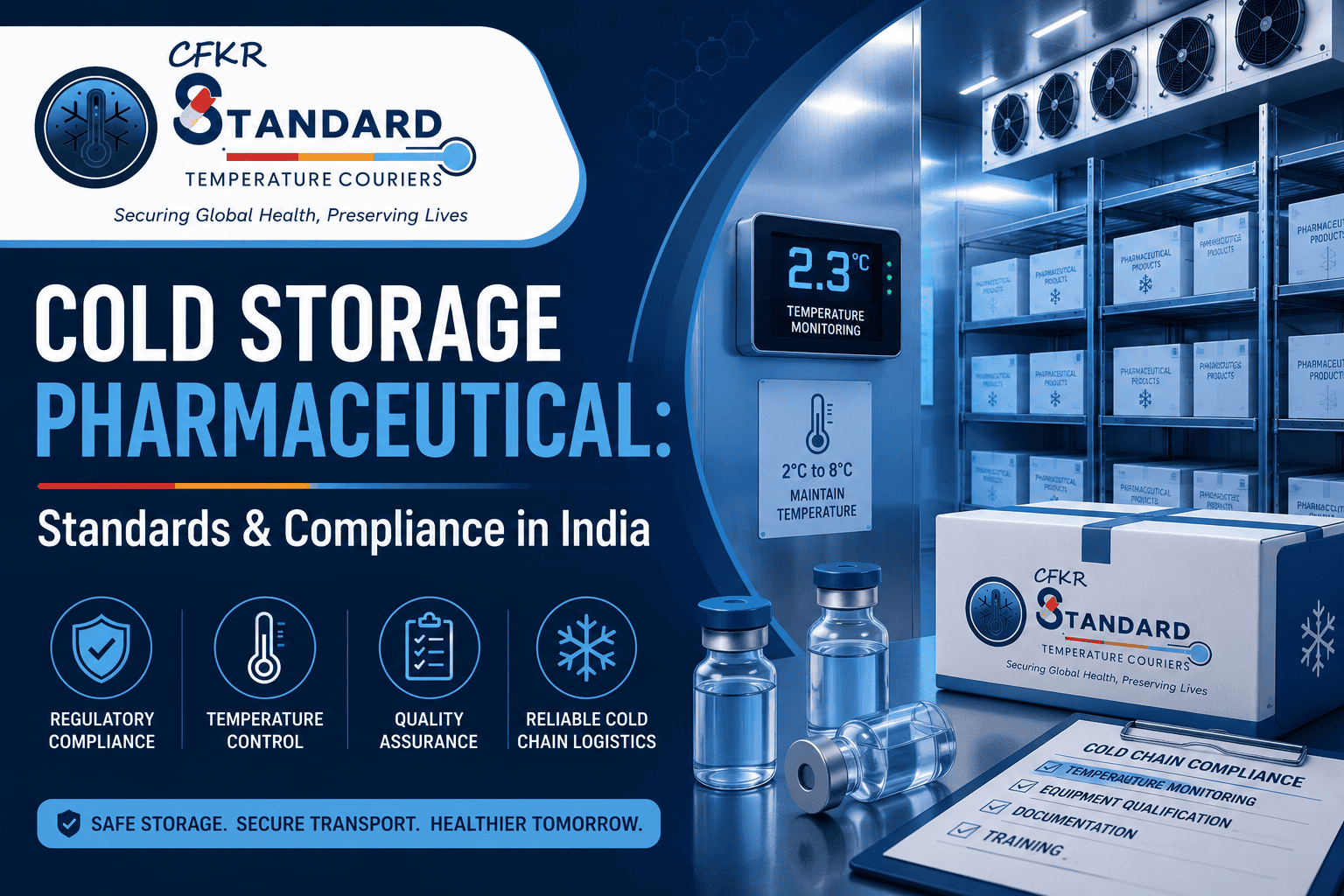
A modern pharmaceutical cold storage facility with temperature-controlled storage, compliance monitoring, and cold chain solutions by STC Couriers.
The pharmaceutical industry depends on one important factor that often goes unnoticed by the end user. Medicines must be stored at the right temperature from the time they are manufactured until they reach hospitals, pharmacies, clinics, and patients. Even a small change in temperature can reduce the quality of many medicines, vaccines, insulin, biologics, and laboratory products. This is why cold storage pharmaceutical systems have become an essential part of healthcare logistics in India.
India is one of the world’s largest producers of pharmaceutical products. Every day, millions of temperature-sensitive medicines travel across cities and states. Without proper cold storage facilities and transportation, these products can lose their effectiveness, leading to financial losses and serious health risks.
As the pharmaceutical industry continues to grow, companies must follow strict storage standards, government regulations, and quality management practices. Businesses also need reliable logistics partners that understand temperature-controlled transportation. STC Couriers supports pharmaceutical companies by providing dependable cold chain logistics solutions designed to protect temperature-sensitive products throughout the supply chain.
In this guide, you will learn what pharmaceutical cold storage means, the standards followed in India, compliance requirements, storage temperatures, and why choosing the right logistics partner is critical.
What is Cold Storage Pharmaceutical?
Cold storage pharmaceutical refers to the controlled storage of medicines, vaccines, biological samples, diagnostic kits, and healthcare products at specific temperatures. These products are kept inside temperature-controlled warehouses, cold rooms, refrigerators, freezers, and insulated transport vehicles to maintain their quality.
Unlike ordinary warehouse storage, pharmaceutical cold storage requires continuous temperature monitoring. Every product has a recommended storage temperature provided by the manufacturer. If that temperature changes beyond the approved range, the medicine may become less effective or completely unusable.
Many pharmaceutical products cannot recover once exposed to incorrect temperatures. Even if they look normal from the outside, their chemical composition may have changed. This is why pharmaceutical companies invest heavily in qualified cold storage facilities.
Why Cold Storage is Important for Pharmaceuticals
Temperature-sensitive medicines are developed after years of research and strict quality testing. Their safety depends on maintaining stable environmental conditions throughout storage and transportation.
When medicines are exposed to excessive heat or freezing temperatures, several problems may occur. The active ingredients can degrade, vaccines may lose their potency, insulin may become ineffective, and biological products can experience irreversible damage.
Proper cold storage pharmaceutical practices help pharmaceutical companies maintain product quality while meeting regulatory requirements. Hospitals and healthcare providers also benefit because they receive medicines that remain safe for patient use.
For patients, proper cold storage means better treatment outcomes and greater confidence in the medicines they receive.
Types of Pharmaceutical Products That Require Cold Storage
Many healthcare products require temperature-controlled storage during their lifecycle.
Vaccines are among the most sensitive pharmaceutical products because they can quickly lose effectiveness when stored outside recommended temperatures.
Insulin requires continuous cold storage before dispensing to patients.
Biological medicines contain proteins that become unstable when exposed to temperature fluctuations.
Blood plasma, laboratory reagents, diagnostic kits, clinical trial materials, specialty medicines, biotechnology products, and certain injectable drugs also require carefully controlled storage conditions.
As India’s pharmaceutical industry expands, the number of products requiring cold storage pharmaceutical facilities continues to increase.
Recommended Temperature Ranges
Different pharmaceutical products require different storage conditions. There is no single temperature suitable for every medicine.
| Product Type | Recommended Storage Temperature | Storage Requirement |
|---|---|---|
| Vaccines | 2°C to 8°C | Refrigerated storage |
| Insulin | 2°C to 8°C | Cold storage before use |
| Biological Medicines | 2°C to 8°C | Continuous monitoring |
| Blood Plasma | Below -20°C | Frozen storage |
| Laboratory Samples | Depends on product | Controlled environment |
| Clinical Trial Materials | Manufacturer guidelines | Validated cold chain |
Maintaining these temperatures throughout storage and transportation is known as preserving the cold chain. Once this chain is broken, product quality cannot always be restored.
Understanding the Pharmaceutical Cold Chain
The cold chain is a complete temperature-controlled process that begins when medicines leave the manufacturing facility and ends when they reach the healthcare provider or patient.
Each stage plays an important role. Products move through warehouses, refrigerated vehicles, distribution centers, hospitals, pharmacies, and healthcare facilities. At every point, temperatures must remain within approved limits.
A successful cold chain depends on trained personnel, qualified equipment, proper packaging, temperature monitoring systems, documented procedures, and regular inspections.
Companies like STC Couriers focus on maintaining temperature stability throughout transportation, helping pharmaceutical manufacturers reduce the risk of product damage.
Pharmaceutical Cold Storage Standards in India
India has established several regulations and quality standards for pharmaceutical storage and distribution. These standards ensure medicines remain safe throughout the supply chain.
One of the most important requirements comes from Good Distribution Practices (GDP). GDP focuses on maintaining medicine quality during transportation, storage, handling, and delivery.
Good Storage Practices (GSP) provide guidance on warehouse operations, environmental monitoring, equipment qualification, cleaning procedures, documentation, and inventory management.
Manufacturers are also expected to follow Good Manufacturing Practices (GMP), which include proper storage before products leave production facilities.
The Central Drugs Standard Control Organisation (CDSCO) regulates pharmaceutical products in India and ensures companies comply with applicable laws and quality standards.
The World Health Organization also publishes internationally recognized guidelines for pharmaceutical storage and distribution. Many Indian pharmaceutical companies follow these recommendations to meet global quality expectations.
Comparison of Standard Warehouse vs Pharmaceutical Cold Storage
The differences between ordinary warehousing and pharmaceutical cold storage are significant.
| Standard Warehouse | Cold Storage Pharmaceutical |
|---|---|
| General storage conditions | Temperature-controlled environment |
| Periodic inspection | Continuous temperature monitoring |
| Basic inventory records | Detailed compliance documentation |
| Standard transportation | Validated refrigerated transport |
| Limited monitoring systems | Real-time monitoring with alerts |
| Suitable for regular goods | Suitable for medicines and vaccines |
The comparison clearly shows why pharmaceutical products require specialized infrastructure rather than conventional storage facilities.
Compliance Requirements for Pharmaceutical Cold Storage
Compliance is much more than maintaining the right temperature. Pharmaceutical companies must document every activity that affects product quality.
Temperature records should be maintained continuously. Monitoring devices must be calibrated regularly to ensure accurate readings.
Warehouses should have backup power systems because even a short power failure can affect sensitive medicines.
Storage equipment should be validated before use to confirm that every section of the facility maintains the required temperature.
Staff members must receive proper training on handling pharmaceutical products, emergency procedures, documentation, and quality control.
Regular internal audits help identify problems before they become compliance issues.
Companies should also establish corrective and preventive action procedures to address any deviations from required standards.
These compliance measures protect both pharmaceutical companies and patients while supporting regulatory inspections.
Challenges in Pharmaceutical Cold Storage
Maintaining pharmaceutical cold storage in India presents several operational challenges.
The country’s climate varies significantly across regions. During summer, temperatures in many cities exceed 45°C, making cold chain transportation more demanding.
Long transportation distances also increase the risk of temperature deviations, especially when medicines move between manufacturing plants, warehouses, and remote healthcare facilities.
Power interruptions remain another challenge in certain locations. Reliable backup systems are necessary to prevent temperature fluctuations.
Proper documentation is equally important. Missing records or incomplete temperature logs can create compliance issues even when medicines have been stored correctly.
Choosing experienced cold chain logistics providers helps pharmaceutical companies overcome many of these challenges through specialized equipment, trained personnel, and continuous monitoring systems.
Conclusion
Maintaining proper cold storage pharmaceutical systems is essential for protecting the quality, safety, and effectiveness of temperature-sensitive medicines. As India’s pharmaceutical industry continues to grow, following storage standards, regulatory requirements, and cold chain best practices has become more important than ever. From maintaining the correct temperature to keeping accurate records and using validated equipment, every step plays a role in ensuring that medicines reach patients in the best possible condition.
Partnering with a trusted cold chain logistics provider can make compliance easier while reducing the risk of product loss and temperature excursions. STC Couriers offers reliable temperature-controlled logistics solutions designed to support pharmaceutical manufacturers, distributors, hospitals, and healthcare providers across India. With advanced monitoring systems, trained professionals, and a strong focus on quality, STC Couriers helps businesses maintain compliance and deliver pharmaceutical products safely and efficiently. Investing in the right cold storage and transportation solutions not only protects valuable medicines but also strengthens patient trust and supports better healthcare outcomes.
Frequently Asked Questions (FAQs)
1. What is cold storage pharmaceutical?
Cold storage pharmaceutical is the process of storing and transporting temperature-sensitive medicines, vaccines, insulin, biologics, and other healthcare products under controlled temperature conditions. It helps maintain product quality, safety, and effectiveness throughout the supply chain.
2. What temperature is required for pharmaceutical cold storage?
Most temperature-sensitive pharmaceutical products are stored between 2°C and 8°C. However, some medicines, blood products, and biological samples may require frozen or ultra-low temperature storage based on the manufacturer’s recommendations.
3. Which standards govern pharmaceutical cold storage in India?
Pharmaceutical cold storage in India follows standards such as Good Distribution Practices (GDP), Good Storage Practices (GSP), Good Manufacturing Practices (GMP), and regulations issued by the Central Drugs Standard Control Organisation (CDSCO) to ensure medicine quality and regulatory compliance.
4. Why choose STC Couriers for pharmaceutical cold chain logistics?
STC Couriers provides reliable temperature-controlled logistics solutions with continuous temperature monitoring, validated cold chain processes, secure handling, and nationwide distribution. These services help pharmaceutical companies maintain compliance and ensure medicines reach their destination safely.