
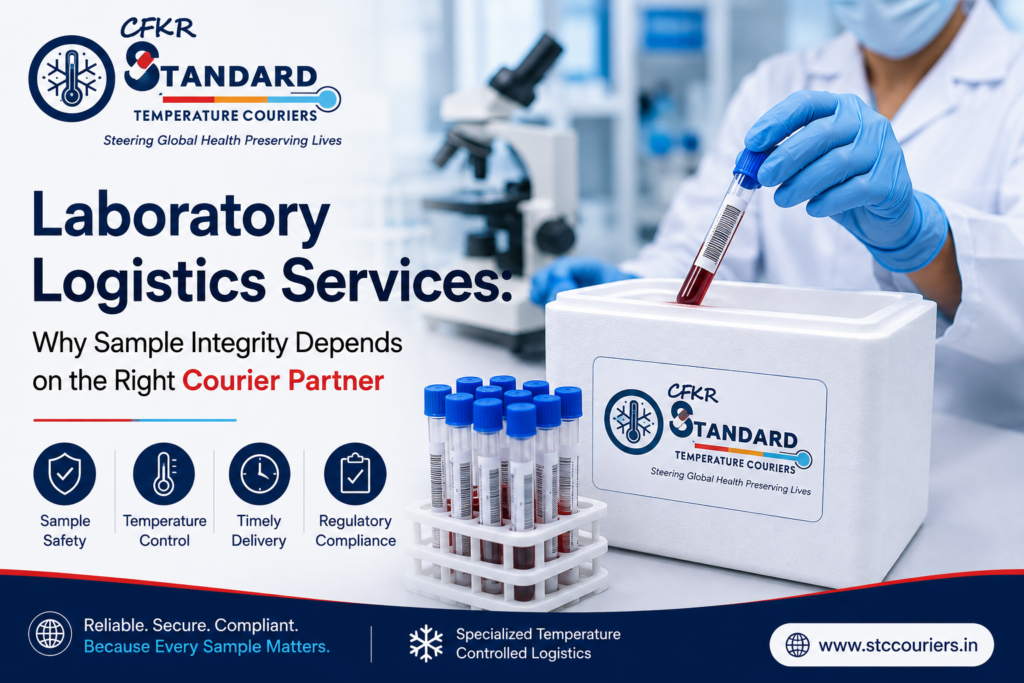
A single delayed shipment can invalidate weeks of clinical work. A single temperature excursion can turn a viable specimen into unusable waste. This is the reality that laboratory managers, hospital administrators, and pharmaceutical supply chain teams live with every day, and it is exactly why laboratory logistics services exist as a distinct discipline from general parcel delivery. When a courier company understands biological specimens, chain of custody requirements, and regulatory documentation, the difference shows up directly in test results, trial outcomes, and patient care. This article breaks down what laboratory logistics services actually require, where standard couriers fall short, and how STC Couriers has built its operation around the specific demands of labs, hospitals, and pharmaceutical companies that cannot afford a shipping mistake.
What Laboratory Logistics Services Actually Involve
Laboratory logistics services cover the movement of biological specimens, diagnostic samples, reagents, and related materials between collection sites, testing facilities, research centers, and storage locations. This sounds simple until you account for what each shipment actually contains. Blood samples, tissue biopsies, culture plates, and DNA extracts are all biologically active or degradable materials. Their value depends entirely on how carefully they are handled between pickup and delivery.
Unlike a retail package, a lab specimen cannot sit in a warehouse overnight or get rerouted through a regional sorting hub. It needs a direct, monitored, and often temperature controlled path from origin to destination. This is why laboratory logistics is treated as its own category within healthcare supply chains, distinct from standard freight or parcel services. The Centers for Disease Control and Prevention outlines detailed packaging and transport requirements for biological substances specifically because improper handling creates both safety risks and data integrity failures (CDC guidance on shipping biological materials).
For a lab, hospital, or research organization, choosing a laboratory logistics provider is not a procurement decision made once and forgotten. It is an ongoing operational dependency that affects diagnostic turnaround time, clinical trial timelines, and ultimately patient outcomes.
Why Standard Courier Companies Fail Laboratory Shipments
Most general courier companies are built around speed and volume. They optimize for getting the most packages through a network in the shortest time, which works well for retail goods but creates serious problems for biological specimens.
The Cold Chain Gets Broken Without Warning
Standard couriers rarely have dedicated cold chain infrastructure. A package requiring 2 to 8 degrees Celsius storage might sit in a delivery van with no active temperature control, or get transferred between vehicles without anyone checking the internal temperature. By the time the sample reaches the lab, it may already be compromised, and there is often no way to prove exactly when the excursion happened.
Chain of Custody Is Treated as an Afterthought
Regulatory and legal requirements around specimen handling demand a documented chain of custody, meaning every person who touches the sample and every location it passes through must be recorded. General courier services typically offer basic tracking numbers that show a shipment moved from point A to point B, but they do not capture the granular handoff documentation that laboratories, hospitals, and pharmaceutical sponsors need for audit purposes.
Staff Are Not Trained on Biohazard Handling
Drivers and handlers at general logistics companies are not typically trained in the Occupational Safety and Health Administration’s bloodborne pathogens standard or in International Air Transport Association dangerous goods regulations for Category B biological substances. Without this training, mishandling risks increase, and so does the chance of a shipment being rejected or delayed at a regulatory checkpoint (IATA Dangerous Goods Regulations overview).
Delivery Windows Are Not Guaranteed
A general courier’s “next day” delivery promise is built around business logistics, not biological viability. Labs frequently need same day or even same hour delivery for time sensitive specimens like fresh tissue for pathology or STAT lab orders from a hospital emergency department. Standard courier networks are simply not structured to guarantee this level of urgency consistently.
The Real Cost of Choosing the Wrong Laboratory Courier Services
The financial and clinical cost of a failed specimen transport is higher than most organizations initially estimate. A rejected blood sample means the patient has to be redrawn, which delays diagnosis and adds direct lab costs. A compromised clinical trial sample can jeopardize an entire study arm, since the College of American Pathologists and FDA both hold sponsors to strict specimen integrity standards during audits (FDA good clinical practice guidance).
Beyond the direct cost of redraws and repeat testing, there is a reputational cost. Hospitals and diagnostic labs that repeatedly experience delayed or compromised deliveries lose trust from referring physicians and patients. Pharmaceutical sponsors that experience recurring temperature excursions during trial logistics face scrutiny from regulatory bodies and increased monitoring requirements. None of this is abstract. It shows up in delayed drug approvals, in lost referral volume, and in avoidable operational cost.
This is precisely why organizations that have been burned by general courier services move toward specialized laboratory courier services with dedicated infrastructure, trained staff, and documented compliance processes. STC Couriers built its laboratory logistics division around solving exactly these failure points.
How STC Couriers Delivers Reliable Laboratory Logistics Services
STC Couriers approaches laboratory logistics as a specialized function, not a side offering bolted onto general delivery routes. Every part of the process, from vehicle selection to driver training, is designed around specimen integrity and regulatory compliance.
Temperature Controlled Transport
Specimens that require refrigeration, freezing, or ambient temperature stability are transported using validated packaging and monitored containers. Temperature is logged throughout transit, giving labs a verifiable record rather than an assumption. This matters for everything from routine blood chemistry panels to sensitive research samples that lose viability outside a narrow temperature band. STC Couriers’ cold chain transport services are built specifically to close the gap that general couriers leave open.
Chain of Custody Documentation
Every specimen handled through STC Couriers’ laboratory logistics services is tracked with a documented chain of custody, recording pickup time, handler identity, transit checkpoints, and delivery confirmation. This level of documentation supports audits from regulatory bodies and gives lab managers a defensible record if a specimen’s integrity is ever questioned.
Regulatory Compliance Built In
Drivers and handlers working on laboratory and pharmaceutical routes are trained on biohazard handling protocols and relevant transport regulations. This reduces the risk of shipments being flagged, delayed, or rejected due to improper packaging or handling documentation, and it keeps client organizations aligned with standards set by bodies like the World Health Organization for infectious substance transport (WHO guidance on transport of infectious substances).
Real Time Tracking and Direct Routing
Rather than routing specimens through centralized sorting hubs, STC Couriers uses direct point to point delivery for time sensitive shipments, paired with real time tracking so lab staff know exactly where a specimen is at any moment. This is particularly critical for STAT orders and same day diagnostic needs where every hour affects clinical decision making. Learn more about how routing works through the medical courier services page.
Pharmaceutical Logistics Services: A Specialized Extension of Lab Logistics
Pharmaceutical logistics services share many of the same requirements as laboratory transport but add layers of complexity around dosage stability, controlled substance handling, and clinical trial documentation. Investigational drug products often require the same or stricter cold chain controls as biological specimens, and any deviation can compromise an entire trial arm or delay a drug’s path to approval.
STC Couriers’ pharmaceutical logistics services extend the same infrastructure used for lab specimen transport, meaning validated temperature control, documented custody chains, and trained handling staff, to pharmaceutical shipments moving between manufacturers, distribution centers, clinical trial sites, and pharmacies. This consistency matters because a single supply chain built on the same compliance standards reduces the number of failure points between drug development and patient delivery.
Clinical trial sponsors working with contract research organizations increasingly demand this level of specialization from their logistics partners, since the FDA’s inspection process for clinical trial integrity includes direct review of specimen and drug product handling records. A courier partner who cannot produce clean documentation becomes a liability during an audit, not just an inconvenience. STC Couriers’ pharmaceutical logistics page outlines the specific protocols used for these shipments.
Industries That Rely on STC Couriers for Laboratory Logistics Services
The demand for specialized laboratory courier services spans a wide range of organizations, each with slightly different operational pressures.
Hospitals and hospital networks depend on fast, reliable specimen transport between satellite clinics, emergency departments, and central labs, where delays directly affect patient care decisions. Independent diagnostic laboratories need consistent daily pickup routes from physician offices and urgent care centers, since their business model depends on predictable turnaround times. Pharmaceutical manufacturers and clinical research organizations require documented, temperature controlled transport for investigational products and trial specimens, since any break in the chain of custody can trigger regulatory findings. Research institutions and universities handling grant funded studies need reliable transport for biological materials moving between labs, often with strict protocols tied to funding body requirements.
Each of these organizations chooses laboratory logistics services not as a convenience but as an operational necessity tied directly to their core function. A missed pickup or a temperature excursion is not just a shipping problem, it becomes a clinical, financial, or regulatory problem.
Veterinary diagnostic labs represent another growing segment, since animal health testing follows many of the same specimen stability rules as human diagnostics, and delays affect treatment decisions in the same urgent way. Blood banks and tissue banks also depend heavily on specialized transport, since the materials they handle are often irreplaceable and time sensitive in a way that goes beyond typical diagnostic samples. For these organizations, a single failed shipment can mean the loss of a donation that cannot simply be recollected.
Public health departments running population level testing programs, including outbreak response and surveillance testing, also rely on dependable laboratory courier services to move high volumes of specimens between collection sites and central testing labs within tight turnaround windows. During periods of elevated testing demand, the difference between a courier partner with dedicated laboratory infrastructure and one without becomes immediately visible in backlog times and rejected sample rates.
Questions to Ask Before Choosing a Laboratory Logistics Provider
Organizations evaluating providers should look past marketing claims and ask specific operational questions. Does the provider use dedicated, validated temperature controlled vehicles, or general delivery vans with a cooler placed inside? Can they produce a documented chain of custody report for every shipment, not just a delivery confirmation? Are drivers trained on current biohazard and dangerous goods regulations, and can that training be verified? What happens when a specimen needs same day or urgent delivery outside normal route schedules?
The answers to these questions separate providers who understand laboratory logistics as a specialized discipline from those who simply added “medical courier” to their service list without building the infrastructure to back it up. Asking these questions before signing a contract prevents the far more expensive process of discovering the gap after a specimen has already been compromised.
What Sets STC Couriers Apart From Other Providers
Many logistics companies claim medical or laboratory capability, but the difference shows up in the details of daily operations. STC Couriers built its laboratory logistics division around dedicated fleet vehicles equipped for cold chain transport, staff trained specifically in biohazard and pharmaceutical handling protocols, and a documentation system designed to withstand regulatory audits rather than just satisfy customer service inquiries.
Response time is another area where the difference is measurable. STC Couriers structures its dispatch process around urgent pickup windows, meaning a STAT lab order or an urgent pharmaceutical shipment gets prioritized rather than queued behind lower priority general deliveries. This operational structure is why hospitals, labs, and pharmaceutical companies that switch from general courier services to STC Couriers typically see immediate improvement in delivery consistency and specimen integrity outcomes.
Pricing transparency also matters for organizations managing tight operational budgets. STC Couriers provides clear rate structures for laboratory and pharmaceutical logistics services without hidden fees tied to temperature control or urgent handling, since these should be standard features of the service rather than premium add ons. Details on service areas and coverage can be reviewed on the about STC Couriers page.
How to Get Started With STC Couriers
Organizations evaluating a new laboratory logistics provider typically start with a review of current pain points, whether that is inconsistent delivery windows, temperature excursions, missing documentation, or simply outgrowing a general courier that was never built for this kind of work. STC Couriers works directly with lab managers, hospital procurement teams, and pharmaceutical logistics coordinators to map out route requirements, temperature control needs, and documentation standards before service begins.
The onboarding process is designed to move quickly since delays in switching providers create the exact operational risk that organizations are trying to eliminate. Most clients can transition their specimen and pharmaceutical shipping routes within a short window, with dedicated support during the first weeks to confirm that pickup times, temperature logs, and delivery confirmations meet expectations.
If your lab, hospital, or pharmaceutical operation is dealing with unreliable specimen transport, delayed pharmaceutical shipments, or documentation gaps that create audit risk, it is worth a direct conversation about what a specialized provider can fix. Request a quote from STC Couriers to get a route and pricing assessment specific to your organization’s needs, or contact the STC Couriers team directly to discuss urgent or ongoing laboratory logistics requirements.
Frequently Asked Questions
What is included in laboratory logistics services?
Laboratory logistics services typically include specimen pickup and delivery, temperature controlled transport for samples requiring refrigeration or freezing, documented chain of custody tracking, compliance with biohazard handling regulations, and real time shipment tracking. The exact scope depends on the provider and the type of specimens being transported.
How is laboratory courier delivery different from standard package delivery?
Laboratory courier services are built around specimen viability rather than general parcel speed. This means direct routing instead of hub based sorting, active temperature monitoring, trained handling staff, and documentation that meets regulatory audit standards. Standard package delivery is not designed to meet these requirements.
Why does temperature control matter so much for lab specimen transport?
Many biological specimens and pharmaceutical products degrade or become unusable outside a specific temperature range. A break in temperature control, even for a short period, can compromise test accuracy or drug product integrity, leading to repeat testing, redraws, or trial data being discarded.
Does STC Couriers handle pharmaceutical and clinical trial shipments?
Yes. STC Couriers’ pharmaceutical logistics services cover investigational drug products, clinical trial specimens, and standard pharmaceutical distribution shipments, using the same temperature controlled infrastructure and documented custody chains applied to laboratory specimen transport.
How quickly can a hospital or lab switch to STC Couriers from another provider?
Transition timelines depend on the number of routes and locations involved, but STC Couriers structures onboarding to move quickly, since organizations switching providers are often doing so because of urgent reliability issues. A direct conversation with the STC Couriers team can provide a specific timeline based on your current setup.
What industries typically use laboratory courier services?
Hospitals, independent diagnostic laboratories, pharmaceutical manufacturers, clinical research organizations, and university research institutions are the primary users of specialized laboratory courier services, each relying on consistent, compliant specimen and product transport as part of their core operations.