
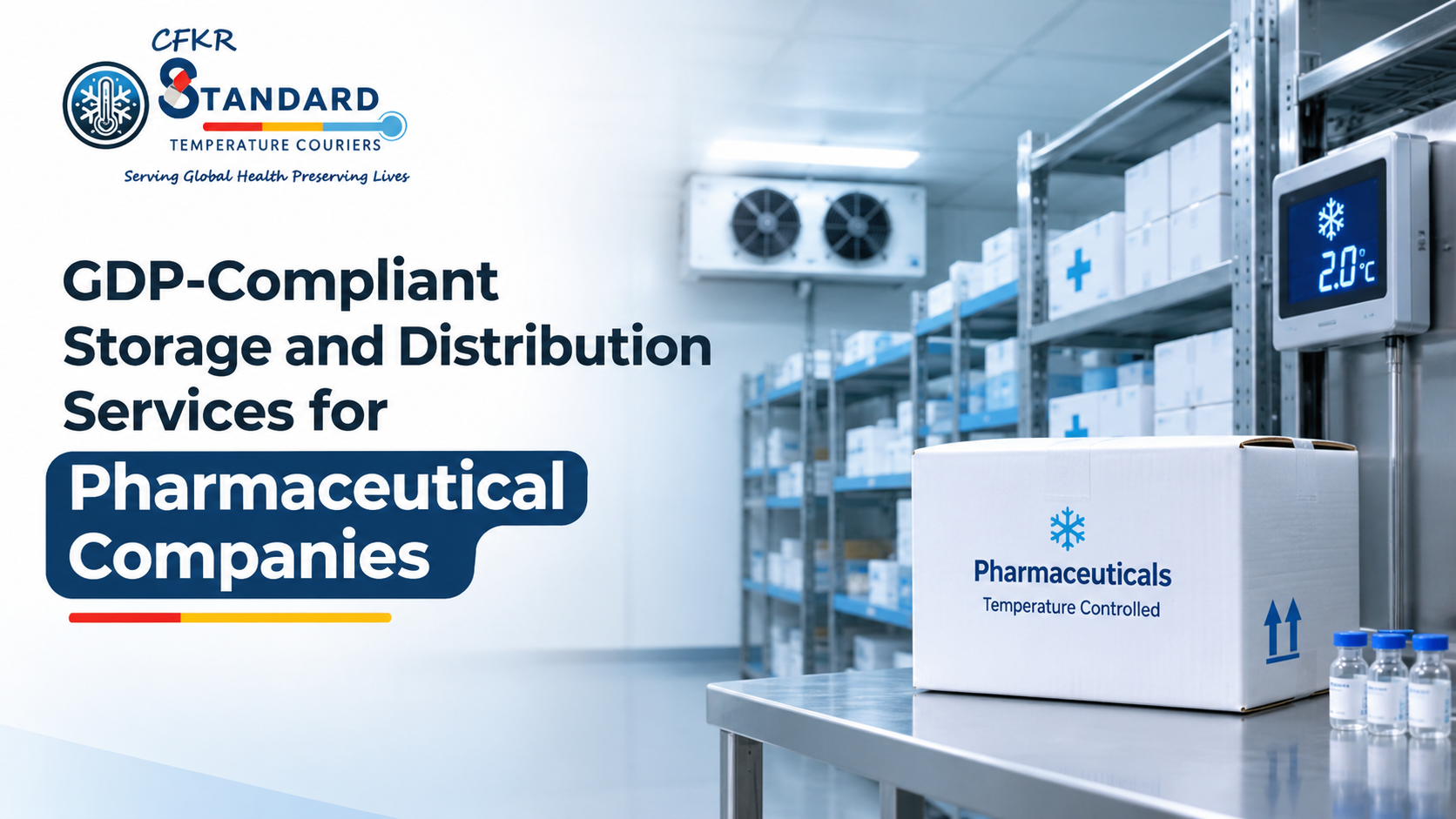
Pharmaceutical products need careful handling at every stage of the supply chain. From the moment medicines leave the manufacturing facility until they reach the customer, their quality must be protected.
Storage conditions, temperature control, handling procedures, and transportation all play an important role in maintaining product quality.
For pharmaceutical companies, choosing a logistics provider that follows Good Distribution Practice (GDP) is an important part of managing these requirements.
GDP-compliant storage and distribution services help pharmaceutical companies maintain product quality, manage supply chain risks, and meet regulatory requirements.
This guide explains what GDP compliance means, how it applies to pharmaceutical storage and distribution, and what companies should consider when choosing a logistics partner.
What Is GDP-Compliant Pharmaceutical Storage and Distribution?
Good Distribution Practice (GDP) refers to the quality standards that help maintain the integrity of pharmaceutical products throughout the distribution process.
These standards cover how medicines are stored, handled, transported, and delivered.
GDP-compliant pharmaceutical storage and distribution services are designed to protect products from conditions that could affect their quality, safety, or effectiveness.
For example, some medicines require storage between 2°C and 8°C, while others must be maintained at controlled room temperature or frozen conditions.
A pharmaceutical logistics provider must understand these requirements and have suitable facilities, equipment, and procedures to manage them.
GDP compliance also involves maintaining records, managing deviations, training staff, and ensuring that products can be traced throughout the supply chain.
Why GDP Compliance Matters for Pharmaceutical Companies
Pharmaceutical products can be sensitive to temperature changes, humidity, light, and improper handling.
Even a short period outside the required storage conditions may affect the quality of certain medicines.
For pharmaceutical companies, poor storage or distribution practices can lead to product damage, shipment delays, regulatory problems, and financial losses.
GDP-compliant logistics help reduce these risks by establishing clear procedures for handling and distributing medicines.
The main benefits include:
Maintaining product quality during storage and transportation
Reducing the risk of temperature-related damage
Improving shipment traceability and accountability
Supporting regulatory compliance
Reducing the risk of product recalls and rejected shipments
Maintaining reliable supply to hospitals, pharmacies, and healthcare providers
For companies handling vaccines, biologics, clinical trial materials, and other temperature-sensitive products, these controls are particularly important.
Key Requirements for GDP-Compliant Pharmaceutical Storage
Pharmaceutical storage requires more than warehouse space. The facility must be suitable for the products being stored and must follow documented procedures.
1. Temperature-Controlled Storage
Different pharmaceutical products have different storage requirements.
Some products must be stored at room temperature, while others require refrigerated, frozen, or ultra-low-temperature conditions.
A pharmaceutical warehouse should have suitable storage areas and temperature monitoring systems to maintain the required conditions.
Temperature monitoring should be supported by documented procedures, appropriate equipment, and a process for responding to temperature deviations.
For products that require refrigeration, maintaining the required temperature range throughout storage is essential.
2. Temperature Mapping and Monitoring
Temperature mapping helps identify temperature variations within a storage area.
It provides information about how temperature is distributed across the facility and helps determine suitable locations for storing pharmaceutical products.
Continuous monitoring can help detect temperature changes before they affect stored medicines.
When a temperature excursion occurs, the logistics provider should document the event and follow an established process to assess the impact on the affected products.
3. Proper Handling and Storage Procedures
Pharmaceutical products must be handled carefully to prevent damage, contamination, and mix-ups.
Storage procedures should cover product identification, segregation, stock rotation, and handling requirements.
Products that are damaged, expired, returned, or suspected of being compromised should be kept separate until their status is confirmed.
These procedures help maintain product integrity and reduce the risk of unsuitable products entering the supply chain.
4. Inventory Management and Traceability
Pharmaceutical companies need accurate information about the location, quantity, and status of their products.
A suitable inventory management system should support batch identification, expiry date tracking, and stock movement records.
Traceability is particularly important when a product needs to be recalled or investigated.
Accurate records help companies identify affected batches and determine where products have been stored or distributed.
GDP-Compliant Pharmaceutical Distribution
Storage is only one part of pharmaceutical logistics. Products must also remain within their required conditions during transportation.
GDP-compliant distribution services use suitable transportation methods, packaging, monitoring systems, and documented procedures to protect medicines throughout the delivery process.
Temperature-Controlled Transportation
Temperature-sensitive products may require refrigerated vehicles, insulated packaging, or specialized containers.
The transportation method should be selected according to the product’s temperature requirements, shipment duration, route, and environmental conditions.
For international shipments, companies should also consider airport handling, customs clearance, transfer points, and the time products may spend outside controlled storage.
Validated Packaging Solutions
Packaging plays an important role in maintaining the required temperature during transportation.
Depending on the product and shipment requirements, pharmaceutical companies may use passive packaging, active temperature-controlled containers, or other qualified packaging systems.
Packaging should be suitable for the expected transit conditions and shipment duration.
A logistics provider should be able to recommend packaging based on the product’s requirements and the planned transportation route.
Shipment Monitoring and Documentation
Pharmaceutical shipments often require temperature monitoring throughout transportation.
Monitoring devices can record temperature conditions and help identify any deviations during transit.
Shipment records should include relevant information about handling, transportation, and delivery.
Clear documentation helps pharmaceutical companies review shipment conditions and investigate any problems that occur during distribution.
How to Choose a GDP-Compliant Pharmaceutical Logistics Provider
Choosing the right logistics partner is an important decision for pharmaceutical manufacturers, distributors, and biotechnology companies.
A suitable provider should understand pharmaceutical handling requirements and have the systems needed to protect products throughout the supply chain.
Before selecting a provider, companies should consider the following factors.
Regulatory Experience
The provider should have experience handling pharmaceutical products and understand the GDP requirements that apply to the shipment.
Ask about its quality management system, operating procedures, staff training, and regulatory compliance processes.
Companies should also verify any claimed certifications or regulatory approvals.
Storage and Transportation Capabilities
The provider should offer storage and transportation solutions that match the product’s requirements.
This may include refrigerated storage, frozen storage, temperature-controlled vehicles, validated packaging, and international shipping services.
Confirm that the provider can maintain the required conditions across the complete shipment route.
Monitoring and Reporting
Ask how the provider monitors temperature during storage and transportation.
Understand how temperature excursions are reported, investigated, and documented.
Access to shipment records and monitoring data can help pharmaceutical companies maintain oversight of their supply chain.
Shipment Traceability
The logistics provider should maintain accurate records of product movements, storage conditions, and delivery details.
This is important for inventory management, shipment investigations, and product recalls.
Companies should understand what information they can access and how quickly it can be provided.
Experience With Specialized Shipments
Some pharmaceutical products require additional handling and transportation controls.
These may include vaccines, biological samples, clinical trial materials, cell and gene therapies, and cryogenic shipments.
Companies should select a provider with relevant experience and suitable infrastructure for the products they need to transport.
Common Challenges in Pharmaceutical Storage and Distribution
Pharmaceutical companies may face several challenges when managing storage and distribution across different locations.
Maintaining Temperature During Transit
Temperature changes can occur during loading, unloading, customs clearance, and transfers between transportation providers.
A suitable logistics plan should account for these stages and include procedures for managing delays or unexpected conditions.
Managing International Shipments
International pharmaceutical distribution involves multiple transportation providers, customs procedures, and regulatory requirements.
Poor coordination can increase transit time and create risks for temperature-sensitive products.
Working with a logistics provider that has experience in international pharmaceutical shipping can help improve coordination and reduce delays.
Managing Temperature Excursions
A temperature excursion occurs when a product is exposed to conditions outside its specified temperature range.
When this happens, the affected products should be identified and assessed according to documented procedures.
The logistics provider should maintain records of the event and support the investigation.
Products should not be released for distribution until their suitability has been confirmed by the responsible quality team.
GDP-Compliant Storage and Distribution Services From CFKR STC Couriers
CFKR STC Couriers provides pharmaceutical logistics solutions designed to support the safe storage and transportation of medicines, biologics, and other temperature-sensitive products.
With more than 30 years of industry experience, the company supports pharmaceutical and biotechnology businesses with cold chain logistics, global distribution, packaging technology, and regulatory compliance.
Its services include:
Cold chain logistics for pharmaceutical and biotech shipments
Temperature-controlled transportation
Validated packaging solutions for sensitive products
Global pharmaceutical logistics and distribution
Support for pharmaceutical and clinical trial supply chains
These services help pharmaceutical companies manage the movement of products while maintaining appropriate handling and transportation conditions.
For companies planning to outsource pharmaceutical logistics, selecting a provider with suitable storage capabilities, documented procedures, and experience in temperature-sensitive transportation is an important step.
Frequently Asked Questions
What does GDP mean in pharmaceutical logistics?
GDP stands for Good Distribution Practice. It refers to quality standards and procedures designed to maintain the quality and integrity of pharmaceutical products during storage, handling, and distribution.
Why is GDP compliance important for pharmaceutical storage?
GDP compliance helps ensure that medicines are stored under suitable conditions, handled correctly, and protected from risks that could affect their quality.
What is the difference between GDP and GMP?
Good Manufacturing Practice (GMP) focuses on the manufacturing and quality control of pharmaceutical products.
Good Distribution Practice (GDP) focuses on maintaining product quality during storage, handling, transportation, and distribution.
What temperature is required for GDP-compliant pharmaceutical storage?
There is no single temperature requirement for all pharmaceutical products.
The required conditions depend on the product’s approved storage instructions. Some products require controlled room temperature, while others need refrigerated or frozen storage.
How can pharmaceutical companies verify a logistics provider’s GDP compliance?
Companies can review the provider’s quality management system, documented procedures, training records, temperature monitoring systems, and relevant certifications or regulatory inspection records.
They may also conduct a supplier audit to assess whether the provider can meet their specific requirements.
Conclusion
GDP-compliant storage and distribution play an important role in protecting pharmaceutical products throughout the supply chain.
From temperature-controlled storage to transportation monitoring and shipment traceability, each stage requires suitable procedures and careful handling.
Pharmaceutical companies should choose logistics providers that understand their product requirements and can maintain the required conditions throughout storage and distribution.
CFKR STC Couriers supports pharmaceutical and biotechnology businesses with cold chain logistics, packaging technology, and global distribution services.
Looking for pharmaceutical storage and distribution support? Contact CFKR STC Couriers to discuss your shipment requirements and find a suitable logistics solution.