
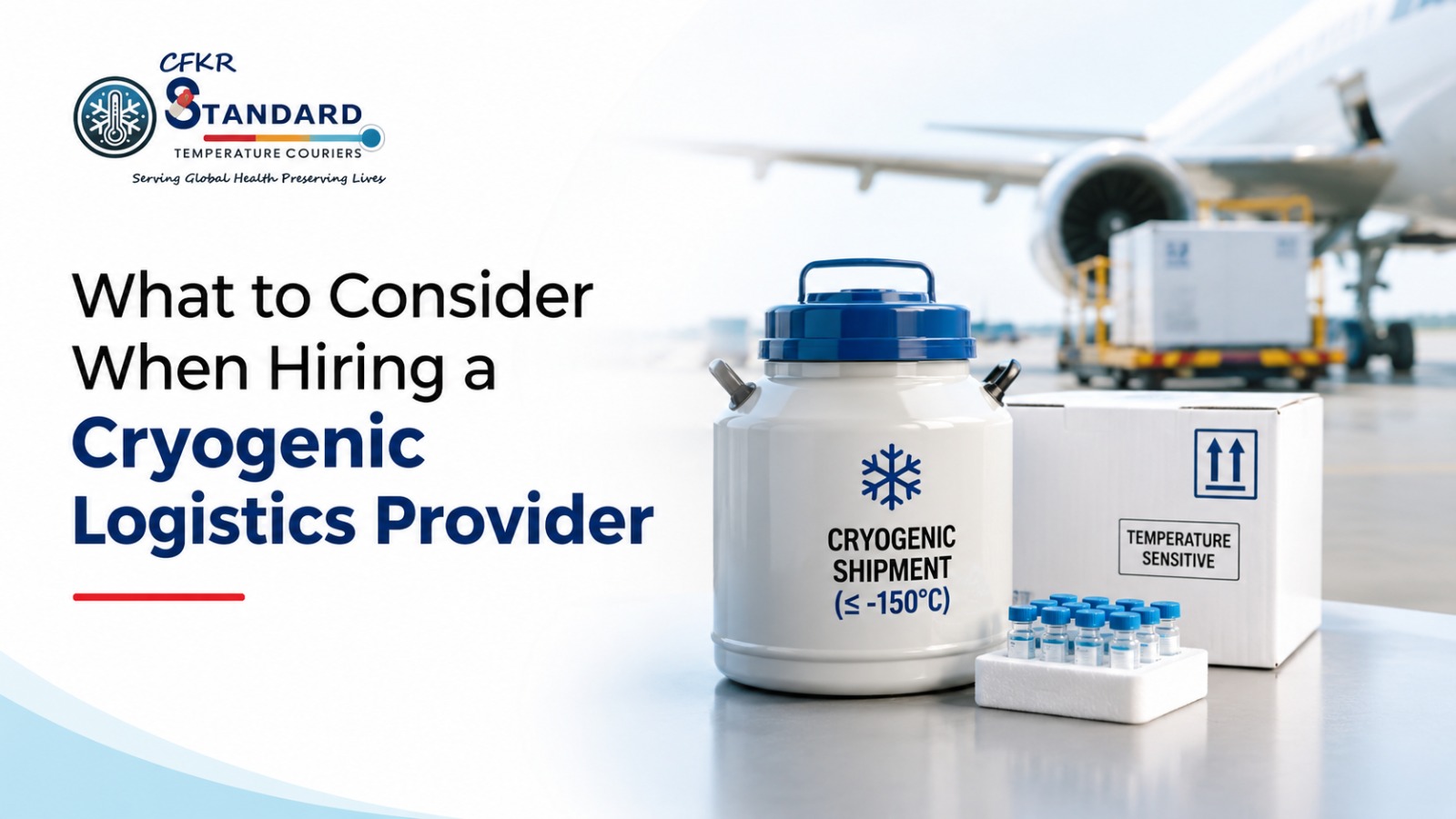
Transporting temperature-sensitive biological materials requires careful planning and specialized logistics support. Some pharmaceutical products, biological samples, cell therapies, and genetic materials must be maintained at extremely low temperatures throughout transportation.
Even a small temperature change can affect the quality, stability, and usability of these materials. This makes cryogenic transportation different from regular pharmaceutical shipping.
For pharmaceutical companies, biotechnology businesses, research laboratories, and clinical research organizations, choosing the right cryogenic logistics provider is an important decision.
A suitable provider should have the right equipment, trained staff, temperature-monitoring systems, and experience handling sensitive shipments.
But what should you check before hiring one?
This guide covers the important factors to consider when selecting a cryogenic logistics provider for your business.
1. Check the Provider’s Experience in Cryogenic Transportation
Cryogenic transportation requires specific knowledge and handling procedures. A logistics company that handles regular pharmaceutical shipments may not have the experience needed to transport materials at cryogenic temperatures.
Before hiring a provider, check its experience with the type of materials you need to ship.
For example, cryogenic transportation may be required for:
Cell and gene therapy products
Biological samples
Human tissue samples
Stem cells
Reproductive materials
Certain pharmaceutical products
Research and clinical trial materials
Ask the provider about its previous experience with similar shipments, the types of materials it handles, and the transportation methods it supports.
A provider with relevant experience is more likely to understand the handling requirements and challenges associated with your shipment.
2. Understand Its Temperature-Controlled Transportation Capabilities
Temperature control is one of the most important factors in cryogenic logistics.
Different biological materials have different temperature requirements. Some materials require storage and transportation at approximately -80°C, while others need temperatures as low as -150°C or below.
For example, certain cell therapy products and biological materials require storage in liquid nitrogen vapour-phase systems at cryogenic temperatures.
Before choosing a provider, discuss your required temperature range and ask how it will be maintained throughout transportation.
Check whether the company can provide:
Appropriate cryogenic shipping containers
Validated temperature-controlled packaging
Temperature monitoring equipment
Suitable handling and storage facilities
Procedures for temperature excursions
Temperature records during transportation
Do not assume that every cold chain logistics provider can handle cryogenic shipments. Cryogenic transportation requires specialized equipment and procedures.
3. Check the Quality of Cryogenic Shipping Containers
The shipping container plays an important role in protecting sensitive materials during transportation.
Cryogenic shipments often use specialized containers called dry shippers. These containers are designed to maintain extremely low temperatures using liquid nitrogen absorbed into an internal material, reducing the risk of free liquid nitrogen movement during transportation.
The type of container required depends on the shipment, temperature range, duration, and transportation method.
Before hiring a provider, ask about:
Container specifications and temperature performance
Temperature-holding duration
Container qualification and validation
Inspection and maintenance procedures
Protection against physical damage
Suitability for air transportation
You should also confirm whether the container is suitable for your shipment’s expected transit time, including possible delays at airports and customs.
The right packaging helps maintain temperature stability and protects sensitive materials throughout the journey.
4. Evaluate Temperature Monitoring and Tracking Systems
Temperature monitoring is essential when transporting sensitive biological materials.
A reliable cryogenic logistics provider should have a clear process for monitoring shipment conditions and recording temperature data.
Ask whether the company provides data loggers or other suitable monitoring devices.
You should also understand how temperature information is collected and shared with your team.
Important things to check include:
Availability of temperature-monitoring devices
Temperature data recording throughout the shipment
Access to temperature reports
Alerts for temperature excursions, where supported
Procedures for reviewing temperature deviations
Shipment tracking and delivery updates
Temperature monitoring helps businesses identify potential problems and review whether the required conditions were maintained during transportation.
For sensitive pharmaceutical and clinical trial materials, temperature records can also support quality documentation and shipment acceptance procedures.
5. Verify Regulatory Compliance and Industry Standards
Cryogenic shipments may be subject to different regulatory requirements depending on the materials, packaging, transportation mode, and destination.
A logistics provider should understand the regulations relevant to your shipment.
For international air transportation, the provider should be familiar with applicable IATA and ICAO requirements.
If the shipment contains biological substances, infectious materials, or other regulated goods, additional packaging, documentation, and handling requirements may apply.
For pharmaceutical and biotechnology shipments, Good Distribution Practice (GDP) principles are also important.
Before hiring a provider, ask:
What regulatory requirements apply to our shipment?
Do you follow relevant GDP procedures?
Are your shipping containers qualified for the intended use?
Can you provide temperature records?
How do you manage documentation and shipment deviations?
Do you understand the applicable dangerous goods requirements?
Do not rely on general claims such as “fully compliant.” Ask the provider to explain which standards and requirements apply to your specific shipment.
6. Check Staff Training and Handling Procedures
Cryogenic materials require careful handling. Incorrect handling of containers or temperature-sensitive materials can affect product quality and create safety risks.
Staff should understand the equipment, handling procedures, and potential risks associated with cryogenic transportation.
For example, liquid nitrogen can cause severe cold burns and may create an oxygen-deficient atmosphere if nitrogen gas accumulates in an enclosed area.
A suitable logistics provider should have appropriate safety procedures and trained personnel.
Ask whether its employees receive training in:
Cryogenic container handling
Temperature-sensitive material transportation
Safe handling of liquid nitrogen equipment
Personal protective equipment requirements
Emergency response procedures
Shipment documentation and handling records
You should also understand who is responsible for handling the shipment at each stage, including pickup, airport transfer, customs clearance, and final delivery.
7. Evaluate International Shipping and Customs Capabilities
Many cryogenic shipments need to travel between countries. These shipments can involve multiple transportation partners, customs authorities, and handling facilities.
International transportation requires careful coordination because delays can affect the shipment’s planned temperature-holding duration and delivery schedule.
Before selecting a logistics provider, check whether it has experience with international cryogenic shipments.
Consider the following:
Countries and destinations covered
Availability of suitable airline and transportation partners
Customs clearance support
Experience with biological and pharmaceutical shipments
Import and export documentation assistance
Destination handling arrangements
Delivery coordination with receiving laboratories or facilities
Ask the provider how it plans to manage potential delays at airports and customs checkpoints.
A clear transportation plan can help reduce unnecessary handling and delivery complications.
8. Understand Emergency Management and Contingency Planning
Even with careful planning, unexpected situations can occur during transportation.
Flights may be delayed, shipments may be held at customs, and containers may experience unexpected handling issues.
A cryogenic logistics provider should have procedures for managing these situations.
Before hiring a company, ask what happens if:
A flight is cancelled or delayed.
A shipment is held at customs.
The container is damaged.
Temperature monitoring identifies a deviation.
Delivery cannot be completed as scheduled.
Find out whether the company has emergency contacts, alternative transportation arrangements, and escalation procedures.
You should also ask how quickly the operations team responds to shipment-related problems.
A provider with a clear contingency plan can help reduce the impact of unexpected transportation issues.
9. Compare Pricing and Service Coverage
Cryogenic transportation costs can vary depending on the type of shipment and the level of service required.
Unlike regular courier services, cryogenic shipments may involve specialized containers, monitoring devices, additional handling, and specific transportation arrangements.
When requesting quotations, provide accurate shipment information.
The cost may depend on:
Type of biological or pharmaceutical material
Required temperature range
Shipment weight and dimensions
Container type and rental requirements
Transportation distance
Delivery timeline
Customs clearance requirements
Temperature monitoring services
Special handling requirements
Ask for a detailed quotation that explains what is included.
Also check whether container rental, return transportation, monitoring equipment, customs charges, and additional handling costs are included or billed separately.
Comparing complete service quotations will help you understand the actual cost of transportation.
10. Check Shipment Visibility and Communication
Clear communication is important when transporting valuable and temperature-sensitive materials.
Your logistics partner should keep your team informed throughout the transportation process.
Ask whether the company provides:
Pickup confirmation
Shipment tracking updates
Transit status notifications
Estimated delivery information
Temperature reports
Delivery confirmation
A dedicated operations contact
For clinical trials and cell and gene therapy supply chains, communication between the logistics provider, laboratory, clinical site, and receiving facility is particularly important.
Before finalizing the agreement, understand how your team can contact the provider if an issue occurs.
11. Ask These Questions Before Hiring a Cryogenic Logistics Provider
Before selecting a provider, ask its operations team a few important questions.
| Questions to Ask | Why It Matters |
|---|---|
| What types of cryogenic materials do you transport? | Confirms relevant shipment experience. |
| What temperature ranges can you support? | Checks whether the provider meets your requirements. |
| Which cryogenic containers do you use? | Helps evaluate packaging capabilities. |
| Do you provide temperature monitoring? | Confirms shipment monitoring arrangements. |
| Can you support international shipments? | Checks global transportation capabilities. |
| How do you handle customs delays? | Helps assess contingency planning. |
| Are your employees trained in cryogenic handling? | Checks staff competency. |
| Can you provide temperature reports? | Helps with shipment documentation and quality checks. |
| What happens if a temperature excursion occurs? | Helps assess its response procedures. |
| Can you provide a detailed quotation? | Helps compare the complete service cost. |
The answers will help you understand whether the provider has the experience and resources needed to handle your shipment.
Common Mistakes to Avoid When Hiring a Cryogenic Logistics Provider
Choosing a logistics provider without checking its capabilities can create unnecessary risks.
Here are some common mistakes businesses should avoid.
Choosing a regular cold chain provider: Not every cold chain company offers cryogenic transportation. Confirm that the provider has the appropriate containers, equipment, and trained staff.
Ignoring container performance: A container must be suitable for the required temperature and expected transit duration. Always check its specifications and qualification records.
Overlooking temperature monitoring: Without appropriate monitoring and documentation, it can be difficult to assess whether shipment conditions were maintained.
Not checking international experience: Cross-border cryogenic shipments require coordination between carriers, customs authorities, and destination partners.
Ignoring emergency procedures: Ask how the provider manages delays, container damage, and temperature deviations before booking.
Choosing based only on price: A lower quotation may not include specialized packaging, monitoring, or additional handling services. Compare the complete service before making a decision.
How CFKR STC Couriers Supports Pharmaceutical and Life Science Logistics
Choosing a logistics partner for cryogenic transportation requires careful consideration of its experience, equipment, handling procedures, and ability to manage sensitive shipments.
CFKR STC Couriers provides specialized logistics solutions for pharmaceutical, biotechnology, and life science businesses.
With over 30 years of industry experience, the company focuses on pharmaceutical cold chain logistics, global distribution, packaging technology, and regulatory compliance.
Its service areas include:
Cold Chain Logistics: Temperature-controlled transportation solutions for pharmaceutical and biotechnology shipments.
Global Logistics: International transportation and distribution support for pharmaceutical and life science businesses.
Packaging Technology: Packaging solutions for biological samples and pharmaceutical shipments.
Regulatory Compliance: Logistics support focused on applicable requirements for pharmaceutical, biotechnology, and clinical trial shipments.
If your business requires specialized transportation for biological materials, cell and gene therapy products, or other temperature-sensitive shipments, discuss your requirements with the CFKR STC Couriers team.
Contact the team to understand the available transportation and packaging solutions for your shipment.
Frequently Asked Questions
1. What is a cryogenic logistics provider?
A cryogenic logistics provider specializes in transporting materials that require extremely low temperatures. These may include biological samples, cell therapy products, genetic materials, and certain pharmaceutical products. Such providers use specialized containers, temperature monitoring, and handling procedures to maintain the required conditions.
2. What temperature is required for cryogenic transportation?
The required temperature depends on the material being transported. Some materials require temperatures around -80°C, while others need cryogenic conditions at -150°C or below. The shipper should confirm the exact temperature requirements before selecting a transportation solution.
3. What is a dry shipper in cryogenic transportation?
A dry shipper is a specialized container that uses liquid nitrogen absorbed into an internal material to maintain cryogenic temperatures. It is designed to minimize the risk of free liquid nitrogen movement during transportation and is commonly used for biological materials.
4. How do you choose the right cryogenic shipping container?
Consider the required temperature, expected transit duration, shipment size, material type, and transportation method. Check the container’s temperature-holding performance, qualification records, maintenance history, and suitability for the intended journey.
5. Is temperature monitoring necessary for cryogenic shipments?
Temperature monitoring is important because it helps document shipment conditions and identify potential temperature deviations. Depending on the material and shipping requirements, suitable monitoring devices and temperature reports may be necessary.
6. Can cryogenic materials be shipped internationally?
Yes. Cryogenic materials can be transported internationally when the shipment meets applicable transportation, packaging, documentation, and import requirements. The logistics provider must also coordinate suitable carriers and destination handling arrangements.
7. How much does cryogenic transportation cost?
The cost depends on the material, temperature requirements, container type, shipment size, destination, transportation mode, and monitoring services. Contact a specialist logistics provider with your shipment details for an accurate quotation.
8. What industries require cryogenic logistics services?
Cryogenic logistics is used by pharmaceutical companies, biotechnology businesses, research laboratories, clinical research organizations, and organizations working with cell and gene therapies.
Final Thoughts
Hiring a cryogenic logistics provider requires more than checking transportation rates and delivery timelines.
You need to understand its experience, temperature-control capabilities, container quality, monitoring systems, staff training, and international shipping arrangements.
The right provider can help your business transport sensitive biological and pharmaceutical materials while maintaining the required shipment conditions.
Before making a decision, discuss your specific requirements, ask for supporting documentation, and understand how the provider will manage your shipment from pickup to final delivery.
Looking for specialized pharmaceutical and life science logistics solutions? Contact CFKR STC Couriers to discuss your transportation requirements.