Uncategorized

Cryogenic Transportation Services Company
Uncategorized

Leading Cryogenic Transportation Companies: Why STC Couriers Wins in 2026

When your business depends on the safe delivery of temperature sensitive gases, biological samples, or medical materials, choosing the wrong logistics partner is not an option. The risks are too high. Product damage, compliance failures, and operational losses can impact not just your revenue but also your reputation. This is why businesses across healthcare, energy, and research sectors choose proven cryogenic transportation companies like STC Couriers that specialize in precision, safety, and reliability. Trusted Cryogenic Logistics Services Built for Zero Compromise Cryogenic materials require storage and transport at extremely low temperatures. Even minor fluctuations can destroy their integrity. STC Couriers understands this responsibility and delivers cryogenic logistics services designed to maintain strict temperature stability from pickup to final delivery.Every shipment is handled using specialized cryogenic containers engineered to preserve internal temperature for extended durations. These containers are supported by monitored transport systems that ensure your materials remain safe throughout transit. This level of control is essential for hospitals transporting liquid oxygen, laboratories moving biological samples, and industrial clients managing liquefied gases. Businesses that partner with STC Couriers gain confidence knowing their shipment is protected by systems designed specifically for cryogenic transportation. A Cryogenic Transportation Services Company That Understands Business Impact Delays, temperature loss, or mishandling in cryogenic logistics can result in serious financial and operational consequences. STC Couriers focuses on preventing these risks through a structured, professional approach.Their process begins with understanding your shipment requirements. Whether you need intercity delivery, airport cargo handling, or time critical express transport, STC Couriers creates a solution tailored to your operational needs.Their trained handling teams follow strict safety and compliance protocols, ensuring proper loading, secure transport, and safe delivery. This reduces risk and ensures your shipment reaches its destination without compromise.Businesses working with STC Couriers benefit from consistent performance, reliable timelines, and professional execution. Real Time Monitoring and Visibility for Complete Peace of Mind One of the biggest concerns businesses face when transporting cryogenic materials is lack of visibility. Without real time updates, it becomes difficult to ensure shipment safety.STC Couriers solves this challenge by providing real time shipment tracking and monitoring. Clients can stay informed about their shipment status, location, and progress throughout the journey.This transparency allows businesses to plan operations confidently. Hospitals can prepare for oxygen supply arrivals. Laboratories can coordinate sample handling. Industrial clients can align production schedules.This level of visibility makes STC Couriers a dependable cryogenic transportation services company for businesses that value control and accountability. Serving Healthcare, Industrial, and Research Clients with Precision STC Couriers supports organizations where cryogenic logistics is mission critical. Healthcare providers rely on them for safe oxygen transport and medical material delivery. Laboratories trust them with sensitive research samples that require strict temperature preservation.Industrial clients depend on their services for transporting liquid nitrogen, argon, and other cryogenic gases essential for manufacturing and processing.Each industry has unique requirements, and STC Couriers delivers customized solutions that align with specific operational needs.Their experience across multiple sectors ensures they understand the urgency, safety requirements, and compliance standards necessary for successful cryogenic transport. Why Businesses Are Switching to STC Couriers Many businesses initially work with general logistics providers and later face issues such as shipment delays, lack of temperature control, or poor handling.STC Couriers provides a specialized alternative focused specifically on sensitive and critical shipments. Their infrastructure, trained team, and temperature controlled systems ensure your cryogenic materials are transported safely.Businesses that switch to STC Couriers often experience improved delivery reliability, better shipment safety, and greater operational confidence.Choosing a specialist instead of a general courier service makes a measurable difference when handling cryogenic materials. Reduce Risk and Protect Your Business Reputation Your logistics partner represents your brand. If your shipment fails, your customers may hold you responsible.Partnering with STC Couriers helps protect your business reputation by ensuring professional handling and reliable delivery.Their focus on safety, compliance, and performance helps minimize risk and maintain client trust.This makes them one of the most dependable cryogenic transportation companies for businesses that cannot afford logistics failures. Book Cryogenic Transportation Services with Confidence If your business requires safe, reliable, and professional cryogenic logistics services, STC Couriers is ready to support your operations. Their team understands the urgency, safety requirements, and precision needed for successful cryogenic transportation. By choosing STC Couriers, you gain more than a logistics provider. You gain a partner committed to protecting your critical shipments and supporting your business success. Contact STC Couriers today to secure reliable cryogenic transportation services and ensure your temperature sensitive materials reach their destination safely, securely, and on time. Conclusion Choosing the right partner among cryogenic transportation companies directly impacts shipment safety, compliance, and business continuity. STC Couriers delivers specialized cryogenic logistics services designed for healthcare, industrial, and research clients who need precise temperature control and reliable delivery. With trained handling teams, monitored transport systems, and proven operational expertise, STC Couriers ensures your cryogenic materials reach their destination without risk. Businesses that value safety, reliability, and professional execution trust STC Couriers as their preferred cryogenic transportation services company. Frequently Asked Questions What makes STC Couriers different from other cryogenic transportation companiesSTC Couriers focuses on specialized cryogenic handling instead of general logistics. They use dedicated cryogenic containers, trained staff, and monitored transport systems to maintain temperature stability and ensure safe delivery. What types of materials can STC Couriers transport under cryogenic logistics servicesSTC Couriers transports liquid oxygen, liquid nitrogen, argon, biological samples, laboratory materials, and other temperature sensitive cryogenic shipments for medical, industrial, and research use. How does STC Couriers maintain temperature during cryogenic transportationSTC Couriers uses insulated cryogenic containers designed to preserve extremely low temperatures during transit. Their process ensures shipment safety from pickup to delivery. Is STC Couriers a reliable cryogenic transportation services company for hospitals and laboratoriesYes, hospitals and laboratories trust STC Couriers for transporting oxygen, medical supplies, and sensitive samples because of their safety protocols and reliable delivery performance. Does STC Couriers provide tracking for cryogenic shipmentsYes, STC Couriers provides shipment tracking so businesses can monitor delivery progress and stay informed about their shipment status.

Uncategorized

Pharmaceutical Cold Chain Logistics 2026 : Trends, Technology & Best Practices

Pharmaceutical Cold Chain Logistics in 2026: What’s Changing and Why It Matters The pharmaceutical industry is undergoing a major transformation, and cold chain logistics sits at the center of this change. As vaccines, biologics, insulin, and other temperature-sensitive medicines become more common, the need for precise, reliable, and fast logistics has intensified. In 2026, cold chain logistics is no longer treated as a support activity; it is a strategic function that directly impacts patient safety, regulatory compliance, and brand credibility. Companies today are evaluating their cold chain partners not only on cost, but on speed, visibility, and temperature integrity. Why Cold Chain Logistics Is Mission-Critical Today Pharmaceutical products are extremely sensitive to temperature variations, and even brief exposure outside approved ranges can render medicines ineffective or unsafe. This makes cold chain logistics fundamentally different from conventional transportation. It requires strict temperature control, specialized handling, rapid transit, and complete documentation throughout the shipment journey. As global pharmaceutical distribution expands and supply chains become more complex, cold chain logistics has evolved into a critical risk-management layer that protects both human lives and commercial value. Technology Is Transforming Cold Chain Reliability Technology has become the backbone of modern cold chain logistics. Real-time temperature monitoring, smart sensors, and automated alert systems now allow logistics teams to track shipment conditions continuously while goods are in transit. Advanced insulated packaging and temperature-controlled containers help maintain stability across long distances, while data-driven route planning minimizes delays and environmental exposure. These innovations enable logistics providers to prevent issues before they occur rather than reacting after damage is done, significantly improving shipment success rates. Regulatory Compliance Is No Longer Optional Regulatory authorities across the world are enforcing stricter standards for pharmaceutical transportation. Compliance with Good Distribution Practices and regional regulations requires validated packaging systems, trained personnel, detailed documentation, and complete traceability of temperature data. Regulatory compliance today goes beyond passing audits; it directly ensures patient safety and protects pharmaceutical brands from recalls, penalties, and reputational damage. Logistics partners who fail to meet these standards expose their clients to significant operational and legal risks. Market Expansion and the Rise of Emerging Regions While North America and Europe continue to lead in advanced cold chain infrastructure, emerging regions such as Asia-Pacific are experiencing rapid growth. Increased pharmaceutical manufacturing, vaccine exports, and healthcare investments are driving demand for dependable temperature-controlled logistics. India, in particular, is becoming a global pharmaceutical hub, making time-critical and air-based cold chain logistics essential for meeting international quality and delivery expectations. Time-Critical and Emergency Deliveries Are the New Reality In 2026, emergency pharmaceutical shipments are no longer rare events. Urgent vaccine replenishments, life-saving medicines, and critical diagnostic samples often require immediate dispatch with zero tolerance for delay. In these situations, speed alone is insufficient if temperature control is compromised. Effective cold chain logistics must balance rapid response with strict temperature management, supported by strong contingency planning and real-time communication throughout the shipment lifecycle. STC Couriers’ Focused Approach to Cold Chain Logistics At STC Couriers, our cold chain operations focus on air-only logistics with rapid response handling, ensuring minimal transit time and controlled temperature exposure. By prioritising air freight and time-critical coordination, STC Couriers supports pharmaceutical and healthcare clients with shipments where speed, safety, and temperature integrity are non-negotiable. This approach significantly reduces transit risks and enhances overall cold chain reliability, especially for urgent and high-value pharmaceutical consignments. Transparency and Visibility as a Trust Factor Modern pharmaceutical clients expect complete transparency throughout the logistics process. Real-time visibility into shipment location, temperature conditions, and delivery timelines has become a standard expectation rather than a premium feature. Transparency builds trust, enables faster decision-making, and allows corrective action before issues escalate. In a highly regulated environment, visibility is not just operational convenience; it is a key element of long-term client confidence. Conclusion: Pharmaceutical cold chain logistics in 2026 is defined by precision, speed, compliance, and accountability. As temperature-sensitive therapies continue to grow, companies must adopt advanced technologies, strengthen compliance frameworks, and partner with logistics providers that specialize in time-critical cold chain operations. In an industry where every degree and every minute matters, the right cold chain strategy is no longer optional — it is essential for sustainable growth and patient safety. Frequently Asked Questions (FAQ)   1. What is pharmaceutical cold chain logistics and why is it critical? Pharmaceutical cold chain logistics involves transporting temperature-sensitive medicines under controlled conditions to maintain safety and effectiveness. It is critical because even small temperature deviations can compromise drug quality, patient safety, and regulatory compliance.   2. How does technology improve reliability in cold chain logistics? Technology improves cold chain reliability through real-time temperature monitoring, smart sensors, and automated alerts that track shipment conditions during transit. These tools help detect issues early and prevent temperature excursions before damage occurs.   3. Why is air freight important for time-critical pharmaceutical shipments? Air freight is essential for time-critical pharmaceutical shipments because it minimizes transit time and reduces temperature exposure risks. It is especially important for urgent vaccines, biologics, and life-saving medicines where speed and temperature integrity are equally critical.   4. What regulations apply to pharmaceutical cold chain transportation? Pharmaceutical cold chain transportation must comply with Good Distribution Practices and regional regulatory standards. These regulations require validated packaging, trained handling personnel, temperature traceability, and complete shipment documentation.   5. How does STC Couriers handle emergency pharmaceutical deliveries? STC Couriers handles emergency pharmaceutical deliveries through air-only logistics with rapid response coordination. This approach ensures minimal transit time, controlled temperature exposure, and real-time visibility for urgent and high-value medical consignments.

Laboratory Logistics Services Challenges
Uncategorized

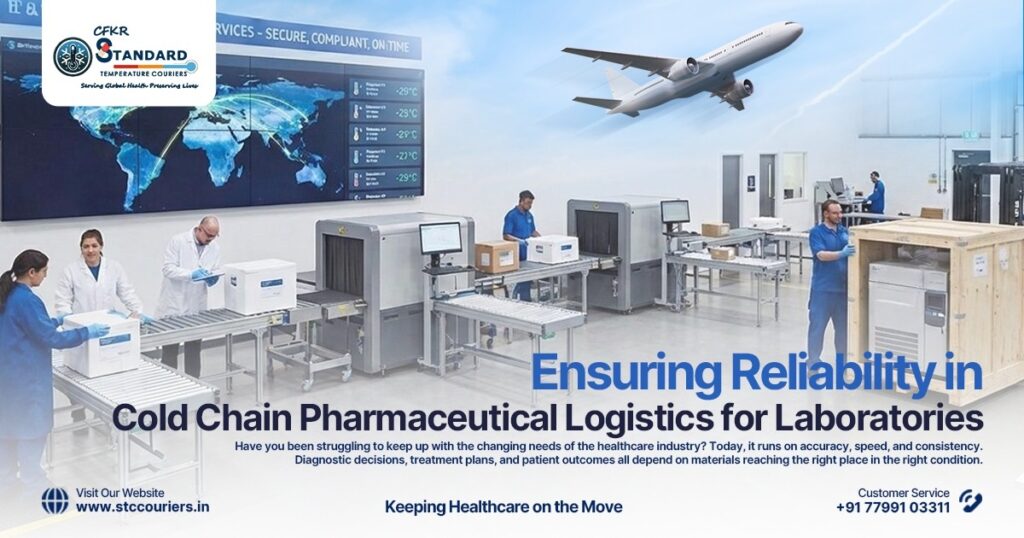
Laboratory Logistics Services Challenges: Cold Chain Pharmaceutical Logistics For Reliability

Have you been struggling to keep up with the changing needs of the healthcare industry? Today, it runs on accuracy, speed, and consistency. Diagnostic decisions, treatment plans, and patient outcomes all depend on materials reaching the right place in the right condition.  At the heart of this movement are laboratory logistics services. They are responsible for transporting samples, reagents, and testing materials without compromise. Despite their importance, laboratory logistics face structural challenges that can quietly undermine reliability if not addressed correctly. This is where cold chain pharmaceutical logistics steps in, not as a supporting function, but as a stabilising system. This conjunction brings predictability and long-term resilience to healthcare supply chains. Why Are Laboratory Logistics Under Growing Pressure? Laboratory logistics has become far more complex than it was even a few years ago. Diagnostic ecosystems are no longer confined to central laboratories. Testing now begins at homes, collection centres, mobile clinics, and satellite labs. With this decentralisation, laboratories are under constant pressure to deliver faster results without compromising accuracy. What has changed most is scale. Logistics systems once designed for predictable volumes must now perform flawlessly across expanding networks, higher sample frequency, and tighter turnaround expectations. In this environment, success is no longer defined by simply transporting samples; it depends on preserving their integrity. Has Decentralised Testing Changed Logistics Expectations? As home sample collection and regional diagnostics grow, samples spend more time in transit and pass through more handling points. Each additional touchpoint increases the risk of degradation, delays, or inconsistency. Logistics providers are now expected to offer the same level of control and reliability across every location, regardless of distance or volume. Why Is Temperature Control Central to Laboratory Reliability? Temperature stability is one of the most challenging factors in laboratory logistics. Many diagnostic materials, including blood, plasma, cultures, and biopsy samples, are biologically active. Even minor temperature fluctuations can alter their composition, affecting test outcomes and clinical decisions. When samples are exposed to conditions outside their required temperature range, laboratories often face compromised results that require recollection or retesting. This not only delays diagnosis but also increases costs and erodes patient trust.  Why Do Time Sensitivity and Infrastructure Gaps Challenge Laboratory Reliability? For laboratories, time is a determining factor of accuracy. Most diagnostic samples have limited viability windows, meaning their usefulness begins to decline the moment they are collected.  What makes the issue more complex is that delivery delays rarely stem from a single cause. Traffic congestion, inefficient routing, unplanned handovers, and inconsistent regional infrastructure often combine to disrupt workflows, creating a ripple effect across laboratory operations. How Do Delays Disrupt Laboratory Workflows? When samples arrive late or outside acceptable conditions, laboratories are often forced to adjust schedules or request recollection. These disruptions might affect staffing efficiency, increase operational costs, and slow down diagnostic reporting. This is where structured pharmaceutical logistics services, supported by cold chain systems, make a measurable difference. By integrating time-bound deliveries, optimised routing, and real-time visibility, cold chain logistics reduce uncertainty and bring predictability to laboratory workflows. Why Does Inconsistent Infrastructure Amplify Time Sensitivity? Laboratory networks often span both metropolitan hubs and emerging remote regions. This is especially true for countries like India with varying geographical features and temperatures. Urban centres can usually offer advanced logistics infrastructure. However, remote areas may lack consistency in transport conditions, storage facilities, and handling standards. A dependable cold chain network can standardise the processes across vast regions of this diverse country. This ensures that samples collected in different locations experience the same level of control, regardless of distance or local limitations.  How Do Laboratory Logistics Services Become More Reliable with Cold Chain Support? So, with the increasing pressure, how can laboratories deal with their problems? Integration of cold chain pharmaceutical logistics shifts reliability from being reactive to proactive. Instead of responding to failures after they occur, laboratories gain systems designed to prevent errors in the first place. Cold chain integration enables: How Does Technology Strengthen Cold Chain Pharmaceutical Logistics? Modern cold chain pharmaceutical logistics rely on IoT-enabled sensors and digital dashboards that monitor temperature, location, and transit duration continuously. Any deviation triggers alerts before damage occurs. For laboratories, this means: These modern technologies can transform laboratory and pharmaceutical logistics from a blind process into a visible, controllable system. Why Does India’s Healthcare Growth Depend on a Reliable Cold Chain Logistics Company? A dependable cold chain logistics company in India can deliver contextual intelligence. From navigating extreme climate variations to adapting to uneven infrastructure and evolving healthcare regulations, localised cold chain networks are built to handle India’s operational realities. As healthcare services extend beyond major metros into tier-2, tier-3, and rural regions, consistency will continue to become more and more challenging. The right cold chain providers will ensure that laboratory samples and pharmaceutical shipments receive the same level of temperature control, handling, and monitoring regardless of location.  This reliability allows healthcare providers across this country to expand access without compromising quality. So naturally, cold chain logistics has become the foundational pillar of India’s growing healthcare needs. How Are Laboratory and Pharmaceutical Logistics Becoming Interconnected? Laboratory diagnostics and pharmaceutical distribution can no longer operate in isolation. Test results inform treatment decisions in real time, making coordination between labs and pharma supply chains essential. Want to learn more about this interconnected approach? Go through our blog “Cold Chain Logistics Company: The Backbone of Healthcare Distribution, to understand how cold chain systems enable seamless healthcare delivery across diagnostics, treatment, and patient care. How Should Laboratories Evaluate Cold Chain Partners? Are you looking for ways to protect the samples and medicines while they are being transported? Choosing the right logistics partner requires looking beyond cost and speed. Laboratories should assess: A well-chosen partner becomes an extension of your laboratory itself, supporting growth without adding complexity. How Does Cold Chain Logistics Support Long-Term Healthcare Expansion? As diagnostic demand grows, logistics systems must scale without increasing risk. Cold chain pharmaceutical logistics provide a framework that supports expansion while maintaining consistency. This long-term thinking is

Uncategorized

How Technology is Transforming Cold Chain Logistics in India

Introduction In recent years, the logistics industry in India has seen a remarkable transformation, thanks to technological advancements. Cold chain logistics, in particular, has benefited immensely from these innovations, ensuring the safe and efficient transportation of temperature-sensitive products, such as pharmaceuticals, fresh produce, and vaccines. In this blog, we will explore how technology is reshaping cold chain logistics in India, making it more reliable, cost-effective, and environmentally friendly. The Growing Importance of Cold Chain Logistics Cold chain logistics is a critical component of supply chains that manage products requiring temperature control, including refrigerated and frozen items. In India, the demand for such logistics has surged, primarily driven by the pharmaceutical and food sectors. Pharmaceuticals, in particular, demand precise temperature control to maintain the efficacy and safety of medicines and vaccines. The stakes are high, as temperature excursions can result in product spoilage, loss of potency, and, in the case of vaccines, even public health crises. Given these challenges, it’s essential to leverage technology to enhance the cold chain logistics infrastructure. Real-Time Monitoring and Tracking One of the most significant technological advancements in cold chain logistics is the integration of real-time monitoring and tracking systems. Temperature-sensitive cargo can now be equipped with sensors and IoT (Internet of Things) devices that constantly monitor conditions during transit. These devices relay information to centralized control centers where logistics operators can track temperature, humidity, and other critical parameters. If there is a deviation from the prescribed conditions, an alert is triggered, enabling immediate corrective action. This has dramatically reduced the risk of temperature excursions and associated losses. Data Analytics and Predictive Maintenance Data analytics is another game-changer in cold chain logistics. By collecting and analyzing large volumes of data, logistics companies can gain insights into their operations. They can identify patterns, trends, and potential issues before they become critical. Predictive maintenance, for example, uses data to forecast when equipment or vehicles might require servicing or repair. This proactive approach minimizes the chances of unexpected breakdowns, which can be particularly damaging in the cold chain, where time is of the essence. Automation and Robotics Automation and robotics are streamlining various aspects of cold chain logistics. Automated storage and retrieval systems (AS/RS) in cold storage facilities optimize space and enhance efficiency. Robots are used for sorting and packaging, reducing the need for manual labor in temperature-controlled environments. In some cases, autonomous vehicles are deployed for transportation, ensuring precision and eliminating the risk of human error. These technologies not only improve efficiency but also contribute to reducing operating costs. Blockchain for Transparency Blockchain technology is being employed to enhance transparency and traceability within the cold chain. By recording every transaction and movement of a product, stakeholders can have complete visibility into the supply chain. This is particularly vital in the food industry, where the source and journey of food products must be accurately traced to guarantee their safety. Blockchain technology not only ensures the integrity of the cold chain but also builds trust among consumers. Improved Packaging Solutions Advanced materials and packaging solutions have emerged to minimize temperature variations during transportation. Phase change materials, for instance, help stabilize temperatures controlled packaging, which is crucial for products that need to remain within strict temperature ranges. These innovations in packaging ensure that even in adverse conditions, such as power outages, the temperature within the packaging remains stable. This is especially important in regions with unreliable power supplies, which is a common issue in some parts of India. Electric and Hybrid Refrigeration Units To reduce the carbon footprint and lower operational costs, many cold chain logistics companies are adopting electric and hybrid refrigeration units. Traditional diesel-powered units are not only costly to operate but also contribute to pollution. Electric and hybrid systems are more energy-efficient and environmentally friendly. They are also quieter, which can be beneficial in urban areas with noise restrictions. The Role of IoT in Supply Chain Visibility IoT technology plays a pivotal role in improving supply chain visibility in the cold chain sector. By connecting various devices and sensors, IoT enables a seamless flow of information. For instance, temperature sensors in trucks or storage facilities transmit data to central control centers. This data is accessible to logistics operators and stakeholders, providing them with real-time insights into the conditions of the cargo. It ensures that any deviations from the desired temperature range are detected and addressed promptly, minimizing the risk of product spoilage. Challenges and the Path Forward While technology is reshaping cold chain logistics in India, challenges remain. The development of cold storage infrastructure in remote areas, where power supply can be unreliable, is an ongoing challenge. Additionally, ensuring that all stakeholders in the supply chain adopt and adapt to new technologies can be a complex process. To overcome these challenges, the government, logistics companies, and other stakeholders need to collaborate. Investments in infrastructure, training, and the adoption of sustainable practices will be key to ensuring the continued success of cold chain logistics in India. Conclusion Technology has brought about a remarkable transformation in cold chain logistics in India. The integration of real-time monitoring, data analytics, automation, and other innovations has made the transportation of temperature-sensitive products more reliable, efficient, and cost-effective. As the demand for cold chain logistics continues to grow, it is vital for India to invest in infrastructure, training, and sustainable practices to meet the challenges that lie ahead. With a well-integrated and technologically advanced cold chain system, India can ensure the safe and efficient transportation of vital products, from life-saving medicines to fresh produce. STC Couriers: Elevating Hyderabad’s Cold Chain Logistics STC Couriers stands as the premier choice for cold chain logistics in Hyderabad, India. With a reputation for excellence in temperature-sensitive cargo transportation, they provide reliable solutions for the pharmaceutical, food, and healthcare industries. Their state-of-the-art facilities, advanced monitoring systems, and a dedicated team ensure that products remain at the precise temperatures required, making them the top choice for businesses seeking safe and efficient cold chain services in Hyderabad.

Uncategorized

Preserving Pharmaceutical Integrity: Temperature Monitoring in Cold Chain Logistics

Pharmaceutical products, especially those that are temperature-sensitive, demand the utmost care and precision in their handling and transportation. Ensuring that these products maintain their integrity throughout the supply chain is of paramount importance. The critical element that makes this possible is temperature monitoring in cold chain logistics. In this blog, we’ll explore the essential role of temperature monitoring in preserving pharmaceutical integrity, the challenges faced, and the technology and best practices that address them. The Significance of Cold Chain Logistics Before delving into the role of temperature monitoring, it’s crucial to understand why cold chain logistics are essential in the pharmaceutical industry. The term “cold chain” refers to the temperature-controlled supply chain that ensures pharmaceutical products, vaccines, and biologics remain within specified temperature ranges from production to distribution and ultimately, to the patient. This is vital because many pharmaceuticals are highly sensitive to temperature fluctuations. Challenges in Maintaining Pharmaceutical Integrity The pharmaceutical cold chain faces numerous challenges that make temperature monitoring indispensable: The Role of Temperature Monitoring Temperature monitoring plays a pivotal role in addressing these challenges and ensuring pharmaceutical integrity. Here’s how: Technology Advancements in Temperature Monitoring Advancements in technology have greatly improved the accuracy and reliability of temperature monitoring systems in cold chain logistics: Best Practices for Pharmaceutical Temperature Monitoring To ensure the pharmaceutical integrity of temperature-sensitive products, consider implementing the following best practices in temperature monitoring: Calibration and Validation: Regular calibration of temperature monitoring equipment is essential to maintain accuracy. Validation ensures that the entire cold chain process is reliable and compliant. Mapping and Risk Assessment: Perform temperature mapping of storage facilities and assess risks in the supply chain to identify critical control points. Temperature Alarms: Implement temperature alarms with clear escalation procedures for different temperature deviations. Remote Monitoring: Use remote monitoring systems to allow for immediate intervention in case of temperature excursions. Data Security: Ensure the security and integrity of temperature data to prevent tampering or unauthorized access. Continuous Training: Proper training of personnel is vital to ensure they understand the importance of temperature monitoring and are equipped to respond effectively. Conclusion In the pharmaceutical industry, maintaining the integrity of temperature-sensitive products is non-negotiable. The consequences of failing to do so can be disastrous for both patients and pharmaceutical companies. Temperature monitoring in cold chain logistics is the linchpin that safeguards these critical products throughout their journey from production to the end user. Advanced technology, best practices, and a commitment to quality assurance are the keys to success in this crucial aspect of pharmaceutical logistics. By embracing these principles, pharmaceutical companies can ensure that the products they provide are not only effective but safe for patients worldwide. Choose STC Couriers for Best Temperature Monitoring Services in Pharma STC Couriers stands at the forefront of pharmaceutical logistics, providing unmatched temperature monitoring services. With a proven track record in the industry, we offer precision, reliability, and compliance. Our state-of-the-art technology ensures real-time temperature tracking, safeguarding your temperature-sensitive pharmaceuticals. We prioritize your pharmaceutical integrity and patient safety. Make the smart choice—opt for STC Couriers to guarantee the highest standards in temperature monitoring. Your pharmaceuticals deserve the best, and we deliver it. Contact us today and experience excellence in cold chain logistics like never before. Make the Smart Choice with STC Couriers – Your Pharmaceuticals Deserve the Best!

Uncategorized

Navigating Regulatory Compliance in Pharmaceutical Transport within Cold Chain Logistics

In the intricate web of pharmaceutical logistics, regulatory compliance stands as a cornerstone ensuring the safety, efficacy, and integrity of medicinal products. Within the realm of cold chain logistics, maintaining adherence to stringent regulatory standards is imperative due to the sensitivity of temperature-controlled pharmaceuticals. This article navigates through the complexities of regulatory compliance in pharmaceutical transport within the cold chain logistics framework, elucidating the challenges, key regulations, and strategies crucial for seamless adherence. The Significance of Regulatory Compliance in Cold Chain Logistics The pharmaceutical industry operates within a web of regulations and standards established by various international bodies, such as the FDA (Food and Drug Administration), EMA (European Medicines Agency), and WHO (World Health Organization), among others. These regulations are designed to ensure the safety, quality, and efficacy of pharmaceutical products throughout their lifecycle, from manufacturing to transportation and distribution. Challenges in Regulatory Compliance for Cold Chain Logistics Stringent Temperature Controls: Pharmaceuticals sensitive to temperature variations demand strict adherence to specified temperature ranges throughout transportation. This poses a significant challenge, especially during long-distance shipments across diverse climatic conditions. Documentation and Record-Keeping: Comprehensive documentation is required at each stage of the cold chain logistics process, including temperature logs, handling procedures, and quality control records. Maintaining accurate and accessible records can be challenging but is essential for compliance. Global Regulatory Divergence: Navigating through diverse international regulations, each with its nuances and requirements, adds complexity to ensuring uniform compliance standards across different regions. Key Regulations Governing Cold Chain Logistics in Pharmaceuticals Good Distribution Practice (GDP): GDP regulations outline the guidelines for proper distribution and storage of medicinal products, emphasizing temperature control, traceability, and quality management throughout the supply chain. Good Manufacturing Practice (GMP): GMP regulations focus on the quality and consistency of pharmaceutical manufacturing processes. Compliance ensures that products are consistently produced and controlled to meet quality standards. International Air Transport Association (IATA) Guidelines: IATA provides specific guidelines for the air transportation of pharmaceuticals, including the Temperature Control Regulations (TCR) and the Perishable Cargo Regulations (PCR). Pharmacopeial Standards: Standards outlined by pharmacopeias, such as the United States Pharmacopeia (USP) and European Pharmacopoeia (EP), set criteria for product quality, including temperature and storage conditions. Strategies for Navigating Regulatory Compliance Robust Quality Management Systems (QMS): Implementing QMS that align with regulatory requirements ensures comprehensive quality control measures are in place, encompassing documentation, risk management, and continuous improvement. Temperature Monitoring and Control Technologies: Leveraging advanced temperature monitoring devices and IoT-enabled sensors allows real-time tracking and alerts for temperature excursions, enabling proactive interventions to maintain compliance. Training and Education: Thorough training of personnel involved in cold chain logistics is crucial. This includes educating them about regulatory requirements, handling procedures, and the importance of compliance. Risk Assessment and Mitigation: Conducting regular risk assessments along the supply chain helps identify vulnerabilities. Developing mitigation plans ensures preparedness to address potential compliance risks. The Future of Regulatory Compliance in Cold Chain Logistics As the pharmaceutical landscape evolves, so do regulatory standards. The future of regulatory compliance in cold chain logistics is expected to witness advancements in technology, increased harmonization of global regulations, and a heightened focus on transparency and traceability throughout the supply chain. Conclusion Navigating regulatory compliance in pharmaceutical transport within the realm of cold chain logistics demands a comprehensive understanding of the stringent requirements and a proactive approach to meet these standards. Adhering to regulations not only ensures the safety and efficacy of pharmaceutical products but also upholds the trust of consumers and stakeholders in the pharmaceutical supply chain. By embracing innovative technologies, robust quality management systems, and a culture of continuous improvement, stakeholders can effectively navigate the intricate landscape of regulatory compliance in cold chain logistics, thereby ensuring the seamless and compliant transport of temperature-sensitive pharmaceuticals.

Uncategorized

Training and Skilling in Cold Chain Logistics: Meeting the Industry Demand in India

In the realm of logistics, the intricate management of temperature-sensitive goods through the cold chain is pivotal for preserving product integrity. In a country like India, with its diverse climate and expansive geography, the need for trained professionals adept at handling cold chain logistics is more crucial than ever. Bridging the skill gap and providing specialized training in this sector not only meets industry demands but also ensures the safe and efficient transportation of perishable goods, pharmaceuticals, and vaccines. Understanding the Need for Skilled Workforce: 1. Technical Expertise: Operating and maintaining temperature-controlled storage facilities and refrigerated transportation vehicles demands specialized technical skills to ensure product quality and safety. 2. Compliance and Regulations: Adherence to stringent regulations governing cold chain logistics requires thorough understanding and implementation, emphasizing the need for trained professionals. 3. Risk Mitigation: Skilled personnel play a critical role in mitigating risks associated with temperature fluctuations, reducing product spoilage, and ensuring the efficacy of pharmaceuticals and perishable goods. Addressing the Skill Gap: 1. Training Programs: Institutes and organizations offering specialized training programs focused on cold chain logistics, covering aspects like temperature control, handling procedures, compliance, and safety measures. 2. Skill Development Initiatives: Collaborative efforts between educational institutions, industry bodies, and the government to develop skill enhancement programs tailored to the evolving needs of the cold chain industry. 3. Continuous Learning: Encouraging ongoing learning and professional development among workers to stay updated with technological advancements and best practices in cold chain logistics. Opportunities for Skill Development: 1. Vocational Training: Promoting vocational training programs catering specifically to cold chain logistics, offering certifications and hands-on experience to enhance employability. 2. Industry-Academia Partnerships: Establishing partnerships between academia and industry to create curriculum frameworks aligned with industry requirements, ensuring graduates are job-ready. 3. Government Support: Government-led initiatives providing incentives and support for skill development programs, encouraging more individuals to pursue careers in cold chain logistics. Impact on Industry and Economy: 1. Enhanced Efficiency: A skilled workforce ensures efficient operations, reducing product losses, and enhancing the overall efficiency of cold chain logistics, thereby positively impacting businesses. 2. Industry Growth: Meeting the demand for skilled professionals fosters industry growth, attracting investments, and positioning India as a hub for advanced cold chain logistics services. 3. Economic Contribution: A well-trained workforce contributes significantly to the economy by reducing wastage, improving product quality, and facilitating the smooth flow of goods across supply chains. Conclusion: Nurturing Talent for a Thriving Industry The expansion and efficiency of India’s cold chain logistics sector hinge on the availability of a skilled and trained workforce. By prioritizing training and skilling initiatives tailored to the specific needs of this sector, India can meet the industry demand, drive growth, and ensure the safe and reliable transportation of temperature-sensitive goods. Investments in training and skilling not only benefit the industry but also create employment opportunities, foster innovation, and contribute to India’s economic development. As the nation progresses towards becoming a global leader in logistics, nurturing a skilled workforce in cold chain logistics stands as a cornerstone for success. STC Couriers- Cold Chain Logistics in Hyderabad, India STC Couriers, a prominent name in cold chain logistics, extends its expertise to Hyderabad, India. Operating within this bustling city, STC Couriers employs cutting-edge technology and specialized solutions to ensure the safe transportation of temperature-sensitive goods. With a focus on pharmaceuticals and perishable items, their state-of-the-art infrastructure and trained professionals maintain stringent temperature controls throughout the supply chain. STC Couriers in Hyderabad stands as a reliable partner, upholding the integrity of sensitive products, bolstering healthcare access, and catering to the burgeoning demand for efficient cold chain logistics in this vibrant and growing region. Experience the difference in cold chain logistics with STC Couriers in Hyderabad! Trust us to safeguard your temperature-sensitive goods. Partner with us for secure, reliable, and efficient transportation. Elevate your logistics standards today!

Uncategorized

The Impact of Digital Health Technologies on Global Clinical Trials

In the ever-evolving landscape of healthcare and pharmaceuticals, globalization has become a pivotal aspect of conducting clinical trials. As the demand for diverse and representative data increases, companies are expanding their reach across borders. This article explores the key strategies that are essential for the effective globalization of clinical trials. Understanding the Global Landscape Regulatory Frameworks Navigating the complex regulatory frameworks in different countries is paramount. Understanding the nuances of each region’s requirements ensures compliance and facilitates a smoother trial process. Cultural Sensitivity Cultural differences can significantly impact the success of a clinical trial. Tailoring protocols and communication strategies to respect and accommodate diverse cultures is essential for participant engagement and retention. Site Selection and Management Site Identification Choosing the right sites is critical for the success of a global clinical trial. Factors such as patient population, infrastructure, and expertise play a crucial role in site selection. Centralized Site Management Implementing centralized management systems streamlines communication and ensures standardized processes across all trial sites, reducing variability and improving data quality. Patient Recruitment and Retention Patient-Centric Approaches Adopting patient-centric strategies is vital for successful recruitment and retention. This involves understanding the needs and concerns of participants and implementing measures to enhance their overall experience. Digital Technologies Incorporating digital technologies such as telemedicine and mobile apps can overcome geographical barriers, making it easier for patients to participate and stay engaged in clinical trials. Data Management and Quality Assurance Standardized Data Collection Establishing standardized methods for data collection ensures consistency and facilitates the comparison of results across different regions. This is crucial for maintaining data integrity. Real-time Monitoring Implementing real-time monitoring tools enhances the ability to identify and address issues promptly, ensuring data quality and compliance throughout the duration of the trial. Collaboration and Partnerships Engaging Local Stakeholders Building strong partnerships with local investigators, healthcare providers, and patient advocacy groups fosters collaboration and aids in overcoming potential challenges unique to each region. Public-Private Partnerships Exploring collaborations between public and private entities can provide additional resources and support, contributing to the overall success of global clinical trials. Risk Management Risk Assessment Conducting comprehensive risk assessments helps identify potential challenges in advance. Developing mitigation strategies ensures a proactive approach to managing risks associated with global clinical trials. Contingency Planning Having robust contingency plans in place is crucial for addressing unforeseen challenges promptly, minimizing disruptions to the trial timeline and data integrity. Regulatory Compliance and Reporting Harmonization of Standards Striving for harmonization in regulatory standards across different regions simplifies compliance efforts and reduces the administrative burden associated with global clinical trials. Timely Reporting Adhering to strict reporting timelines ensures transparency and compliance with regulatory requirements, building trust with regulatory authorities and stakeholders. Future Trends in Global Clinical Trials Decentralized Trials The adoption of decentralized trial models is gaining momentum, leveraging technologies to conduct certain aspects of trials remotely, providing greater flexibility for participants. Artificial Intelligence and Predictive Analytics The integration of AI and predictive analytics enhances decision-making processes, optimizing trial design, patient recruitment, and overall trial management. Conclusion In conclusion, effective globalization of clinical trials requires a holistic approach that addresses regulatory, cultural, and logistical challenges. By implementing these key strategies, pharmaceutical and biotech companies can conduct trials that not only meet global standards but also contribute valuable insights to advance healthcare on a global scale.

Uncategorized

Best Tips for Hiring a Medical Courier Service

When it comes to the healthcare industry, timely and secure delivery of medical supplies, samples, and equipment is crucial.  Hiring a reliable medical courier service ensures that your medical deliveries are handled with the utmost care and professionalism.  Here are ten essential tips to guide you in choosing the right medical courier service. 1. Verify Their Experience and Expertise Check Their Industry Knowledge Ensure the courier service has significant experience in handling medical deliveries. They should understand the specific requirements and regulations related to transporting medical items. Look for Specialized Training The couriers should be trained in handling medical deliveries, including the use of proper packaging, temperature control, and understanding the urgency and confidentiality of medical items. Don’t hesitate to ask such questions when choosing a reliable source for you. 2. Assess Their Reliability and Punctuality Timely Deliveries Confirm that the courier service has a track record of timely deliveries. In the medical field, delays can be critical. So this aspect you can analyze by checking their past customer testimonials. 24/7 Availability Choose a courier service that offers round-the-clock services and not at particular hours of the day to ensure your deliveries can be made at any time, day or night. 3. Evaluate Their Handling of Sensitive Materials Proper Packaging The courier service should provide appropriate packaging solutions to maintain the integrity of the medical items during transit. Temperature Control Don’t forget to check if they offer temperature-controlled transportation for items that require specific storage conditions. 4. Check Their Compliance with Regulations Regulatory Adherence Ensure the courier service complies with all relevant regulations, including  CDSCO for patient information and IPC for handling hazardous materials. Certification and Licensing Verify that the courier service holds necessary certifications and licenses to operate in the medical field. Many of the service providers list their achievements on their website so you can refer to that before making your final deal. 5. Investigate Their Tracking and Communication Systems Real-Time Tracking A good medical courier service should offer real-time tracking of your deliveries, allowing you to monitor the progress and location of your items. Transparent Communication Effective communication is key. The courier service should provide updates on the status of your delivery and be available to answer any queries. 6. Review Their Safety and Security Measures Secure Transportation Ensure the courier service uses secure methods to transport medical items, protecting them from damage, loss, or theft. Confidentiality The service should have strict policies in place to protect the confidentiality of sensitive medical information. 7. Consider Their Range of Services Versatility Choose a courier service that offers a wide range of services, including same-day delivery, scheduled routes, and emergency deliveries. Customization The ability to customize services to meet your specific needs is an added advantage. 8. Read Customer Reviews and Testimonials Online Reviews Check online reviews and ratings to gauge the reputation and reliability of the courier service. Testimonials Look for testimonials from other healthcare providers who have used the service. Positive feedback from peers can be a good indicator of the service’s quality. 9. Compare Costs Transparent Pricing Ensure the courier service provides clear and transparent pricing. Avoid services with hidden fees or unclear cost structures. Value for Money While cost is important, don’t compromise on quality. Balance the cost with the level of service provided to ensure you’re getting value for your money. 10. Test Their Customer Service Responsiveness Evaluate their customer service by reaching out with inquiries. A responsive and helpful customer service team is a good sign of a reliable courier service. Problem Resolution Check how they handle issues and complaints. A good courier service should have a straightforward process for resolving any problems that may arise. Conclusion: Medical Courier Service Choosing the right medical courier service is crucial for the efficient and safe delivery of medical supplies and samples. By following these tips, you can find a service that meets your specific needs and ensures the highest standards of delivery. At Standard Temperature Couriers (STC Services), we understand the critical nature of medical deliveries.  Our team is trained to handle sensitive medical items with the utmost care and precision.  We offer 24/7 service, real-time tracking, and secure transportation solutions.  Trust STC Services for all your medical courier needs, and experience the peace of mind that comes with knowing your deliveries are in safe hands.

Uncategorized

Essential Tips for Pharma Distribution Optimization

The pharmaceutical industry in India is a thriving sector, characterized by rapid growth and significant contributions to the global market. However, the complexity of pharma distribution comes with its own set of challenges that require strategic optimization to ensure efficiency, compliance, and patient safety. For pharma companies based in India or those with branches here, understanding and implementing effective distribution strategies is crucial for maintaining a competitive edge. Before we get into understanding the need for strategic pharma distribution, it’s vital to know its importance. The Importance of Optimized Pharma Distribution Ensuring Timely Delivery Timely delivery of pharmaceutical products is essential for maintaining the health and well-being of patients. Delays can lead to critical shortages and impact patient outcomes. Therefore, optimizing distribution processes to ensure punctual delivery is a priority. Compliance with Regulatory Standards Pharmaceutical distribution must adhere to stringent regulatory standards to ensure the quality and safety of products. Companies must navigate complex regulations and ensure their processes comply with national and international standards. Cost Efficiency Optimized distribution processes can significantly reduce costs. By improving logistics, warehousing, and inventory management, companies can achieve substantial savings and reinvest in research and development. Key Strategies for Optimizing Pharmaceutical Distribution Leveraging Advanced Technology Automated Systems Implementing automated systems for inventory management and order processing can streamline operations. Automated systems reduce human error, improve accuracy, and speed up processes. Real-Time Tracking Real-time tracking technology allows companies to monitor their products throughout the distribution chain. This transparency enhances security and ensures that any issues can be addressed promptly. Strategic Warehousing Centralized Warehousing Centralized warehousing can simplify distribution logistics and reduce transportation costs. By strategically locating warehouses, companies can ensure faster delivery times and lower expenses. Cold Chain Management Proper cold chain management is critical for temperature-sensitive pharmaceuticals. Implementing robust cold chain systems ensures that products maintain their efficacy and safety from production to delivery. Enhancing Supply Chain Collaboration Partnering with Reliable Distributors Collaborating with reliable and experienced distributors can enhance the efficiency of the supply chain. Strong partnerships ensure that products are handled with care and delivered on time. Integrated Communication Systems Integrated communication systems enable seamless coordination between manufacturers, distributors, and retailers. Efficient communication helps in forecasting demand, managing inventory, and preventing stockouts or overstocking. Overcoming Challenges in Pharmaceutical Distribution Navigating Regulatory Changes Regulatory landscapes are continually evolving. Staying informed and adaptable to changes in regulations is essential for maintaining compliance and avoiding disruptions in distribution. Addressing Logistics Challenges in India India’s diverse geography and infrastructural challenges can complicate distribution. Developing tailored logistics solutions that account for regional differences and infrastructure limitations is crucial for effective distribution. Ensuring Product Security Pharmaceuticals are often targeted for theft and counterfeiting. Implementing security measures such as tamper-evident packaging and secure transportation can protect products and maintain their integrity. STC’s Pharma Distribution Services STC Couriers offers a range of services designed to optimize pharmaceutical distribution processes. Their solutions include advanced inventory management systems, real-time tracking, and cold chain logistics, ensuring products are delivered safely and efficiently. STC’s commitment to compliance and quality assurance sets them apart. Their processes adhere to stringent regulatory standards, ensuring that products meet the highest safety and quality benchmarks. With a network of reliable partners and extensive industry expertise, STC enhances the efficiency of the supply chain. Their integrated communication systems and strategic warehousing solutions ensure that products reach their destinations promptly and securely. Tech, Warehousing, and Collaboration are Keys to Pharma Efficiency & Compliance Optimizing pharmaceutical distribution is a multifaceted challenge that requires a strategic approach. By leveraging advanced technology, strategic warehousing, and enhancing supply chain collaboration, pharma companies in India can improve efficiency, reduce costs, and ensure compliance. Partners like STC provides a comprehensive pharma distribution services to achieve these goals, demonstrating the benefits of optimized processes in delivering high-quality pharmaceutical products to patients.

Scroll to Top