
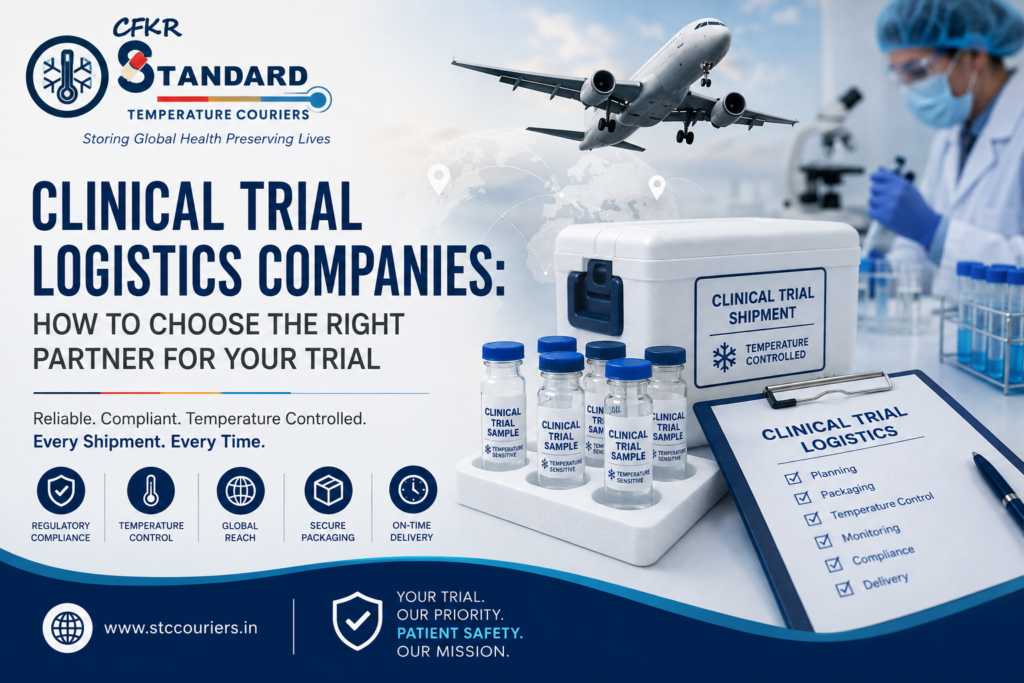
If you are reading this, you are probably past the research stage. You already know clinical trial logistics companies exist, you understand roughly what they do, and now you need to pick one for an active or upcoming study. This guide is written for that exact moment. It walks through what separates a dependable logistics partner from one that will cost you a protocol deviation six months into your trial, and it gives you a clear framework for making the final call.
Clinical trials do not fail because of bad science nearly as often as they stall because of bad logistics. A shipment that arrives two degrees outside its validated range, a customs delay that holds an investigational product at a border for four days, a depot that cannot locate a kit when a site calls with an enrollment window closing. These are not rare events. They happen every week, somewhere, on a trial that otherwise had a solid protocol and a capable CRO. The logistics partner is often the weakest link simply because sponsors treat vendor selection as an afterthought rather than a decision with real clinical and financial consequences.
By the time most sponsors start comparing clinical trial logistics companies seriously, they have already lived through at least one of these problems on a previous study. That experience tends to sharpen the questions being asked in an RFP, but it does not always change the criteria used to make the final decision. Price and general reputation still drive too many contracts, even when the sponsor knows from firsthand experience that neither of those factors predicted how the last vendor actually performed once patients were enrolling. This guide is built around the criteria that do predict performance, based on where clinical supply chains actually break down.
Why Clinical Trial Supply Chain Management Deserves Your Full Attention
Clinical trial supply chain management is not the same discipline as commercial pharmaceutical distribution, even though the two get lumped together constantly. A commercial shipment has forgiving timelines and predictable volumes. A clinical trial shipment has a randomization schedule, a narrow enrollment window, a site coordinator waiting on a specific kit number, and a protocol that does not care about your carrier’s excuse for the delay.
The Cost of Getting It Wrong
A single temperature excursion on an investigational product can force a site to quarantine an entire shipment pending a stability assessment. Depending on the molecule, that assessment can take days, and during those days a patient visit gets missed or rescheduled. Missed visits create protocol deviations. Enough deviations and a data monitoring committee starts asking questions the sponsor does not want to answer. None of this shows up in a logistics quote, but all of it shows up in the trial timeline and the eventual submission package.
Regulatory Pressure Is Only Increasing
Regulatory expectations around trial conduct keep tightening. The FDA finalized its adoption of ICH E6(R3) Good Clinical Practice in September 2025, and the update pushes sponsors toward a quality by design approach, meaning risks to trial quality need to be identified and mitigated from the earliest planning stages instead of being addressed after something has already gone wrong. That shift applies directly to supply chain decisions. A sponsor who cannot demonstrate that they assessed a logistics partner’s risk profile before shipment one is in a weaker position during an inspection than one who documented that evaluation up front. Your regulatory team can review the full guidance directly on the FDA’s E6(R3) guidance page if an SOP update is needed.
What the Best Clinical Trial Logistics Companies Actually Do
Not every company that calls itself a clinical trial logistics provider offers the same scope of service. Some are pure freight forwarders who happen to handle pharma. Others run the full chain from depot storage through last mile delivery to the site. Knowing the difference matters before you sign anything.
Clinical Trial Supply and Logistics Planning
Real clinical trial supply and logistics planning starts before the first patient is randomized. It means building a distribution model around your enrollment forecast, your site countries, your comparator sourcing, and your randomization method. A logistics partner who asks for your protocol synopsis and enrollment projections during the proposal stage is doing the job correctly. One who quotes you a flat per-shipment rate without asking those questions is pricing a commodity, not planning a supply chain.
Cold Chain and Temperature Controlled Shipping
Most investigational products, biologics especially, require temperature controlled shipping across a defined range, and a growing share require deep frozen or cryogenic handling. A serious provider maintains validated packaging, continuous monitoring on every shipment, and a documented excursion response procedure. This is where IATA’s CEIV Pharma certification becomes a useful screening tool. The program assesses an organization against a detailed checklist covering quality management, staff training, and cold chain handling, giving sponsors a third party benchmark rather than a vendor’s self reported claim. You can review the certification scope on IATA’s official CEIV Pharma page before asking a vendor for proof of compliance.
Depot Network and Storage
A depot network determines how quickly a site can get a replacement kit when something goes wrong. A partner with depots concentrated in one region will struggle on a global trial with sites in Latin America or Southeast Asia. Ask for the actual depot list, not a marketing map, and confirm which depots are owned versus subcontracted.
Customs and Cross Border Documentation
Customs delays are one of the most preventable causes of trial disruption, and they are almost always a documentation failure rather than a genuine border issue. A logistics partner with dedicated regulatory affairs staff who prepare import permits, certificates of analysis, and country specific paperwork in advance will clear shipments in hours instead of days. This single capability, more than any other, is what separates companies built for clinical trial supply and logistics from generalist freight brokers.
Real Time Visibility and Track and Trace
You should never have to call a logistics provider to ask where a shipment is. Real time visibility platforms with temperature data, GPS tracking, and automated excursion alerts are standard among the better vendors now. If a company cannot show you a live dashboard during the sales process, assume you will be chasing status updates by phone for the life of the contract.
For sponsors who want a closer look at how this comes together operationally, our clinical trial logistics services page breaks down each capability in more detail.
Key Criteria for Selecting a Clinical Trial Logistics Partner
Once you have narrowed your list, the evaluation gets more specific. These are the criteria that actually predict performance over the life of a trial, as opposed to the ones that just look good in a proposal deck.
Regulatory Certifications to Look For
Good Distribution Practice compliance is the baseline, not a differentiator. The World Health Organization’s guidance on storage and distribution of time and temperature sensitive medical products lays out the risks a product faces at each stage of the supply chain, from purchasing through transportation and final delivery, and it forms the backbone of most national GDP frameworks. Beyond GDP, look for CEIV Pharma certification for any partner handling air freight, and ask whether their quality management system has been through a sponsor audit in the last twelve months, not just an internal review. The current WHO storage and distribution guidance is publicly available on the WHO publications page.
Geographic Reach and Depot Coverage
Match the partner’s footprint against your actual site list, country by country. A vendor that is strong in North America and Western Europe but subcontracts everything in Asia Pacific is introducing a layer of risk you cannot fully audit. Ask directly which lanes are handled in house and which are outsourced.
Technology and Visibility Platforms
Evaluate the platform itself, not just the sales demo. Ask how excursion alerts are triggered, how quickly a human responds after an automated alert fires, and whether the system integrates with your IRT or clinical trial management system. A platform that requires manual data entry at each handoff point is a platform that will eventually produce a gap in your audit trail.
Track Record With Similar Trial Types
A logistics company with deep experience in oncology cold chain shipments is not automatically equipped for a decentralized trial requiring direct to patient delivery, and vice versa. Ask for references from sponsors running trials similar in scale, indication, and geography to yours, not just their biggest logo clients. Registered trial details on ClinicalTrials.gov can help you verify a reference’s trial scope before you call them.
Common Mistakes Sponsors Make When Choosing a Logistics Partner
The most common mistake is treating the RFP process as purely a pricing exercise. Logistics costs are a small fraction of overall trial spend, and choosing the cheapest bid almost always costs more in the long run once you account for deviations, re-shipments, and site relationship damage.
The second mistake is failing to involve clinical operations and regulatory affairs in the vendor selection alongside procurement. Procurement optimizes for cost. Clinical operations understands what a missed dosing window actually does to a trial. Both perspectives need to be in the room before a contract gets signed.
The third mistake is not stress testing the vendor’s contingency planning. Ask specifically what happens when a flight is cancelled, when a border closes unexpectedly, or when a depot loses power. A vendor with a rehearsed, documented answer has been through this before. A vendor who improvises an answer on the call has not. The European Medicines Agency’s overview of Good Distribution Practice requirements is a useful reference point when you are drafting contingency questions for an EU focused trial.
A fourth mistake, less discussed but just as costly, is signing a master service agreement that does not scale with the trial. Phase 1 volumes look nothing like Phase 3 volumes, and a vendor who performed well on a small, single country study can struggle badly once that same protocol expands to twenty countries and hundreds of sites. Ask a prospective partner directly how their depot capacity, staffing, and technology stack change as shipment volume grows, and get a specific answer rather than a general assurance that they can handle it.
Why STC Couriers Stands Out Among Clinical Trial Logistics Companies
STC Couriers built its clinical trial supply and logistics operation around the specific failure points described above rather than adapting a general freight model to pharma. That means dedicated depot capacity reserved for trial materials, validated cold chain packaging maintained and requalified on a fixed schedule, and a regulatory documentation team that prepares customs paperwork before a shipment ever leaves the depot rather than after a border agent asks for it.
Sponsors working with STC Couriers get a named logistics coordinator for the life of the study rather than a rotating support queue, along with real time shipment visibility that integrates directly into existing trial management workflows. If your current provider cannot answer the questions raised earlier in this guide with specifics, our team can walk through exactly how we would handle your protocol’s distribution requirements. Visit our clinical trial logistics company overview to see the full service scope, or go straight to our request a quote page if you already have a protocol and site list ready to share.
How to Evaluate a Clinical Trial Supply and Logistics Proposal Before You Sign
Before signing with any vendor, run their proposal through a short checklist. Confirm the depot network matches your actual site countries rather than a broader regional claim. Confirm the temperature range validation data for their packaging matches your product’s stability profile, not a generic industry range. Confirm who owns the customs documentation process and get that responsibility written into the contract rather than left as a verbal assurance. Confirm the escalation path and response time commitment for a temperature excursion, in writing, with named contacts rather than a general support email.
Ask for two references from active trials, not completed ones. A reference from a trial that already closed cannot tell you how the vendor performs under live enrollment pressure. Reach out to our clinical operations team directly if you want a second opinion on a proposal you have already received. We review competitor proposals for sponsors regularly and can flag gaps before they become site level problems.
Getting Started With a Clinical Trial Supply Chain Management Partner
If your trial is entering activation and you still need to finalize logistics, the timeline matters more than it feels like it does right now. Depot onboarding, packaging validation, and customs pre-registration in each site country all take real calendar time, and starting that process four weeks before first patient in is cutting it closer than most sponsors realize.
The fastest path forward is a direct conversation with a team that can look at your protocol and site list and tell you honestly what is achievable on your timeline. Contact STC Couriers to start that conversation, or if you want to see how our depot and cold chain infrastructure lines up with your specific countries first, explore our cold chain shipping services before you commit to anything.
Frequently Asked Questions
What is the difference between a clinical trial logistics company and a general pharmaceutical distributor?
A general pharmaceutical distributor typically moves commercial product on predictable schedules with forgiving timelines. A clinical trial logistics company manages randomization driven shipments, narrow dosing windows, comparator sourcing, and destruction or return of unused investigational product, all under a protocol rather than a standard commercial order.
How long does it take to onboard a new clinical trial logistics partner?
Depot setup, packaging validation, and customs pre-registration across site countries typically take between four and eight weeks depending on the number of countries and the complexity of the investigational product. Trials with cryogenic or deep frozen requirements often need additional lead time for packaging qualification.
What certifications should a clinical trial logistics company hold?
At minimum, look for Good Distribution Practice compliance in every region where the partner operates. For any air freight component, CEIV Pharma certification from IATA is a strong indicator of cold chain competence, since the program evaluates organizations against more than 280 criteria covering temperature management, specialized personnel, and adherence to international regulations.
Can a single logistics partner handle a global multi-country trial?
Yes, provided their depot network genuinely covers your site countries rather than relying heavily on subcontracted regional partners. Ask for the specific depot list and confirm ownership before assuming full coverage.
What happens if a shipment experiences a temperature excursion?
A reliable partner has a documented excursion response procedure that includes automated alerting, immediate notification to the sponsor and site, and a stability hold process while the product is assessed against validated data. This should be defined in the service agreement before the trial starts, not improvised after the first incident.
How do I compare pricing across clinical trial logistics companies fairly?
Compare total cost per patient visit rather than per shipment, and factor in the cost of a single protocol deviation caused by a logistics failure. The cheapest quote rarely accounts for the operational cost of re-shipments, expedited replacements, or site relationship strain.