
Shipping dangerous goods is not something a business can afford to get wrong. One missed label, one incorrect classification, or one poorly packed container can lead to fines, seized shipments, damaged reputations, or worse, an actual safety incident on the road, in the air, or at sea. If your company handles chemicals, batteries, aerosols, flammable liquids, or any other regulated material, understanding how dangerous goods move through the supply chain is not optional. It is the foundation of running a compliant and safe operation.
This guide walks through what dangerous goods actually are, how they are classified, what the law requires during transport, and how working with an experienced courier partner like STC Couriers removes the guesswork from a process that leaves very little room for error.
What Are Dangerous Goods?
Dangerous goods are substances or articles that pose a risk to health, safety, property, or the environment when they are transported. This covers a far wider range of products than most people assume. It is not just industrial chemicals or explosives. Everyday items such as lithium batteries, perfumes, nail polish, dry ice, paint, cleaning products, and certain medical supplies all fall under dangerous goods regulations once they enter a shipping network.
The risk with these materials comes from their physical or chemical properties. Some are flammable. Some react badly with heat, pressure, or moisture. Some are corrosive or toxic. Others become unstable when mixed with different substances or exposed to vibration during transit. Because the risks vary so widely, global regulatory bodies have built a structured system for identifying, classifying, and handling these goods so that everyone in the supply chain, from the manufacturer to the final delivery driver, knows exactly what they are dealing with.
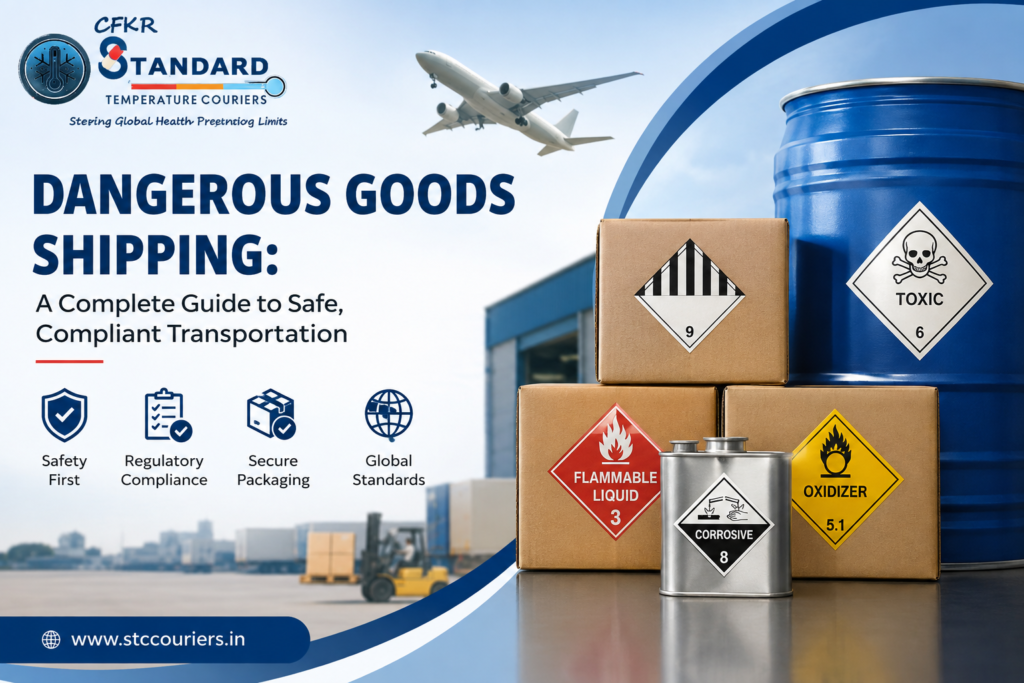
Dangerous Goods Classification: The Nine Hazard Classes
Every regulated substance is placed into one of nine internationally recognized hazard classes. This classification system was developed to standardize how dangerous goods are identified, labeled, and packed no matter which country they are shipped through. Understanding these categories is the first practical step toward compliant shipping.
Class 1: Explosives
This class includes fireworks, ammunition, and any substance designed to produce an explosive effect through chemical reaction. These shipments require specialized licensing and are subject to the tightest controls of any hazard class.
Class 2: Gases
Gases are divided into flammable gases, non-flammable non-toxic gases, and toxic gases. Propane cylinders, aerosol cans, and medical oxygen tanks all fall here. Pressure and temperature control during transport are critical for this class.
Class 3: Flammable Liquids
Petrol, paint, adhesives, and many solvents fall into this category. These substances can ignite easily at normal transport temperatures, so proper containment and separation from heat sources is mandatory.
Class 4: Flammable Solids
This includes substances that catch fire through friction, moisture, or spontaneous combustion, such as matches, certain metal powders, and some industrial materials.
Class 5: Oxidizing Substances and Organic Peroxides
These materials can cause or intensify fire by releasing oxygen. Bleaching agents and certain fertilizers are common examples.
Class 6: Toxic and Infectious Substances
Pesticides, certain pharmaceuticals, and clinical or biological samples fall under this class. Infectious substances, in particular, require strict packaging protocols to prevent contamination during transit.
Class 7: Radioactive Material
This includes medical isotopes and industrial radiography sources. Transport of radioactive material is governed by some of the most detailed regulatory frameworks in the dangerous goods system.
Class 8: Corrosive Substances
Acids, batteries, and certain cleaning agents can cause severe damage to skin or other materials on contact. Proper containment prevents leaks that could damage other cargo or injure handlers.
Class 9: Miscellaneous Dangerous Goods
This is a catch-all category for substances that present a hazard not covered by the other eight classes, including lithium batteries, dry ice, magnetized materials, and environmentally hazardous substances. Given how common lithium battery shipments have become with the rise of electronics and e-commerce, this class has grown significantly in importance over the past several years.
Correct classification determines everything that follows: the packaging you need, the documentation required, the labels that must appear on the outside of the box, and the carriers legally permitted to move your shipment. Misclassifying a product, even accidentally, is one of the most common and costly mistakes businesses make when shipping regulated goods. If you are unsure how your product should be classified, our dangerous goods shipping team can review your product details and confirm the correct hazard class before you book a shipment.
The Transportation of Dangerous Goods: What the Regulations Actually Require
Once a product has been correctly classified, the next challenge is moving it through the supply chain in a way that satisfies domestic and international transport law. The transportation of dangerous goods is governed by a layered set of regulations depending on the mode of transport and the countries involved.
Road transport typically follows regulations such as the ADR agreement in Europe or equivalent domestic frameworks elsewhere. Air transport follows the IATA Dangerous Goods Regulations, which are notably strict given the added risks of altitude, pressure changes, and confined cargo holds. Sea freight is governed by the IMDG Code, published by the International Maritime Organization. In the United States, the Pipeline and Hazardous Materials Safety Administration, part of the Department of Transportation, sets the domestic standard. Each of these frameworks shares a common structure but differs in specific requirements, which is exactly why cross-border shipments of dangerous goods are so easy to get wrong without proper expertise.
Documentation Requirements
Every dangerous goods shipment must travel with accurate, complete paperwork. This typically includes a dangerous goods declaration, a safety data sheet for the substance being shipped, and any permits required for the specific hazard class. Missing or inconsistent documentation is one of the most frequent reasons shipments get delayed or rejected at customs or by the carrier itself.
Packaging Standards
Packaging for dangerous goods is not a matter of using a sturdy box. Regulations specify UN-certified packaging rated for the specific hazard class and quantity being shipped. This includes requirements around inner containment, cushioning, absorbent materials for liquids, and pressure resistance for gases. Packaging that has not been tested and certified to the correct UN standard will not be accepted by compliant carriers, regardless of how well it appears to protect the contents.
Labeling and Placarding
Labels communicate risk information at a glance to everyone who touches the shipment, from warehouse staff to emergency responders. Each hazard class has a distinct diamond-shaped label with a defined color and symbol. Larger shipments moving by truck or container also require placards on the vehicle itself. Incorrect or missing labeling is one of the fastest ways to have a shipment held or refused during transit.
Training and Handling
Anyone involved in packing, labeling, or transporting dangerous goods is required to hold current dangerous goods training relevant to their role. This is not a one-time certification. Most frameworks require refresher training on a recurring cycle, and handlers must stay current with regulatory updates as classifications and rules evolve, including standards such as the OSHA Hazard Communication Standard that governs how hazard information is communicated in the workplace.
Common Challenges Businesses Face When Shipping Dangerous Goods
Most businesses that run into trouble with dangerous goods shipments are not being careless. They are simply unaware of how detailed and specific the requirements are. A few patterns come up again and again.
Product classification is often assumed rather than verified, especially when a supplier’s paperwork is incomplete or outdated. Packaging that meets general shipping standards but not UN certification gets used because the difference is not always obvious to someone outside the industry. Carriers with limited dangerous goods experience decline shipments at the last minute, causing costly delays. And businesses that ship internationally often discover too late that a substance acceptable under one country’s regulations is restricted or banned under another’s.
These are exactly the kinds of problems that a specialized courier partner is built to prevent.
Why Choose STC Couriers for Dangerous Goods Transportation
STC Couriers has built its dangerous goods service around one principle: compliance has to be built into the process from the first phone call, not checked at the end of it. Our team works with clients across manufacturing, pharmaceuticals, chemicals, electronics, and laboratory services to move regulated materials safely and on schedule.
Every shipment we handle goes through a classification check before it moves, confirming the correct UN number, hazard class, and packing group. Our packaging meets UN certification standards appropriate to each hazard class, and our documentation process is built to satisfy the specific requirements of road, air, or sea transport depending on your shipment’s route. Our drivers and handling staff maintain current dangerous goods training, and our team stays on top of regulatory changes across the jurisdictions we operate in so your shipments are never caught off guard by a rule update you did not know about.
We also understand that dangerous goods shipping is rarely a one-off requirement. Businesses that manufacture or distribute regulated products need a courier partner they can rely on consistently, not just for a single compliant shipment but for every shipment going forward. That consistency is what we are built to deliver.
If your business also needs support with broader logistics, our courier services and same-day delivery options can be combined with dangerous goods handling to keep your full supply chain moving without needing multiple providers.
Our Dangerous Goods Shipping Process
When you work with STC Couriers on a dangerous goods shipment, the process starts with a classification review of your product, confirming hazard class, packing group, and any special handling requirements. From there, our team advises on the correct UN-certified packaging if you do not already have compliant containers in place. We prepare or verify all required documentation, including the dangerous goods declaration and safety data sheet, before the shipment leaves your facility. Labeling and placarding are applied to the exact standard required for the mode of transport, and the shipment is then moved by drivers and handlers trained specifically for hazardous materials.
Throughout transit, we maintain visibility on the shipment so you know exactly where your regulated cargo is at every stage. For businesses shipping across borders, we also manage the additional customs and regulatory documentation that comes with international dangerous goods movement.
If you regularly ship larger volumes of hazardous materials, our freight services team can build a dedicated logistics plan around your product mix and shipping frequency, which often reduces cost and improves turnaround time compared to booking individual shipments as needed.
Industries We Support
Dangerous goods shipping needs look different depending on the sector. Pharmaceutical and healthcare companies frequently ship diagnostic samples, medical gases, and temperature-sensitive biological materials that fall under multiple hazard classes at once. Manufacturers move raw chemicals, adhesives, and industrial solvents that require careful packaging and labeling. Electronics companies increasingly deal with lithium battery shipments as more products ship with built-in power cells. Laboratories and research institutions ship infectious substances and reagents that demand precise handling under Class 6 regulations.
Whatever your industry, the underlying requirement is the same: your shipment needs to be classified correctly, packed to standard, documented properly, and handled by people who understand the regulations governing your specific hazard class.
Get Started with Safe, Compliant Dangerous Goods Shipping
Dangerous goods shipping is not a place to cut corners or rely on guesswork. The regulations exist because the risks are real, and the consequences of getting it wrong extend far beyond a delayed shipment. Working with a courier partner who understands classification, packaging, documentation, and handling requirements from end to end is the most reliable way to keep your shipments compliant and your operations running smoothly.
STC Couriers has the experience, training, and processes in place to handle your dangerous goods shipments correctly the first time. If you are ready to move regulated materials safely and without the compliance headaches, request a quote or contact our team today to discuss your shipment.
Frequently Asked Questions
What counts as a dangerous good in shipping?
A dangerous good is any substance or item that poses a risk to health, safety, property, or the environment during transport. This includes obvious hazards like chemicals and explosives, but also everyday items such as lithium batteries, aerosols, perfumes, and certain cleaning products.
How many hazard classes are there for dangerous goods?
There are nine internationally recognized hazard classes, ranging from explosives and gases to flammable liquids, corrosives, and miscellaneous dangerous goods such as lithium batteries and dry ice.
Can any courier ship dangerous goods?
No. Carriers need specific training, certified packaging capability, and documentation processes to legally transport dangerous goods. Not every courier is equipped or licensed to handle regulated shipments, which is why choosing a specialized provider matters.
What happens if a dangerous goods shipment is misclassified?
Misclassification can lead to shipment delays, refusal by the carrier, fines, or in serious cases, safety incidents during transit. It is one of the most common and costly mistakes businesses make when shipping regulated materials.
Do dangerous goods regulations differ between air, road, and sea transport?
Yes. Air transport follows IATA Dangerous Goods Regulations, sea freight follows the IMDG Code, and road transport follows regional frameworks such as ADR in Europe or domestic hazardous materials regulations elsewhere. Each has its own specific packaging, labeling, and documentation requirements.
How do I know if my product needs a safety data sheet for shipping?
If your product is classified under any of the nine dangerous goods hazard classes, a safety data sheet is typically required as part of the shipping documentation. Your supplier or manufacturer should be able to provide this, and a dangerous goods courier can confirm what is needed for your specific shipment.