
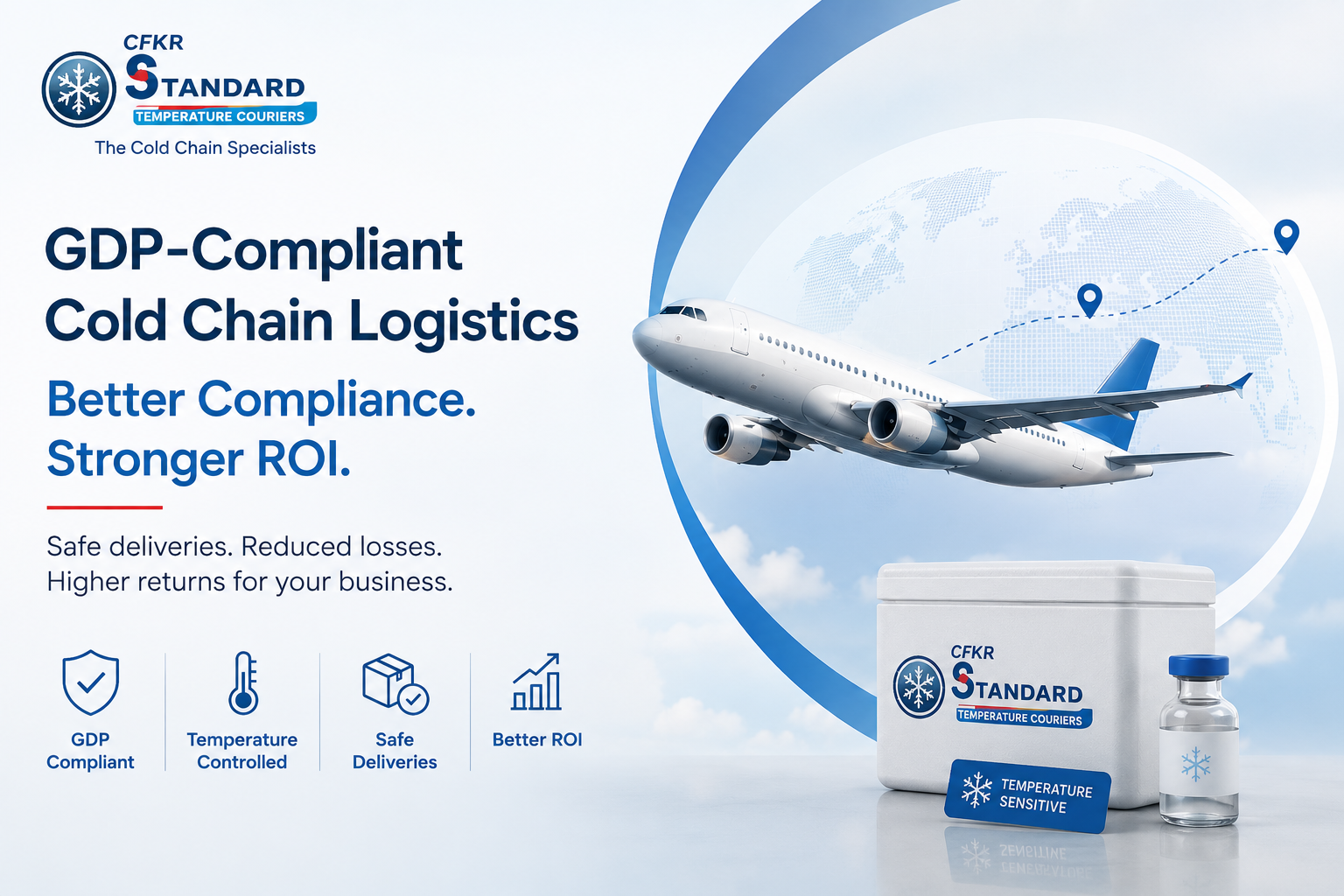
For pharmaceutical companies, every shipment carries more than products. It carries patient trust, regulatory responsibility, and significant business value. Whether transporting vaccines, biologics, specialty medicines, clinical trial materials, or temperature-sensitive drugs, maintaining the right conditions throughout the journey is essential.
Many businesses focus on transportation costs when choosing a logistics partner. While shipping rates are important, they represent only one part of the overall picture. The real cost of pharmaceutical logistics includes product loss, shipment delays, compliance risks, damaged reputation, customer dissatisfaction, and operational inefficiencies.
This is where GDP-compliant cold chain logistics creates measurable business value.
Good Distribution Practice (GDP) provides a framework for handling, storing, and transporting pharmaceutical products safely throughout the supply chain. Working with a GDP-compliant logistics provider helps pharmaceutical businesses reduce avoidable losses, improve operational efficiency, maintain product quality, and ultimately achieve a stronger return on investment (ROI).
In this article, we will explore how GDP-compliant cold chain logistics contributes to long-term business growth, why it matters for pharmaceutical companies, and how choosing the right logistics partner can positively impact both financial performance and customer confidence.
Understanding GDP-Compliant Cold Chain Logistics
Good Distribution Practice, commonly known as GDP, is a quality standard designed to ensure pharmaceutical products are consistently stored, handled, transported, and distributed under appropriate conditions.
The purpose of GDP is straightforward. Every medicine should reach the end user in the same condition as when it left the manufacturer.
Cold chain logistics supports this objective by maintaining the required temperature throughout transportation and storage. Depending on the product, this may involve refrigerated, frozen, or controlled room-temperature environments.
GDP compliance covers every stage of the logistics process, including temperature monitoring, documentation, packaging validation, warehouse management, transportation, shipment tracking, staff training, and risk management.
Instead of treating logistics as a simple transportation service, GDP-compliant providers manage every shipment as part of a controlled process designed to protect product quality.
What Does ROI Mean in Pharmaceutical Logistics?
Return on Investment is often associated with marketing campaigns or business expansion, but it is equally important in logistics.
In pharmaceutical supply chains, ROI is not measured only by reducing transportation costs. It is measured by the value created through safer operations, fewer losses, improved compliance, and higher customer satisfaction.
A business that spends slightly more on reliable logistics but prevents product damage, regulatory issues, and shipment failures often achieves a much higher return than one focused only on securing the lowest transportation rate.
The right logistics investment protects revenue while creating long-term operational stability.
Product Protection Directly Improves Profitability
Pharmaceutical products are highly sensitive to environmental conditions. Even a brief temperature deviation can reduce product effectiveness or make medicines unsuitable for use.
When this happens, businesses may need to discard products, replace inventory, investigate the incident, and arrange emergency shipments.
These situations increase costs quickly.
GDP-compliant cold chain logistics minimizes these risks by maintaining validated temperature conditions throughout transportation and storage. Every shipment follows established procedures that reduce the possibility of product exposure.
When products arrive safely and remain usable, companies avoid unnecessary replacement costs and protect their revenue.
Reducing product loss is one of the most direct ways GDP compliance improves return on investment.
Preventing Temperature Excursions Saves Significant Costs
Temperature excursions remain one of the biggest challenges in pharmaceutical logistics.
A shipment exposed to incorrect temperatures for even a short period may require quality investigations, quarantine procedures, laboratory testing, regulatory reporting, or complete disposal.
Beyond the immediate financial loss, businesses also face delays in delivering medicines to healthcare providers and patients.
GDP-compliant logistics providers reduce these risks through validated packaging, temperature-controlled vehicles, continuous monitoring, and predefined handling procedures.
By preventing temperature excursions before they occur, pharmaceutical companies save money while improving operational reliability.
Compliance Reduces Business Risk
Regulatory compliance is an essential part of pharmaceutical operations.
Authorities expect companies to demonstrate that medicines have been handled correctly throughout the supply chain. Missing records, incomplete documentation, or poor transportation practices can result in inspections, regulatory observations, shipment rejection, or financial penalties.
GDP-compliant logistics providers maintain proper documentation and standardized operating procedures that support regulatory requirements.
This reduces compliance risks while helping pharmaceutical companies prepare for audits with confidence.
Avoiding regulatory issues also protects revenue by preventing costly disruptions to business operations.
On-Time Deliveries Improve Customer Retention
Hospitals, pharmacies, distributors, and healthcare providers depend on timely deliveries.
Late shipments can delay patient treatment, interrupt supply chains, and reduce customer confidence.
Reliable delivery performance creates stronger business relationships.
GDP-compliant logistics focuses on planning, route management, shipment monitoring, and operational consistency to improve delivery performance.
Customers who consistently receive products on time are more likely to continue working with the same pharmaceutical supplier.
Higher customer retention contributes directly to stronger long-term profitability.
Real-Time Visibility Supports Better Decision-Making
Modern pharmaceutical logistics is built on visibility.
Knowing where a shipment is, whether it remains within the required temperature range, and when it will arrive allows businesses to respond quickly if unexpected situations occur.
Real-time shipment tracking improves operational control by reducing uncertainty.
Supply chain teams spend less time following up on deliveries and more time focusing on strategic planning.
This improved efficiency reduces administrative workload while increasing productivity across logistics operations.
Better visibility also supports faster decision-making, which can prevent small issues from becoming expensive problems.
Validated Packaging Protects Every Shipment
Packaging plays a critical role in pharmaceutical logistics.
The right packaging maintains stable temperatures during transportation while protecting products from environmental changes.
GDP-compliant logistics providers use validated packaging systems that have been tested under different transportation conditions.
These packaging solutions reduce the risk of temperature fluctuations during delays, transfers, or extended transit periods.
Investing in reliable packaging often prevents much larger financial losses caused by damaged pharmaceutical products.
Efficient Warehouse Operations Improve ROI
Cold chain logistics extends beyond transportation.
Temperature-controlled warehousing plays an equally important role in maintaining product quality.
GDP-compliant warehouses follow strict procedures for inventory management, storage conditions, monitoring, and product handling.
Efficient warehouse operations reduce inventory errors, improve stock accuracy, minimize product expiration, and speed up order processing.
Better inventory control reduces waste while improving overall supply chain efficiency.
These operational improvements contribute to higher profitability over time.
Lower Insurance Claims and Reduced Financial Losses
Shipment damage often results in insurance claims.
Although insurance may recover part of the financial loss, the process consumes time, creates additional paperwork, and rarely compensates for lost customer confidence or operational disruption.
GDP-compliant logistics significantly reduces shipment failures.
Fewer damaged shipments mean fewer claims, less administrative work, and improved financial stability.
Businesses spend less time resolving problems and more time focusing on growth.
Stronger Reputation Creates Long-Term Business Value
Reputation is one of the most valuable assets in the pharmaceutical industry.
Healthcare providers expect consistent quality, reliable deliveries, and complete product integrity.
Companies that repeatedly experience logistics failures may struggle to retain customers and secure new business opportunities.
GDP-compliant logistics helps build a reputation for reliability.
When customers know that medicines will arrive safely and on time, trust grows naturally.
A strong reputation often leads to repeat business, long-term contracts, and positive industry referrals.
These outcomes generate measurable business value that extends far beyond individual shipments.
Supporting Business Growth Without Increasing Risk
As pharmaceutical companies expand into new markets, logistics becomes more complex.
Additional distribution centers, international shipments, larger inventories, and new regulatory requirements all increase operational challenges.
GDP-compliant logistics provides standardized processes that allow businesses to grow while maintaining consistent quality standards.
Instead of creating new risks during expansion, companies can scale confidently with reliable logistics systems already in place.
This stability supports sustainable business growth while protecting return on investment.
Why Choosing the Right Logistics Partner Matters
Not every logistics provider specializes in pharmaceutical transportation.
Handling temperature-sensitive products requires expertise, validated infrastructure, trained personnel, and strict operational controls.
Choosing a provider based only on transportation cost may appear economical initially, but unexpected shipment failures, product loss, and compliance issues often create much higher long-term expenses.
A trusted GDP-compliant logistics partner focuses on protecting product quality throughout the entire supply chain.
This approach reduces operational risk while improving business performance.
How CFKR STC Couriers Supports Better ROI
At CFKR STC Couriers, we understand that pharmaceutical logistics is about much more than moving products from one location to another.
With more than 30 years of industry experience, we provide GDP-compliant cold chain logistics solutions designed to protect product integrity throughout storage, transportation, and distribution.
Our services include temperature-controlled transportation, validated packaging solutions, cold storage warehousing, pharmaceutical distribution, air freight, ocean freight, express shipping, and specialized logistics support for clinical trials and biotechnology products.
Every shipment is handled with precision, supported by trained professionals, modern infrastructure, and carefully monitored transportation processes.
By reducing product loss, maintaining compliance, improving delivery reliability, and supporting operational efficiency, we help pharmaceutical businesses strengthen their supply chains while achieving better long-term returns on investment.
Conclusion
In pharmaceutical logistics, the lowest transportation cost does not always deliver the highest business value.
Real return on investment comes from protecting product quality, preventing losses, maintaining compliance, improving operational efficiency, and building long-term customer trust.
GDP-compliant cold chain logistics helps pharmaceutical companies achieve all of these objectives through standardized processes, reliable temperature control, validated packaging, and secure transportation.
Every successful shipment protects revenue, strengthens customer relationships, and supports business growth.
As the pharmaceutical industry continues to evolve, investing in reliable GDP-compliant logistics is no longer simply a regulatory requirement. It is a strategic business decision that improves efficiency, reduces risk, and creates long-term value.
If your organization is looking for a trusted logistics partner that prioritizes safety, compliance, and reliability, CFKR STC Couriers offers the expertise and infrastructure needed to keep your pharmaceutical supply chain moving with confidence.