
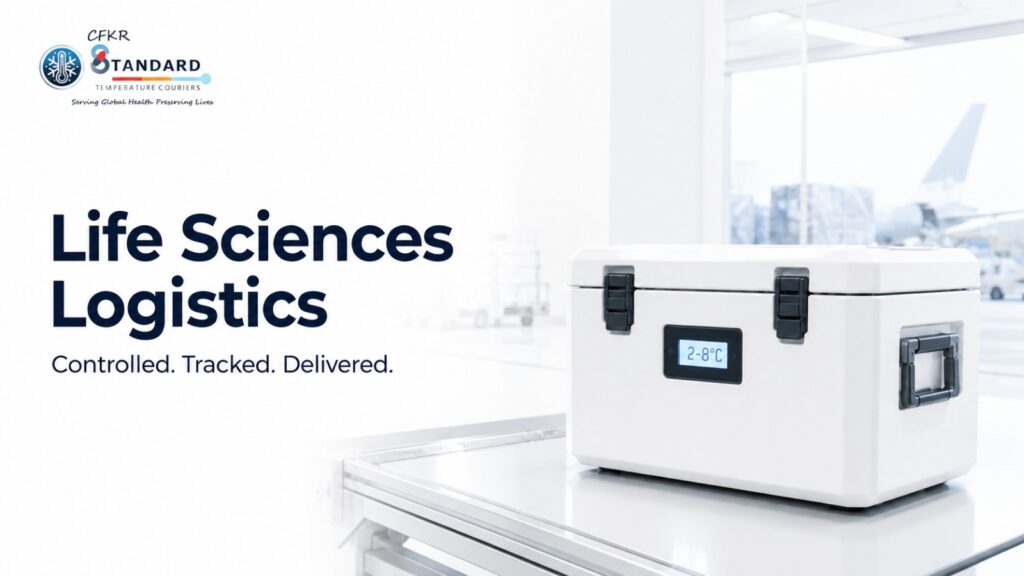
Life sciences shipments cannot be treated like ordinary freight. Medicines, clinical trial materials, biotech samples and medical devices may need controlled temperatures, careful documentation and clear handover records. A delay, handling error or missing document can affect a study, a product release or a planned delivery.
At CFKR STC Couriers, we support businesses that need a more controlled approach to movement, packaging and delivery. Our life sciences logistics service is built around planning the shipment properly before collection, maintaining visibility while it moves and completing delivery with the required records.
The right logistics plan depends on the product, temperature range, route, destination, urgency and applicable regulations. This is why pharmaceutical logistics and healthcare logistics need more than a standard courier booking.
Why life sciences logistics needs a planned process
Life sciences logistics covers the movement of sensitive products used in pharmaceutical, healthcare, biotech and research environments. These shipments can include medicines, diagnostic items, clinical trial materials, devices, samples and other controlled products.
Each shipment should start with a clear assessment. The logistics team needs to understand what is being shipped, where it is going, what conditions it needs during transit and what documents are required. This helps avoid last-minute changes that can delay collection or customs clearance.
The World Health Organization explains that storage and distribution are important parts of medical-product supply chain management, as products can face risks during transport, storage, repackaging and distribution. Its guidance also notes that every party in the supply chain must follow applicable legislation and regulations. Read the WHO good storage and distribution practices guidance.
For this reason, reliable life sciences logistics must combine operational planning, controlled handling, shipment tracking and regulatory compliance.
Shipment tracking from collection to delivery confirmation
Shipment tracking gives the shipper visibility after the consignment leaves the facility. For sensitive products, a tracking number alone is not enough. The process should also include planned checkpoints, clear escalation when an exception occurs and a confirmed record when the consignee receives the shipment.
A strong shipment tracking process starts at collection. The shipment details, destination, contact persons, handling requirements and documents should be checked before dispatch. During transit, the team should be able to monitor the shipment status and respond quickly if there is a routing issue, a missed connection or a delivery concern.
At the final stage, delivery confirmation provides evidence that the shipment has reached the intended consignee. This may include the delivery time, recipient details and proof of handover, based on the service and shipment requirements.
For pharmaceutical distribution, this visibility helps the sender coordinate with hospitals, laboratories, distributors, trial sites and receiving teams. It also helps reduce uncertainty when the shipment is urgent or time-sensitive.
Cold chain logistics for temperature-sensitive shipments
Cold chain logistics is used when a product must stay within a defined temperature condition during storage and transport. The right solution depends on the product’s approved temperature range, expected transit time, route conditions and packaging performance.
Temperature-controlled logistics is not one fixed service. Some shipments may need chilled conditions, while others may require frozen conditions or a much lower temperature range. The packaging choice must support the required condition for the expected journey, including handling time at collection, airport or transit points and final delivery.
STC Couriers’ Cold Chain service can be considered where a shipment needs controlled movement and a planned cold chain process. Before booking, share the product handling instructions, temperature requirement, package dimensions, shipment value, destination and required delivery time.
Temperature-controlled packaging helps create the required protection around the product during transit. Cold chain packaging may include qualified insulated packaging, refrigerants and handling instructions selected for the shipment profile. Packaging must be matched to the actual route and product requirement; using a standard box without assessment can create avoidable risk.
Cold chain distribution should also consider the handover points. A shipment can be well packed but still face problems if the receiving location is not ready, if the contact person is unavailable or if there is no clear delivery procedure. Good planning covers the full journey, not only the transport leg.
Pharmaceutical logistics and pharmaceutical cold chain logistics
Pharmaceutical logistics requires careful coordination because products may be subject to quality requirements, controlled temperatures, traceability needs and destination-specific rules. A practical process begins with understanding whether the shipment is ambient, chilled, frozen or otherwise temperature-sensitive.
Pharmaceutical cold chain logistics adds another layer of responsibility. The product’s temperature requirement must be understood before packaging and routing are selected. The shipper should provide the handling instructions and any supporting documents needed for the shipment.
For pharmaceutical distribution, it is useful to confirm these points before collection:
- Product description and intended use
- Required storage and transport conditions
- Origin and destination details
- Required delivery date and receiving hours
- Packaging and refrigerant requirement
- Regulatory compliance and customs documentation needs
- Contact details for both sender and consignee
- Delivery confirmation requirement
This information allows the logistics partner to plan a suitable service instead of treating the shipment as ordinary cargo.
Clinical trial logistics for time-sensitive study materials
Clinical trial logistics requires close coordination between sponsors, clinical research organisations, sites, laboratories and logistics teams. Clinical trial materials may include investigational products, kits, samples, documents or other study-related consignments.
The key challenge is that each movement may have a strict timeline and site-specific delivery requirement. A clinical site may accept deliveries only during certain hours. A laboratory may require prior notice. A product may need controlled conditions until handover.
Before arranging clinical trial logistics, the shipper should confirm the shipment schedule, site contact, packaging requirement, import permissions if applicable and emergency contact process. The consignee should also know that the shipment is arriving and be prepared to receive it.
STC Couriers can help customers plan these shipment requirements through its Life Sciences Logistics service. Early planning is important, especially for international routes, temperature-controlled products and urgent site deliveries.
Liquid nitrogen transport and dry ice transport
Liquid nitrogen transport and dry ice transport need specialised planning. These materials may be used to maintain specific temperature conditions for certain products, but they must be handled according to the shipment type, transport mode and applicable rules.
Dry ice is treated as hazardous material for air transport and requires suitable preparation, marking, labelling and trained handling. IATA confirms that dry ice shipments by air require regulatory training. The applicable requirements can change, so every shipment should be checked against the current carrier and regulatory rules.
Liquid nitrogen transport also needs product-specific planning, particularly where dry shippers or specialised containers are involved. The container, holding time, route and receiving arrangement should be reviewed before dispatch.
Do not assume that every temperature-sensitive shipment needs dry ice or liquid nitrogen. The correct solution should always follow the product requirement and validated shipping plan.
Regulatory compliance and customs documentation
Regulatory compliance is a core part of international pharmaceutical logistics, biotech logistics and medical device logistics. Requirements can vary by product type, country, transport mode and destination authority.
Customs documentation may include invoices, packing lists, airway bills, permits, licences, product declarations and other documents required for import or export clearance. The exact documents must be confirmed for each shipment. Missing or inaccurate paperwork can lead to holds, storage charges or delivery delays.
For regulated or specialised cargo, documentation and classification should be checked before collection. This is particularly important for temperature-controlled products, clinical trial materials, dry ice transport and other sensitive consignments.
STC Couriers’ Regulatory Compliance service is relevant when your shipment needs support with the planning of compliance-related requirements. For international movements, our Global Logistics service can help you plan the route and shipment process with the destination in mind.
How CFKR STC Couriers supports your shipment
CFKR STC Couriers supports customers who need a dependable partner for life sciences logistics. Our service is designed for businesses moving pharmaceutical products, healthcare shipments, clinical trial materials, biotech consignments and medical devices.
Our approach begins with understanding the shipment requirement. We then help plan the packaging, route, handling process, documentation and delivery arrangement based on the product and destination.
If you need cold chain logistics, temperature-controlled logistics, pharmaceutical distribution or shipment tracking support, share your shipment details with our team before booking. This allows us to recommend a suitable process and identify important requirements early.
For a quote or shipment discussion, contact CFKR STC Couriers.
Frequently Asked Questions
What is life sciences logistics?
Life sciences logistics is the planned movement of products used in pharmaceutical, healthcare, biotech, research and clinical settings. It can include packaging, temperature control, documentation, shipment tracking and delivery confirmation.
Why is shipment tracking important for pharmaceutical logistics?
Shipment tracking helps the sender see the shipment status during transit. For pharmaceutical logistics, it also supports faster action if there is a delay, routing issue or delivery exception.
What is the difference between cold chain logistics and temperature-controlled logistics?
Cold chain logistics usually refers to a controlled-temperature process for temperature-sensitive products. Temperature-controlled logistics is a broader term that covers planned transport at the required temperature condition, based on the product’s needs.
What is temperature-controlled packaging?
Temperature-controlled packaging is packaging selected to help maintain the required product condition during transit. It may include insulated containers and suitable refrigerants, depending on the shipment plan.
Can STC Couriers support clinical trial logistics?
Yes. STC Couriers supports life sciences logistics planning for clinical trial materials and other sensitive consignments. Contact the team with the route, temperature requirement, delivery timeline and documentation details.
Are dry ice transport and liquid nitrogen transport handled in the same way?
No. Dry ice transport and liquid nitrogen transport have different operational and regulatory requirements. The right process depends on the product, packaging, transport mode and destination.
What customs documentation is needed for an international shipment?
Customs documentation depends on the product, origin, destination and regulations. Documents may include an invoice, packing list, airway bill, permits, licences or other declarations. Confirm the requirements before dispatch.
How can I get a quote for pharmaceutical cold chain logistics?
Send CFKR STC Couriers the product description, temperature requirement, pickup and delivery locations, package size, weight, required delivery date and any regulatory compliance needs.