
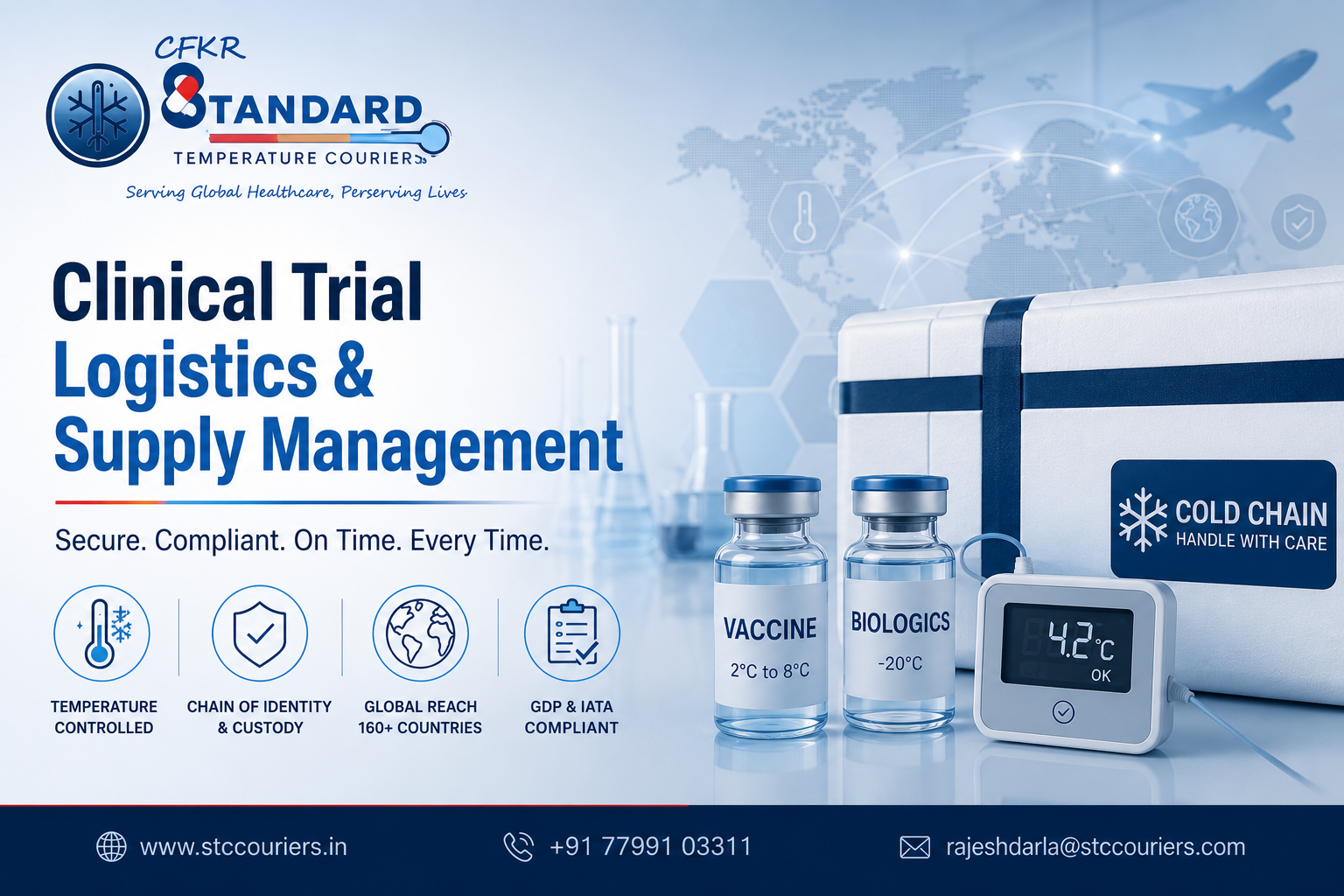
CFKR STC Couriers delivers reliable Clinical Trial Logistics & Supply Management with temperature-controlled transportation, cold chain solutions, secure packaging, real-time tracking, chain of custody, and GDP & IATA-compliant pharmaceutical logistics for safe global clinical trial distribution.
Every year, thousands of vaccine doses, insulin vials, and life saving medicines get damaged before they reach a patient. The reason is often simple. The temperature was not controlled during transport. This is why temperature controlled logistics has become one of the most important parts of the modern pharmaceutical supply chain.
If a medicine gets too warm or too cold during its journey, it can lose its effectiveness or become unsafe to use. This is not a small risk. It affects patient health, company reputation, and the cost of doing business. That is exactly why refrigerated transport services exist, and why pharma companies are willing to pay more for a logistics partner who understands the science behind it.
In this blog, we will look at what temperature controlled logistics actually means, why it matters so much for pharmaceutical supply chains, and how a company like STC Couriers manages this process from pickup to delivery.
What Is Temperature Controlled Logistics
Temperature controlled logistics is the process of storing and moving goods within a specific temperature range so that the product does not spoil, degrade, or lose its quality. This includes everything from the packaging used, to the vehicle that carries the goods, to the warehouse where the goods are stored before delivery.
For pharmaceutical products, this range is usually very narrow. Some medicines need to stay between 2 and 8 degrees Celsius. Others need to stay frozen at minus 20 degrees Celsius. Even a short break in this temperature range, sometimes called a temperature excursion, can ruin an entire batch of medicine worth lakhs of rupees.
This is different from regular transport, where a small change in temperature does not matter much. In pharma logistics, even a two hour delay at the wrong temperature can mean the difference between a usable medicine and a wasted one.
Why Pharmaceutical Companies Depend on Refrigerated Transport Services
Pharmaceutical products are not like regular cargo. Vaccines, biologics, insulin, and certain antibiotics are sensitive to heat, cold, light, and even vibration. This is why refrigerated transport has become a non negotiable part of pharma supply chains.
There are three main reasons why this matters so much.
First, patient safety comes first. A medicine that has been exposed to the wrong temperature may not work as intended, or in some cases, it could cause harm.
Second, there are strict regulations. Government bodies and health authorities require proof that medicines were transported and stored under the correct conditions. Without this proof, a batch of medicine can be rejected at the point of delivery.
Third, the financial loss is real. Pharmaceutical products are expensive to manufacture. If a shipment gets spoiled due to poor temperature control, the loss falls directly on the company, and sometimes on the patient who never receives the medicine they needed.
This is where working with an experienced logistics partner makes a real difference. Companies that specialise in pharmaceutical logistics understand these risks and build their entire process around avoiding them.
How Refrigerated Transport Actually Works
A refrigerated transport system is more than just a truck with a cooling unit attached to it. It is a full chain of steps that work together to keep the product at the right temperature from the moment it leaves the factory to the moment it reaches the pharmacy or hospital.
The process usually starts with pre cooling. Before any product is loaded, the vehicle or container is cooled down to the required temperature. This avoids a temperature spike as soon as the goods are placed inside.
Next comes the packaging. Insulated boxes, gel packs, and sometimes dry ice are used depending on how sensitive the product is. This acts as a backup layer of protection in case the main cooling system faces any issue during transport.
During the actual transport, temperature monitoring devices track the internal temperature continuously. Many logistics providers now use real time GPS and temperature sensors so that both the sender and receiver can check the shipment status at any point during the journey.
Finally, there is the last mile delivery. This is often the most overlooked part, but it is just as important. A refrigerated truck may keep the temperature stable for hundreds of kilometres, but if the last mile delivery van does not have proper cooling, all that effort can go to waste in the final few kilometres.
Comparison of Different Cold Chain Transport Methods
Different products need different types of cold chain solutions. Here is a simple comparison to help understand which method suits which type of shipment.
Transport Method | Temperature Range | Best Suited For | Typical Duration |
Refrigerated Trucks | 2°C to 8°C | Vaccines, insulin, regional pharma distribution | Same day to 2 days |
Reefer Containers | -20°C to 25°C | Bulk pharma exports, large hospital orders | 3 to 15 days |
Insulated Courier Boxes | 2°C to 8°C | Small batch medicines, urgent hospital deliveries | Few hours to 1 day |
Cold Storage Warehousing | -20°C to 8°C | Long term storage before distribution | Weeks to months |
As you can see, there is no single solution that fits every shipment. A good logistics partner will assess the product type, distance, and urgency before recommending the right method.
The Real Challenges in Cold Chain Logistics
Managing a cold chain sounds simple on paper, but in reality, there are many points where things can go wrong. Traffic delays, equipment failure, power cuts at storage points, and even human error during loading and unloading can all lead to temperature excursions.
In a country like India, where temperatures can cross 40 degrees Celsius in many regions during summer, the challenge becomes even bigger. A cooling unit that works fine in mild weather may struggle to maintain the required temperature during a hot afternoon delivery run.
This is why experienced providers build redundancy into their systems. This means having backup cooling units, trained staff who know how to handle temperature sensitive cargo, and monitoring systems that send alerts the moment something goes outside the safe range.
How STC Couriers Handles Temperature Controlled Deliveries
At STC Couriers, the approach to temperature controlled logistics is built around one simple idea. The product must reach the customer exactly as it left the sender, with no compromise on quality.
This starts with proper vehicle selection based on the product type and distance. For short distance pharma deliveries within a city, insulated courier boxes with gel packs are often used. For longer routes, refrigerated vehicles with active cooling systems are deployed.
Every shipment is tracked from pickup to delivery. This gives both the sender and the receiving pharmacy or hospital full visibility into where the shipment is and whether the temperature has remained within the safe range throughout the journey.
The team handling these shipments is trained specifically for pharma logistics. This is different from general courier handling, because pharma products need to be loaded, stacked, and unloaded in a way that avoids temperature loss and physical damage.
For businesses looking to understand more about how this process works for their specific product, the cold chain solutions page has more detailed information on the services offered.
Regulatory Standards That Guide Cold Chain Logistics
Pharmaceutical cold chain logistics does not operate in a vacuum. It follows strict guidelines set by health authorities around the world. In the United States, the FDA sets clear standards for how temperature sensitive drugs must be stored and transported. Globally, the World Health Organization has published detailed guidelines on vaccine storage and distribution that many countries, including India, use as a reference point.
Good distribution practice, often referred to as GDP, is another standard that logistics companies follow. This set of guidelines, supported by bodies like the International Air Transport Association, covers everything from vehicle maintenance to staff training to documentation requirements for pharma shipments moving by air.
Following these standards is not just about avoiding penalties. It is about building trust with pharmaceutical companies who need to know that their products are in safe hands from the moment they are picked up.
Temperature Requirements for Common Pharmaceutical Products
Different medicines have different storage needs. Getting this wrong even by a few degrees can affect the product. Here is a quick reference table.
Product Type | Required Temperature | Risk if Exposed to Wrong Temperature |
Vaccines | 2°C to 8°C | Loss of effectiveness, potential health risk |
Insulin | 2°C to 8°C | Reduced potency, patient safety risk |
Biologics | -20°C to 8°C | Protein breakdown, product failure |
Antibiotics (certain types) | 15°C to 25°C | Reduced shelf life |
Blood Plasma Products | -18°C or below | Complete product loss |
This table shows why a one size fits all approach does not work in pharma logistics. Every shipment needs to be assessed individually, and the transport method chosen accordingly.
Best Practices for Businesses Shipping Pharmaceutical Products
Businesses that regularly ship temperature sensitive products can reduce risk by following a few simple practices. Choosing a logistics partner who specialises in cold chain transport rather than a general courier service is the first step. General couriers are not built for this level of precision.
Proper documentation also matters. Every shipment should have a clear temperature log that can be checked if there is ever a dispute about product quality on arrival. This protects both the sender and the logistics provider.
Regular communication with the logistics team about delivery windows also helps. A pharmacy that knows exactly when a shipment will arrive can plan to receive it immediately, rather than letting it sit outside in the heat while waiting for someone to bring it into cold storage.
Lastly, businesses should ask their logistics partner about backup plans. What happens if a vehicle breaks down mid route? A reliable partner will always have a contingency plan ready, rather than leaving the shipment exposed while a solution is arranged.
Final Thoughts
Temperature controlled logistics is not just a service, it is a responsibility. When a pharmaceutical product is being transported, there is often a patient somewhere waiting to receive it. Getting the temperature wrong is not just a business loss, it can be a health risk for someone who needs that medicine to work exactly as intended.
This is why choosing the right refrigerated transport partner matters so much. From proper vehicle selection to trained staff to continuous temperature monitoring, every step needs to be handled with care.
If your business needs a reliable partner for pharmaceutical cold chain logistics, you can learn more about the services offered or get in touch with the team to discuss your specific requirements. You can also visit stccouriers.in to explore the full range of logistics solutions available for temperature sensitive shipments.
Frequently Asked Questions
What is the difference between cold chain logistics and temperature controlled logistics?
Cold chain logistics usually refers to keeping a product below room temperature, often for frozen or refrigerated goods. Temperature controlled logistics is a broader term that covers any shipment where the temperature needs to stay within a set range, whether that range is cold, frozen, or even a controlled room temperature.
How is temperature monitored during pharmaceutical transport?
Most refrigerated vehicles and courier boxes now come with digital temperature loggers or sensors that record the temperature throughout the journey. Some providers, including STC Couriers, also offer real time tracking so the sender and receiver can check the shipment status while it is still on the road.
What happens if a pharmaceutical shipment faces a temperature excursion?
A temperature excursion means the product went outside its safe temperature range at some point during transport. Depending on how long and how severe the excursion was, the batch may need to be tested before use, or in serious cases, discarded entirely. This is why continuous monitoring and quick response from the logistics team are so important.
Can small pharmacies use refrigerated courier services for single deliveries?
Yes. Insulated courier boxes with gel packs are commonly used for smaller, single unit deliveries such as sending insulin or a small batch of vaccines to a local pharmacy or clinic. This does not require a full refrigerated truck and works well for short distance, time sensitive orders.
How do I choose the right refrigerated transport partner for my business?
Look for a provider with experience specifically in pharmaceutical logistics, not just general refrigerated goods. Ask about their vehicle types, backup cooling systems, temperature monitoring tools, and how they handle delays or breakdowns. It also helps to check if they follow recognised standards such as good distribution practice for pharma shipments.