
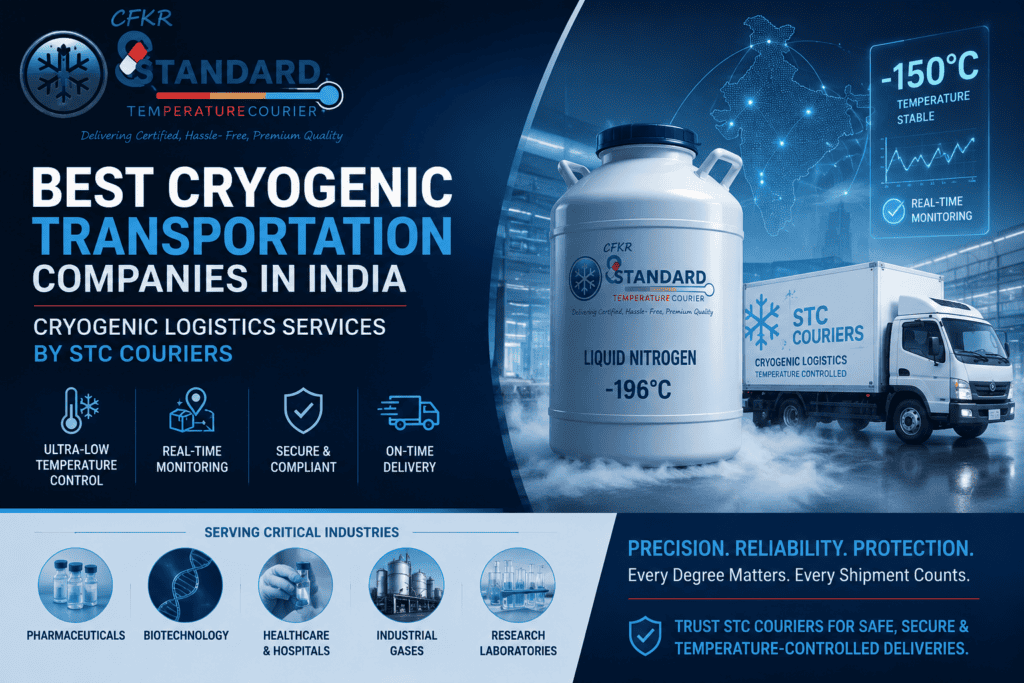
Shipping a parcel from one city to another is usually straightforward. You pack it, hand it over, and track it until it reaches the destination. But what happens when the product inside must remain at minus 150 degrees Celsius throughout the entire journey? What happens if the temperature rises even slightly during transit? In most cases, the product is permanently damaged and cannot be recovered.
This is the reality for industries that work with biological samples, vaccines, stem cells, laboratory materials, and industrial gases. Standard courier services are not designed for this level of precision. Only experienced cryogenic transportation companies like STC Couriers have the infrastructure, expertise, and monitoring systems required to handle these highly sensitive shipments safely.
This blog explains what cryogenic transportation is, how it differs from regular cold chain logistics, which industries rely on it, and what businesses should look for when selecting a trusted cryogenic logistics partner like STC Couriers.
What Is Cryogenic Transportation?
Cryogenic transportation is the process of moving products and materials that must be stored at extremely low temperatures, typically below minus 150 degrees Celsius. These are not products that simply need refrigeration. They require ultra-low temperature preservation that standard cooling systems cannot achieve.
To maintain these conditions, STC Couriers uses specialized liquid nitrogen containers, dry ice packaging, and thermally insulated cryogenic vessels designed specifically for ultra-low temperature transportation.According to the U.S. Department of Transportation’s guidelines on
Unlike regular refrigerated transport, cryogenic logistics involves highly controlled handling procedures, specialized packaging systems, and continuous monitoring throughout the shipment journey.
Cryogenic Transport vs Standard Cold Chain Logistics
Many businesses assume that cold chain logistics and cryogenic transportation are the same thing. In reality, they are completely different logistics categories with different operational requirements.
Feature | Standard Cold Chain | Cryogenic Transportation by STC Couriers |
Temperature Range | 2°C to 8°C | Below minus 150°C |
Cooling Method | Electric refrigeration | Liquid nitrogen or dry ice |
Product Type | Food and standard medicines | Biological samples, stem cells, industrial gases |
Packaging Used | Refrigerated insulated boxes | Specialized cryogenic dewars and containers |
Monitoring Level | Basic GPS tracking | Real-time temperature monitoring |
Risk if Temperature Rises | Gradual degradation | Immediate and permanent damage |
Compliance Requirements | Moderate | High and strictly regulated |
This comparison clearly shows that cryogenic transportation requires far more precision, specialized handling, and operational expertise than traditional cold chain logistics.
Industries That Depend on STC Couriers Cryogenic Logistics Services
Several industries rely heavily on cryogenic transportation services every single day.
Healthcare and Pharmaceutical Industry
Hospitals, diagnostic laboratories, and pharmaceutical companies regularly transport blood samples, biopsy tissues, stem cells, vaccines, and biological materials between facilities. These products are extremely temperature sensitive, and even a small temperature fluctuation can destroy an entire shipment.
STC Couriers provides reliable cryogenic logistics solutions designed specifically for healthcare and pharmaceutical supply chains.
Biotechnology and Research Laboratories
Biotech companies and research facilities often transport genetic material, cell cultures, research compounds, and experimental biological samples between laboratories and testing centers.
The World Health Organization has published detailed guidance on vaccine cold chain requirements, and cryogenic conditions apply to many of the newer biological vaccines in development.
These materials require ultra-low temperature handling and precise transit management, which is why laboratories trust STC Couriers for safe cryogenic transportation services.
Industrial Gas Companies
Cryogenic logistics is also essential for transporting liquid oxygen, liquid nitrogen, liquid argon, and other industrial gases that must remain in pressurized ultra-low temperature environments.international regulations. IATA’s Dangerous Goods Regulations set detailed rules for how cryogenic materials must be packaged, labeled, and handled on aircraft, and non-compliance can result in shipments being refused or confiscated.
Food and Scientific Research
Certain premium frozen food products, scientific research materials, and laboratory testing samples also require cryogenic preservation during long-distance transportation.
The Real Challenges in Cryogenic Transportation
Cryogenic transportation is one of the most technically demanding areas of logistics. The risks involved are significant, and even small failures can result in major losses.
Temperature Deviation
A minor temperature increase can permanently destroy biological samples, vaccines, or laboratory materials within minutes.
This is why STC Couriers uses advanced real-time monitoring systems to track shipment temperatures continuously during transit.
Packaging Failure
Cryogenic packaging is highly specialized. Dewars, dry ice containers, and insulated vessels must be correctly filled, sealed, and maintained throughout transportation.
Improper packaging can compromise the entire shipment.
Transit Delays
Unexpected delays at airports, customs checkpoints, or transport hubs can create serious risks for cryogenic shipments.
STC Couriers plans for these situations with backup cooling solutions, contingency protocols, and proactive shipment monitoring.international regulations. IATA’s Dangerous Goods Regulations set detailed rules for how cryogenic materials must be packaged, labeled, and handled on aircraft, and non-compliance can result in shipments being refused or confiscated.
Regulatory Compliance
Cryogenic shipments often involve biological materials and hazardous substances that require strict documentation and compliance procedures.
Experienced cryogenic transportation providers like STC Couriers ensure all shipment documentation, labeling, and handling procedures meet required regulations.
What Makes STC Couriers a Reliable Cryogenic Transportation Company
Not every logistics company claiming to offer cryogenic transportation has the expertise or infrastructure to manage it safely.
Here is what makes STC Couriers a trusted partner for cryogenic logistics services in India:
Evaluation Factor | STC Couriers Provides |
Temperature Monitoring | Real-time digital tracking and alerts |
Specialized Packaging | Proper dewar and dry ice selection |
Trained Staff | Experienced handling teams for cryogenic shipments |
Emergency Support | Backup cooling plans and 24/7 assistance |
Regulatory Compliance | Complete shipment documentation support |
Delivery Network | Reliable transportation routes across India |
Why Real-Time Temperature Monitoring Matters
In cryogenic transportation, real-time temperature monitoring is not optional. It is essential.
STC Couriers uses advanced digital monitoring systems that track shipment temperatures throughout the journey. If temperatures move outside the approved range, alerts are triggered immediately so corrective action can be taken.
For pharmaceutical and healthcare businesses, these temperature records also serve as compliance documentation and quality assurance proof.
The FDA’s guidelines on biologics and cold chain make it clear that temperature records are part of the product’s quality documentation.
Packaging in Cryogenic Logistics
Packaging plays a critical role in maintaining ultra-low temperatures during transportation.
Liquid Nitrogen Dewars
For temperatures below minus 150°C, specialized liquid nitrogen dewars are used. These vacuum-insulated containers maintain cryogenic temperatures without requiring external power.
Dry Ice Packaging
Dry ice is commonly used for slightly higher cryogenic temperature ranges, around minus 78°C.
At STC Couriers, packaging solutions are selected based on:
Product sensitivity
- Shipment duration
- Transportation mode
- Environmental conditions
- Regulatory requirements
This customized approach helps ensure shipment safety and temperature stability throughout transit.
Common Mistakes Businesses Make While Choosing Cryogenic Transportation Companies
Choosing Based on Price Alone
Selecting the cheapest logistics provider can lead to expensive shipment failures later.
Cryogenic logistics requires specialized expertise, and compromising on quality increases operational risk significantly.
Not Checking Industry Experience
Transporting industrial gases is completely different from transporting biological samples or stem cells.
Businesses should always verify whether the provider has experience handling their specific product category.
Ignoring Emergency Preparedness
A professional cryogenic transportation company should always have contingency plans for delays, packaging failures, and cooling system issues.
STC Couriers maintains backup systems and emergency response procedures to minimize shipment risks.
The Future of Cryogenic Logistics in India
The demand for cryogenic transportation services is growing rapidly due to advancements in:
- Biotechnology
- Cell and gene therapy
- Vaccine distribution
- Pharmaceutical research
- Medical diagnostics
Modern monitoring systems, smart sensors, and advanced packaging technologies are helping companies like STC Couriers deliver safer and more efficient cryogenic logistics solutions across India.
According to Allied Market Research’s analysis of the cold chain logistics sector, the global market is expected to continue expanding significantly over the next decade, with cryogenic requirements driving a major portion of that growth.
Sustainability is also becoming increasingly important, with newer packaging systems designed to improve efficiency while reducing environmental impact.
conclusion
Cryogenic transportation is far more than standard cold shipping. It is a highly specialized logistics process that requires trained professionals, advanced packaging systems, real-time monitoring, and strict regulatory compliance.
For businesses in healthcare, biotechnology, pharmaceuticals, laboratories, and industrial gas supply, selecting the right logistics partner is critical.
STC Couriers provides trusted cryogenic transportation and temperature-controlled logistics services across India with a strong focus on:
- Precision handling
- Real-time monitoring
- Regulatory compliance
- Safe transportation
- Time-critical delivery support
With reliable cryogenic logistics infrastructure and experienced operational teams, STC Couriers helps businesses move highly sensitive shipments safely and efficiently across the country.